
Quartz vs. Quartzite Countertops: A Master Artisan’s Guide to Nature and Refinement (2026)
What if the most critical decision for your kitchen isn’t the color of the cabinetry, but the geological legacy resting beneath your fingertips? The choice between quartz vs quartzite countertops is often obscured by linguistic similarity, yet it represents a fundamental crossroads between the raw, unyielding power of nature and the meticulous refinement of human engineering. You likely seek a surface that balances breathtaking aesthetics with the resilience required for daily life in a Staten Island or Manhattan home. We understand the trepidation that comes with selecting a high-end material; no one wishes to see a significant investment marred by a heat ring or an accidental wine spill.
This guide provides the clarity you need to distinguish between geological artistry and industrial excellence, ensuring your selection reflects your personal standard of luxury. You’ll gain a sophisticated understanding of the 12% rise in quartzite demand, the specific maintenance profiles of each material, and how to secure a slab that offers a lasting return on investment. We will examine the intersection of durability and design to help you find the enduring surface your home deserves.
Key Takeaways
- Distinguish between the raw, metamorphic power of quartzite and the curated, industrial precision of engineered quartz to find your ideal design foundation.
- Evaluate the technical performance of quartz vs quartzite countertops, specifically regarding their resistance to thermal shock and surface abrasions.
- Learn why quartzite serves as the ultimate guardian against high heat, while quartz offers a non-porous surface that eliminates the need for periodic sealants.
- Uncover the aesthetic nuances that allow you to balance the organic, marble-like veining of natural stone with the predictable elegance of modern composites.
- Understand the vital role of artisanal fabrication in ensuring your chosen material is precisely templated and installed for a lifetime of service.
Geological Artistry vs. Engineered Precision: Defining the Core Difference
The linguistic bridge between these two materials often leads to a nomenclature trap. While their names share a root, their identities are worlds apart. One is a raw testament to the earth’s ancient history; the other is a triumph of modern material science. Understanding the nuance of quartz vs quartzite countertops requires looking beneath the polished surface to the very molecular structure of the slab. Homeowners often find themselves at a crossroads, torn between the allure of a natural relic and the reliability of a precision-engineered surface—a dilemma similar to choosing between mined and lab-grown diamonds at a family-owned specialist like Robson’s Jewelers.
Quartzite: Nature’s Unyielding Metamorphic Legacy
Quartzite is a metamorphic masterpiece. It begins its life as humble quartz sandstone, transformed through staggering heat and tectonic pressure into a dense, interlocking crystalline structure. This intense process, which dictates the Geological origins of quartzite, creates a stone that often outmatches granite on the Mohs scale of hardness. Its beauty lies in elegant imperfection. Mineral impurities bleed into the stone, creating ethereal veining and depth that no machine can replicate. Every slab is a unique historical record of the earth.
Quartz: The Evolution of Refined Surfaces
In contrast, quartz countertops represent a sophisticated evolution of human ingenuity. These slabs are meticulously crafted composites, typically consisting of 90-95% crushed natural quartz crystals bonded with high-performance polymer resins. This engineering allows for a structural uniformity that nature cannot provide. While a natural slab may have hidden fissures, quartz is consistently dense throughout. The addition of pigments allows designers to curate a spectrum of tones, from deep obsidian to minimalist whites, ensuring a perfect match for contemporary aesthetics.
As master fabricators, we view these materials with equal reverence but different intentions. Choosing between quartz vs quartzite countertops isn’t about finding a “better” material, but about selecting the right partner for your lifestyle. Quartzite offers the prestige of the authentic and the unrepeatable. Quartz offers the peace of mind found in predictable performance and bacterial resistance. Achieving the perfect finish requires specialized skill, particularly when ensuring quartz fabrication NYC standards are met for high-end installations. Our role is to ensure that whether you choose the raw power of the earth or the precision of the laboratory, the final result is a curated masterpiece that stands the test of time.
The Performance Duel: Durability, Heat, and Daily Life
In the high-pressure environment of a Manhattan kitchen, a countertop is more than a design choice; it’s a functional partner. The debate of quartz vs quartzite countertops often centers on how these surfaces withstand the chaotic rhythm of daily use. While both materials offer exceptional longevity, their technical responses to heat, blades, and impact are dictated by their disparate origins. When exploring leading countertop materials, homeowners must weigh the raw resilience of stone against the curated stability of composites. Quartzite typically registers a seven on the Mohs scale of mineral hardness, effectively outranking most granites and making it nearly impervious to scratches from standard kitchen utensils.
Heat Resistance: The Artisan’s Warning
Quartzite is a true guardian of the stove. Having been forged in the earth’s crust under extreme thermal pressure, it handles hot cookware with a stoic indifference. You can move a searing pan from the range to a quartzite surface without fear of structural damage. Quartz, however, requires a more disciplined approach. Most engineered quartz surfaces possess a thermal threshold where temperatures exceeding 300 degrees Fahrenheit can cause the binding resins to permanently discolor or scorch. This chemical reality means that while quartz is incredibly durable, it’s not invincible. For the active NYC chef, we always recommend the use of trivets on engineered surfaces to preserve the pristine clarity of the resin. We invite you to experience these textures firsthand at our Staten Island showroom, where the difference in tactile resilience becomes immediately apparent.
Scratch and Impact Resilience
The crystalline structure of quartzite provides a surface so hard it can actually dull your professional cutlery. It’s a material defined by its unyielding nature, offering a level of scratch resistance that natural stone enthusiasts prize. Conversely, quartz offers a different kind of strength: impact resilience. The high-performance polymer resins used in quartz fabrication act as a flexible binder. This makes quartz slightly less prone to chipping on the edges if a heavy cast-iron pot happens to collide with the rim. In high-traffic kitchens across the Five Boroughs, this subtle “give” can be a significant advantage.
Ultimately, the performance winner depends on your personal kitchen habits. If you value the ability to place hot items directly on the counter, quartzite’s volcanic heritage is unmatched. If you prefer a surface that resists the incidental chips of a busy family life, the engineered precision of quartz may be your ideal legacy. Our 30-year history as fabricators has shown us that both materials, when handled with the respect they deserve, will serve as a permanent anchor for your home’s aesthetic.
Aesthetic Archetypes: Curating Your Visual Design Legacy
Aesthetic choices define the soul of a home. In the dialogue of quartz vs quartzite countertops, the decision rests on whether you desire a surface that is a unique geological event or a meticulously curated design element. While some homeowners prefer the predictable elegance of engineered stone, others find themselves drawn to the raw, untamed beauty of the earth. This choice is a cornerstone of a broader natural stone design philosophy that values heritage, permanence, and the intrinsic artistry of the natural world.
The One-of-a-Kind Soul of Natural Quartzite
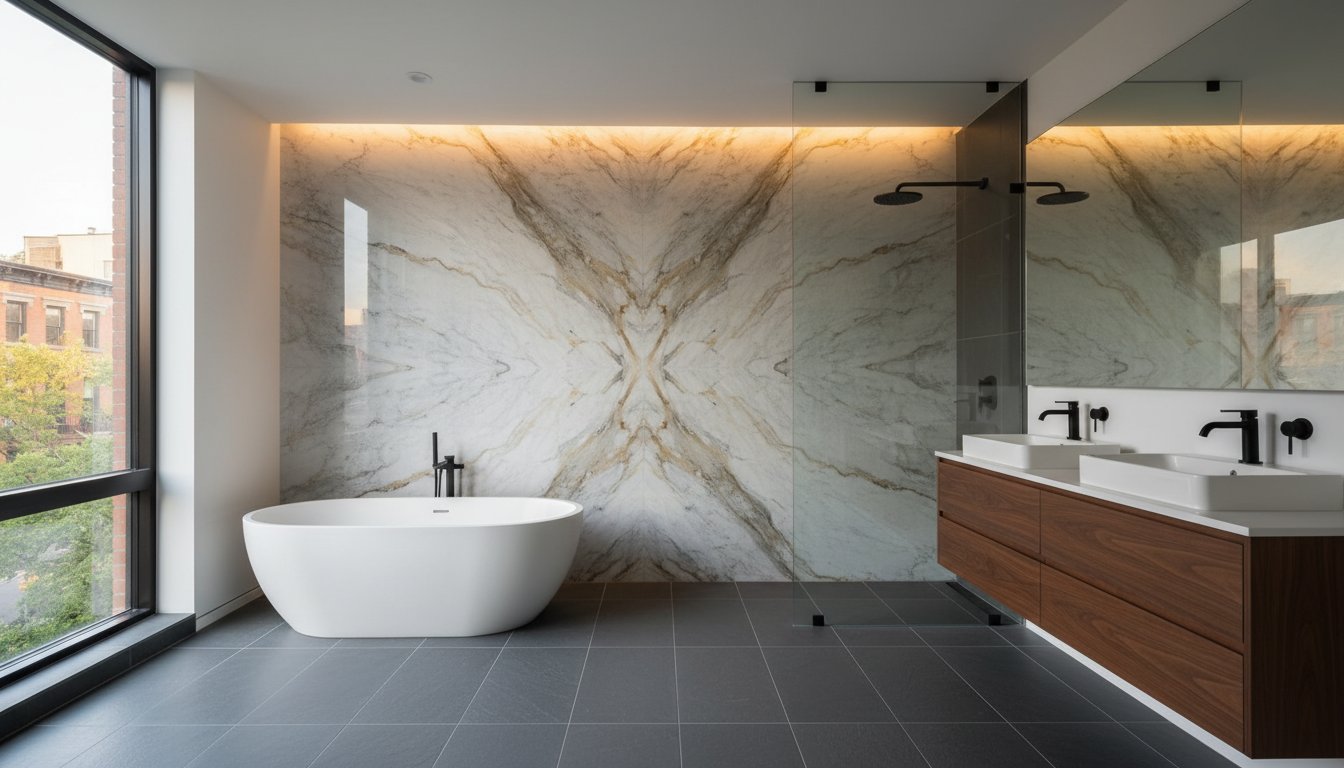
Quartzite offers a visual depth that remains unparalleled in the world of architectural surfaces. Its crystalline structure allows light to penetrate the surface, creating an ethereal translucency that can be dramatically enhanced with backlighting for a truly exotic focal point. For a Brooklyn townhouse or a Staten Island estate, this material provides a visual anchor that is impossible to replicate. The thrill of the hunt occurs in our showroom, where you select the exact slab that will define your space. We often assist clients in the complex art of book-matching slabs, ensuring that the natural veining flows with a rhythmic, intentional grace across backsplashes and islands. No two kitchens using this material will ever be identical; each is a singular historical record.
The Curated Perfection of Engineered Quartz
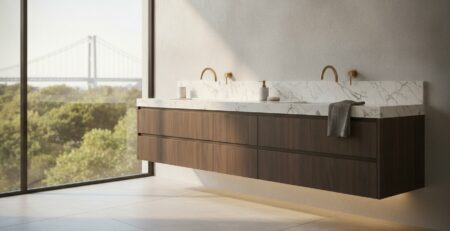
For the modern, minimalist NYC loft, the consistency of engineered quartz is often the preferred choice. Large kitchen islands often require a seamless appearance and structural uniformity that natural stone cannot always guarantee. Industry experts often highlight how a Quartz vs. Quartzite: An Industry Leader’s Comparison reveals the manufacturer’s ability to control every pigment and vein. This precision allows us to match the specific palette of a custom kitchen cabinet project with absolute fidelity. As we move through 2026, we see a distinct shift toward warmer tones like creamier whites and soft gold veining, a trend that quartz manufacturers have embraced with remarkable accuracy. High-end quartz replicas of Calacatta marble provide that iconic aesthetic without the porous vulnerability of traditional marble.
Selecting your surface is a deeply tactile experience. While quartz provides the security of choosing from a sample with guaranteed results, quartzite invites you to witness the raw power of nature in a full-sized slab. Both paths lead to an enduring legacy, but the journey depends on whether you value the artisan’s control or nature’s unscripted hand. We invite you to explore these archetypes at our showroom to find the slab that speaks to your personal standard of luxury.

The Reality of Maintenance: Preserving Your Investment
Preserving the pristine allure of a high-end kitchen requires a commitment to stewardship. When evaluating quartz vs quartzite countertops, the primary distinction lies in how each material interacts with the liquids and acids of a working kitchen. One offers a “set and forget” convenience, while the other demands a rhythmic ritual of protection to maintain its geological splendor. Understanding these maintenance profiles ensures your selection remains a curated masterpiece rather than a source of future anxiety.
Quartzite: The Sealing and Etching Truth
Quartzite demands respect for its natural porosity. Based on our 30 years of family-owned operation, we recommend sealing your quartzite surfaces every one to two years to maintain an impenetrable barrier against stains. You can verify the integrity of your stone’s protection by performing a simple water test: if beads of moisture remain on the surface after ten minutes rather than darkening the grain, your seal is performing its duty.
A significant challenge in the current market is the mislabeling of softer stones, such as dolomitic marble, as “soft quartzite.” True quartzite is unyielding and will not be etched by a knife blade or common culinary acids like lemon juice and red wine. However, if a slab is misidentified, these acids can cause permanent dulling of the finish. Choosing a reputable fabricator ensures you receive authentic, metamorphic stone that resists the rigors of NYC’s most ambitious home chefs. We invite you to consult with our master fabricators to ensure your selection receives the stewardship it requires.
Quartz: The Low-Maintenance Advantage
Engineered quartz offers a distinct advantage for the busy professional. Because it’s a non-porous composite, it never requires sealing or specialized stone cleaners. The high-performance resins act as a permanent shield, blocking coffee, oils, and pigments from penetrating the surface. This “wipe and go” lifestyle is often the deciding factor for those who value predictable performance over the unique soul of natural stone.
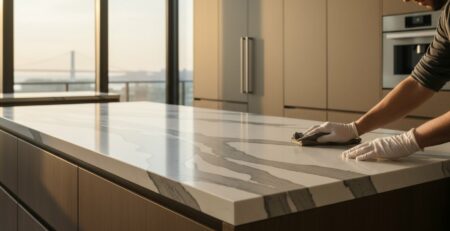
Long-term care for quartz focuses on preserving its factory-polished luster. You should avoid abrasive scouring pads or harsh alkaline chemicals, which can eventually dull the resin over time. Simple soap and water are sufficient to maintain the clarity of the design. While quartz is exceptionally resistant to staining, it lacks the volcanic-level heat tolerance of its natural counterpart, requiring a disciplined use of trivets to avoid scorching the binders. By following these focused protocols, you ensure your investment remains a source of pride for decades to come.
Mastering the Slab: The Richmond Stone Fabrication Edge
While the technical specifications of quartz vs quartzite countertops are vital, the ultimate success of your installation hinges on the mastery of the fabricator. A premium slab is merely raw potential until it meets the blade. At Richmond Stone, we’ve spent over 30 years acting as guardians of these natural elements, refining our process to ensure that the transition from quarry to kitchen is handled with poise. Whether you require the industrial precision of quartz fabrication NYC or the delicate handling of an exotic quartzite, our family-owned heritage serves as your guarantee of uncompromising quality.
The Art of Templating and Precision Cutting
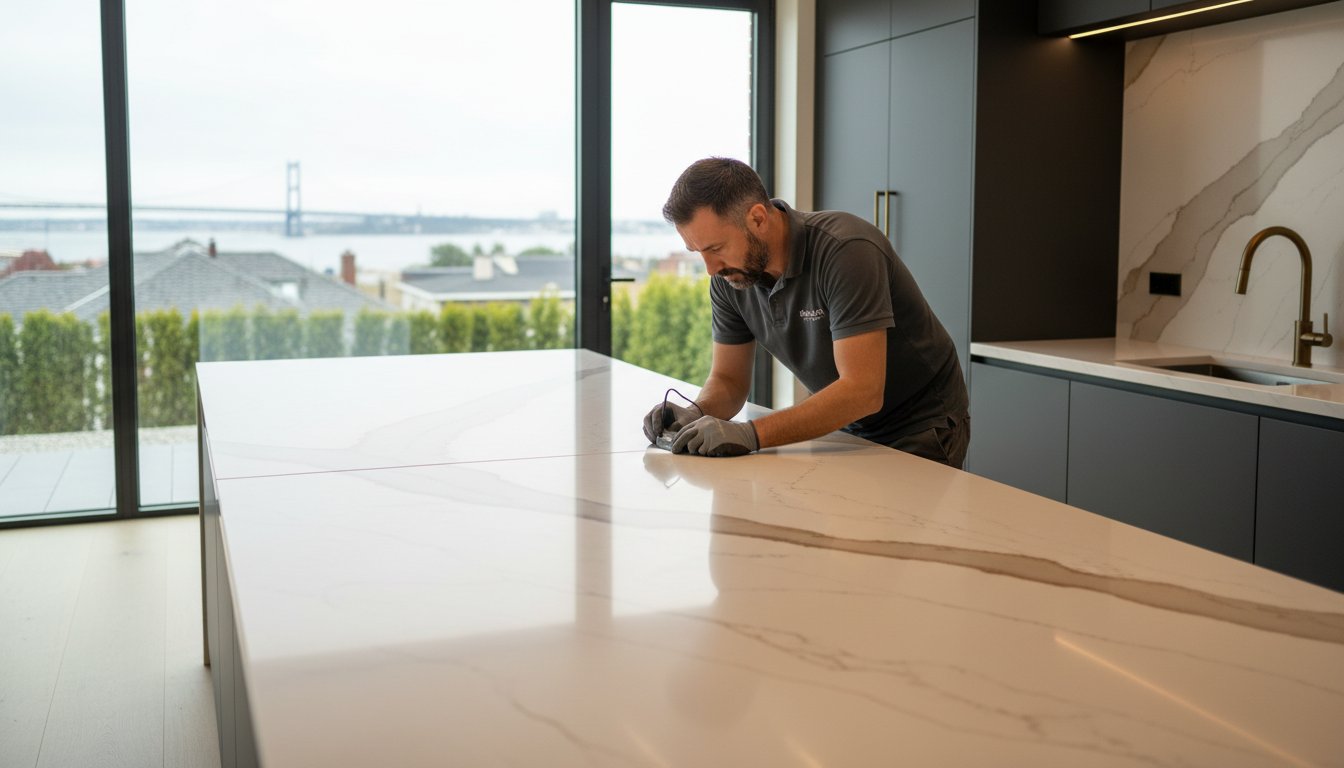
Precision begins long before the first cut. We utilize advanced digital templating to capture the exact nuances of your kitchen’s architecture, ensuring a perfect fit for even the most complex layouts. Quartzite, while incredibly hard, possesses a crystalline brittleness that requires a master’s touch to prevent fracturing during the cutting process. Conversely, creating custom countertops Staten Island residents can trust involves achieving nearly invisible seams through meticulous color-matching of adhesives. Our cutters respect the stone’s integrity, treating every slab as a unique historical record that deserves a flawless finish.
A Trusted Partner in Your Renovation Journey
Selecting a surface is a tactile experience that shouldn’t be rushed. We invite you to our Staten Island showroom on Richmond Valley Road to touch the slabs and witness the interplay of light and mineral firsthand. Our full-service approach allows us to integrate your chosen surface with bespoke cabinetry, creating a cohesive environment where every element is intentional. Navigating the logistical complexities of NYC high-rises and residential deliveries is a specialized skill we’ve honed over three decades. We don’t just deliver stone; we deliver a legacy of permanence.
Our commitment to your project extends from the initial sourcing to the final realization of your vision. We understand that choosing between quartz vs quartzite countertops is a deeply personal decision. By choosing a partner with a 30-year family legacy, you ensure that your investment is protected by artisans who value heritage as much as you do. Your home deserves a surface that reflects your standard of luxury, installed with the quiet confidence that only decades of expertise can provide.
Securing Your Design Legacy: The Final Selection
Your home is a sanctuary of personal expression, and the surfaces you choose serve as the foundation for its enduring elegance. Selecting between quartz vs quartzite countertops is more than a simple design choice; it’s a commitment to the character and permanence of your living space. Whether you’re drawn to the unscripted, metamorphic beauty of a natural slab or the curated, non-porous reliability of an engineered composite, your decision should reflect a balance of aesthetic vision and daily performance needs. You don’t have to navigate these complexities alone.
The success of this investment relies on the precision of the artisan who refines these raw elements. With 30+ years of master craftsmanship, our family-owned and operated institution remains dedicated to serving NYC and NJ with uncompromising quality. We invite you to move beyond the screen and experience the tactile depth of these materials in person. Visit our Staten Island Showroom or request a bespoke consultation today to ensure your project becomes a unique, curated masterpiece. Your vision deserves a surface that doesn’t just survive the years, but matures with grace alongside your home’s history.
Frequently Asked Questions
Is quartzite more expensive than quartz in 2026?
Quartzite typically commands a higher investment than quartz in 2026. While installed quartz generally ranges from $70 to $120 per square foot, quartzite often begins at $100 and can reach $160 per square foot. This price reflects the complexity of sourcing exotic natural slabs and the specialized tooling required to cut such a hard material. The final cost of quartz vs quartzite countertops depends on the rarity of the specific slab you select.
Can I put hot pans directly on quartzite countertops?
You can place hot pans directly on quartzite countertops without fear of structural damage. This material was forged under intense geological heat, giving it a volcanic-level thermal tolerance. In contrast, the engineered resins found in quartz can scorch or discolor if exposed to temperatures exceeding 300 degrees Fahrenheit. While quartzite is a guardian of the stove, we always recommend using trivets on any surface to ensure the longest possible design legacy for your home.
Does quartz countertop stain from red wine or coffee?
Engineered quartz is exceptionally resistant to staining from red wine, coffee, and oils because it is non-porous. The high-performance polymer resins act as a permanent barrier, preventing liquids from penetrating the surface. This makes quartz an ideal choice for busy households where spills might not be addressed immediately. Unlike natural stone, which relies on a topical sealer, the protection in a quartz slab is built into its very molecular structure during the manufacturing process.
How often do I need to seal my quartzite countertops?
We recommend sealing your quartzite countertops every one to two years to maintain their resistance to moisture and oils. While the stone itself is incredibly hard, its natural porosity requires a rhythmic ritual of protection to prevent deep-seated staining. Professional sealing is a straightforward process that ensures your investment remains pristine. You can use the water test to check if your current seal is still performing its duty effectively by observing how moisture beads on the surface.
What is ‘Soft Quartzite’ and should I avoid it for my kitchen?
“Soft quartzite” is an industry misnomer for dolomitic marble or other stones that lack the true hardness of metamorphic quartzite. These materials are susceptible to etching from acidic substances like lemon juice or vinegar. For a high-performance kitchen, it’s vital to choose authentic quartzite that registers a seven on the Mohs scale. We help our clients verify stone authenticity through scratch tests to ensure their selection won’t fail under the rigors of daily culinary use.
Is quartz better than quartzite for a high-traffic family kitchen?
Quartz is often the superior choice for high-traffic family kitchens due to its chip resistance and lack of maintenance. The flexible resin binders allow it to withstand the incidental impacts of heavy pots better than the brittle crystalline structure of natural stone. Additionally, the non-porous surface suits the frantic pace of modern life. However, if your family prioritizes heat resistance and geological artistry, quartzite remains an unyielding and prestigious alternative that offers a unique, one-of-a-kind soul.
How do I clean my quartz vs quartzite surfaces daily?
Daily cleaning for both surfaces is best handled with a soft cloth, warm water, and a pH-neutral mild soap. You must avoid acidic or abrasive cleaners on quartzite, as they can eventually compromise the sealer or etch the mineral surface. For quartz, simple soap and water preserve the factory-polished luster without the need for waxes. Maintaining the balance of quartz vs quartzite countertops requires only a gentle touch and the avoidance of harsh chemicals that can dull the finish.
Can Richmond Stone install countertops in Manhattan apartments?
Richmond Stone regularly performs complex installations in Manhattan apartments, navigating the unique logistical challenges of high-rise stone delivery. Our team has 30 years of experience coordinating with building management and ensuring that large slabs are transported safely through tight urban environments. From our Staten Island showroom to the finest residences across the Five Boroughs and New Jersey, we provide a full-service experience that includes precise digital templating and expert artisanal installation for your project.