Best Granite Countertop Edges: An Artisan’s Guide
The most profound design decisions are often the ones you feel before you see them. While the expansive beauty of a natural slab captures the eye, it’s the finished profile that dictates the daily experience of your home. Many homeowners find themselves stalled by a singular, vital question: what is the best edge for granite countertops to ensure a space remains both timeless and resilient? It’s a choice that determines whether your kitchen feels like a fleeting trend or a curated masterpiece. You likely seek a profile that honors the raw beauty of the material while resisting the chips and wear that can compromise lesser craftsmanship.
We recognize that the distinction between a standard profile and a premium custom finish often feels shrouded in mystery. This guide illuminates the path toward selecting an edge that balances architectural elegance, tactile comfort, and the enduring durability of natural stone. We will examine how specific profiles complement your cabinetry and lifestyle, providing the professional clarity required to transform a simple stone slab into a permanent fixture of luxury.
Key Takeaways
- Understand how the edge profile acts as the final signature of your stone, framing the slab’s natural movement to align with your home’s architectural heritage.
- Discover what is the best edge for granite countertops by comparing minimalist, transitional, and classical profiles that balance visual prestige with daily tactile comfort.
- Learn to prioritize long-term durability and safety through specific profiles that resist chipping and protect your custom cabinetry from moisture.
- Gain insight into the master artisan’s process where hand-finished precision ensures your selection transcends fleeting trends to become a permanent fixture of luxury.
Defining the Edge: Why the Profile is the Final Signature of Your Countertop
The edge profile represents the precise intersection of aesthetics, safety, and stone durability. A countertop edge is the final architectural detail that determines a project’s style. Much like a bespoke frame elevates a masterpiece, the right edge frames a granite slab, guiding the eye and anchoring the stone within the room. While the surface provides the visual drama, the edge provides the tactile connection. It’s the part of the stone you interact with most, whether you’re leaning against the island or running a hand along the perimeter. Every curve and angle tells a story of manual refinement and intentional design. When clients ask what is the best edge for granite countertops, the answer begins with recognizing that the profile is more than a finishing touch; it is the final signature of the stone.
The Anatomy of a Countertop Edge
The geometry of an edge involves a deliberate relationship between the top and bottom radius. A slight curve can soften the stone’s presence, while a sharp, vertical drop emphasizes its mass. We often work with 3cm slabs, which offer a balanced weight for most residential applications. For those seeking a sense of profound permanence, a mitered edge can create the illusion of a much thicker, monolithic block. This level of customization requires the steady hand of a master fabricator. At Richmond Stone, our in-house team ensures every profile is hand-polished to a mirror finish, honoring the inherent strength of granite as a natural stone while refining its raw character into something truly sophisticated.
Impact on Durability and Maintenance
Choosing the right profile is a practical investment in the stone’s longevity. Sharp, ninety-degree edges are traditionally more prone to chipping in high-traffic kitchens where heavy pots and pans are common. By introducing even a subtle radius, we distribute the force of an impact and preserve the stone’s integrity for decades. Certain profiles also serve a protective function for your home. A well-crafted edge can redirect spills, preventing liquids from running directly onto your custom cabinetry. While complex, layered profiles offer a classical grandeur, simpler profiles provide an ease of cleaning that suits a contemporary lifestyle. When determining what is the best edge for granite countertops, you must weigh these functional benefits against the desired visual impact to ensure the result is both beautiful and enduring.
A Taxonomy of Elegance: Comparing Popular Granite Edge Profiles
Selecting the right profile requires an understanding of architectural design language. Profiles generally fall into three primary categories: minimalist, transitional, and classical. When homeowners ask what is the best edge for granite countertops, we often look to the home’s existing geometry for the answer. Minimalist styles favor clean lines, while classical styles embrace ornate, layered curves. Each choice transforms the stone’s personality, shifting it from a quiet background element to a bold, sculptural centerpiece.
Modern and Minimalist Profiles
In the industrial lofts of New York City, the Eased edge reigns supreme. It is essentially a square edge with a slightly softened top corner. This subtle rounding prevents chipping while maintaining a sharp, clean silhouette. While a perfectly square edge looks modern, it’s often too fragile for daily use. The Eased profile provides the same aesthetic with significantly better durability. For those seeking more definition, the Beveled edge introduces a crisp, geometric line that catches the light with precision. If the goal is a monumental appearance, the Mitered edge is the premier choice. By joining two pieces of stone at a forty-five-degree angle, our artisans create the illusion of a massive, monolithic block that appears much thicker than a standard slab.
Traditional and Ornate Profiles
Traditional estates across Staten Island often demand a more evocative profile that speaks to architectural heritage. The Bullnose and Half Bullnose offer timeless, organic curves that provide soft movement and a comfortable tactile experience. For a more formal aesthetic, the Ogee edge features a graceful S-curve that highlights the master fabricator’s skill. More elaborate profiles, such as the Dupont or Cove, introduce deep recesses and sharp steps that evoke the grandeur of classical architecture. Layered profiles like the Triple Pencil or the cascading Waterfall provide a dramatic, high-end look suitable for grand islands and luxury spaces. Finding the balance between these styles is a personal journey. You can explore these profiles in person by visiting our Staten Island showroom to feel the difference between a hand-polished Ogee and a crisp Bevel.
Functionality Meets Form: Selecting the Best Edge for Your Lifestyle
Design serves the life lived within the space. A kitchen is a sanctuary of activity, and the stone surfaces you select must withstand the unique rhythms of your household. When determining what is the best edge for granite countertops, you’re really asking which profile will endure the rigors of your specific daily habits. A profile that suits a professional chef in a high-performance workspace might differ significantly from one chosen for a family home where children frequently gather around a central island. True luxury isn’t just about the visual impact; it’s about how the material responds to your touch and your needs over decades of use.
Safety and Comfort Considerations
Safety is a quiet necessity in high-traffic zones. Sharp corners on a kitchen island can be treacherous for small children or active pets. Rounded profiles, such as the Bullnose, offer a protective curve that minimizes the risk of painful bumps or bruises. Beyond basic safety, consider the ergonomics of your environment. If you spend hours prepping meals or hosting guests, the tactile sensation of leaning against a stone edge matters. A sharp, crisp edge can feel harsh against the forearm during long periods of use. The Half Bullnose is often the perfect compromise for busy homes. It offers a flat top that maintains a clean, modern aesthetic while providing a rounded bottom that remains comfortable and soft to the touch.
Protecting Your Investment
The geometry of your stone affects more than just its own longevity. A well-designed edge can act as a silent guardian for your custom cabinetry. Some profiles can be fabricated with a subtle channel on the underside, often referred to as a drip groove. This architectural detail ensures that liquid spills are redirected away from the wood of your cabinets, preventing moisture damage and preserving your overall investment. This level of foresight is a hallmark of the master artisan’s perspective.
Maintenance and cleaning efficiency should also guide your selection. While ornate profiles like the Ogee offer unmatched classical beauty, their intricate crevices and layers can trap dust and cooking debris. If you prefer a simple, effortless cleaning routine, minimalist profiles are superior. Regardless of the complexity, every hand-carved edge requires professional sealing to maintain its luster and resist staining. Understanding these functional nuances is part of appreciating Natural Stone: A Master Artisan’s Guide to Nature’s Timeless Legacy. By matching the profile to your daily activity, you ensure what is the best edge for granite countertops in your home is one that balances enduring beauty with practical resilience.

The Artisan’s Perspective: Matching Edges with Granite Patterns and Cabinetry
The true artisan views a kitchen as a singular, cohesive composition. While the slab’s color is often the first trait noticed, its internal energy, or movement, dictates the final design logic. When deciding what is the best edge for granite countertops, you must look beyond the stone itself to the surrounding environment. A master fabricator understands that an edge isn’t an isolated choice; it’s a bridge between the geological history of the stone and the crafted wood of your home. This dialogue between materials ensures the finished project feels intentional and permanent.
Veining and Movement Coordination
Granite slabs with dramatic, sweeping veins require a disciplined hand. If the stone possesses high visual activity, a complex profile can create unnecessary visual clutter. In these instances, a simple Eased or Beveled edge allows the natural artistry of the stone to remain the focal point. A Bullnose edge can soften the appearance of a stone with aggressive veining, creating a harmonious transition from the horizontal surface to the vertical plane. Conversely, stones with a more uniform, speckled pattern benefit from the added character of a multi-layered profile, which introduces a sense of architectural intent to an otherwise subtle surface.
Cabinetry and Hardware Harmony
The lines of your stone should echo the language of your cabinetry. Minimalist flat-panel or Shaker cabinets find their ideal companion in the crisp, clean lines of an Eased edge. This pairing emphasizes a contemporary, streamlined aesthetic that feels both modern and grounded. For homes featuring more traditional styles, the Ogee edge stands as the perfect partner for custom kitchen cabinets with raised panels and intricate molding. This alignment of details creates a sense of heritage, ensuring the kitchen feels like a curated legacy rather than a collection of separate parts.
Designers often utilize the ‘Island Statement’ to anchor a room. This involves selecting a more elaborate, premium profile for the center island while maintaining a simpler edge for the perimeter surfaces. This technique draws the eye to the heart of the home, transforming the island into a sculptural centerpiece. In darker granites, such as deep blacks or forest greens, ornate edges play a vital role in capturing light. The curves of a Dupont or Cove profile create a rhythmic play of shadow and highlight, adding a layer of visual depth that flat edges simply cannot provide. Ultimately, determining what is the best edge for granite countertops depends on your desire for either seamless integration or bold architectural contrast. To see how these profiles interact with different stone patterns, we invite you to view our portfolio of bespoke fabrication.
The Richmond Stone Craft: Bespoke Edges for New York’s Finest Homes
The refinement of natural stone is a responsibility we’ve held for over 30 years. As a family-owned fabricator serving Staten Island, the NYC boroughs, and the NJ metro area, Richmond Stone views every project as a unique contribution to a home’s heritage. Our in-house fabrication process is where raw nature meets master craftsmanship. We treat every slab with a specific reverence, ensuring the stone is handled as an architectural treasure rather than a mere commodity. While many suppliers rely on standardized, machine-cut processes, we believe true luxury is found in manual refinement. When exploring what is the best edge for granite countertops, the answer is often found in the skill of the person holding the polishing tool. This intersection of nature and human skill is the foundation of our work.
A Legacy of Precision in Fabrication
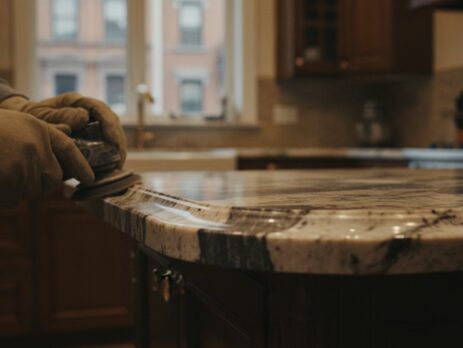
Achieving a mirror-like finish on a complex profile requires more than high-end equipment. It demands an artisan’s eye. Our master fabricators hand-polish every linear foot of stone to ensure the luster of the edge perfectly matches the brilliance of the surface. Manual intervention allows us to maintain absolute consistency across the entire project, from the expansive kitchen island to the smallest backsplash return. Machine-cut alternatives often leave subtle ridges or dull spots that compromise the stone’s elegance. By prioritizing hand-finished precision, we ensure your investment remains a source of pride for decades. This meticulous attention to detail is what defines a project’s lasting value. Understanding these nuances is a critical step in The Art of Selection: Finding a Master Granite Fabricator Near Me in 2026.
Your Journey with Richmond Stone
The creation of a custom environment is a deeply personal endeavor. Our process begins with precise digital templating to ensure a perfect fit, but the collaborative design phase is where your vision truly takes shape. We work alongside you to determine what is the best edge for granite countertops in the context of your specific cabinetry, lighting, and lifestyle. This bespoke approach ensures the final installation feels like a curated masterpiece rather than a mass-produced product. We invite you to experience these profiles first-hand. By visiting our showroom and feeling the texture of our hand-finished edges, you’ll understand why Richmond Stone remains a trusted partner for New York’s finest homes. We encourage you to schedule a design consultation at our Staten Island showroom to begin your journey toward a home of enduring elegance.
Crafting a Legacy in Stone
The journey from a raw slab to a finished architectural feature culminates in the profile you choose. The ideal edge serves as a bridge between the geological history of the material and the curated design of your home. It’s a choice that dictates both the visual weight of your surfaces and the tactile comfort of your daily life. Determining what is the best edge for granite countertops is a journey of aligning your personal aesthetic with the functional demands of your home, ensuring every curve and angle reflects your commitment to quality.
At Richmond Stone, we’ve spent over 30 years refining the intersection of nature and human skill. Our family-owned expertise ensures that every project in Staten Island, the NYC boroughs, and the NJ metro area receives the benefit of artisan hand-finished edge profiles. We invite you to move beyond the ordinary and embrace the bespoke precision that only a master fabricator can provide. Your home deserves a finish that transcends fleeting trends to offer something of lasting value. Design your masterpiece with a Richmond Stone consultation and allow us to help you realize an environment of enduring elegance.
Frequently Asked Questions
What is the most popular edge for granite countertops in 2026?
The Eased edge remains the preeminent choice for those seeking a timeless, minimalist aesthetic. Its subtle rounding provides a clean silhouette that highlights the stone’s natural beauty without distraction. Mitered edges are also increasingly favored in luxury environments to create a monolithic, structural appearance. These profiles reflect a broader movement toward architectural clarity and understated permanence in high-end residential design across the New York City metro region.
Which granite edge is the easiest to keep clean?
Minimalist profiles like the Eased or Bullnose are the most effortless to maintain. Their smooth, continuous surfaces lack the deep crevices and intricate layers found in more ornate designs, which can occasionally trap dust or cooking debris. For a high-performance kitchen, these streamlined edges allow for a simple wipe-away cleaning routine, ensuring your granite surfaces remain pristine with minimal intervention while preserving the stone’s hand-polished luster.
Does the choice of edge profile affect the price of the countertop?
The complexity of a profile directly influences the labor required during the fabrication process. While standard edges like Eased or Half Bullnose are foundational, premium profiles such as Ogee, Dupont, or Mitered require extensive hand-finishing by a master artisan. This additional time and precision are reflected in the final investment. When determining what is the best edge for granite countertops, we recommend balancing your aesthetic goals with the structural requirements of your project.
Which edge is best for preventing chips in a busy kitchen?
Rounded profiles like the Full Bullnose or Half Bullnose are superior for resisting impact-related damage. Sharp, ninety-degree angles are more vulnerable to chipping when struck by heavy cookware or kitchen tools. By introducing a radius to the edge, the force of an impact is distributed more evenly across the stone. This functional choice is particularly vital for high-traffic islands where daily activity is most concentrated and preservation is paramount.
Can I have a different edge on my kitchen island than on the perimeter?
Designers frequently utilize a more elaborate profile on a central island while maintaining a simpler edge on the perimeter counters. This technique, often called an island statement, anchors the room and establishes a clear focal point. For instance, pairing a classic Ogee edge on the island with an Eased edge on the surrounding surfaces creates a sophisticated architectural contrast. This bespoke approach ensures your kitchen feels like a curated, individual masterpiece.
What is a mitered edge, and why is it used for luxury kitchens?
A mitered edge is created by joining two pieces of stone at a precise forty-five-degree angle to create the illusion of a massive, monolithic block. This profile is a hallmark of luxury design because it allows a standard slab to appear significantly thicker and more structural. It requires exceptional skill to ensure the vein matching and seams are invisible, resulting in a permanent architectural feature that exudes quiet confidence and prestige.
How do I know if a specific edge will work with my granite’s pattern?
Harmonizing the profile with the stone’s movement is essential for visual balance. If your granite features aggressive veining or dramatic color shifts, a simple Eased or Beveled edge prevents visual clutter and lets the stone’s natural artistry shine. Conversely, stones with a more consistent, speckled pattern can benefit from an ornate Ogee or layered profile to add architectural depth. To discover what is the best edge for granite countertops for your specific slab, we suggest viewing full-scale samples in a showroom.
Is an Ogee edge too traditional for a modern kitchen?
While the Ogee edge is rooted in classical heritage, it can serve as a sophisticated bridge in transitional spaces. When paired with contemporary cabinetry and minimalist hardware, an ornate edge introduces a layer of warmth and craftsmanship that prevents a modern kitchen from feeling sterile. The key is intentionality; using a hand-finished Ogee profile on a dark, polished granite can provide a rhythmic play of light that elevates a modern environment through subtle, artistic contrast.