
How to Select the Perfect Granite Slab: 2026 Guide
What if the granite that looks perfect in a small sample feels entirely different across your finished countertop? Learning how to select the perfect granite slab starts with seeing the stone as a whole, so you can judge its color shifts, natural markings, and pattern in context.
It’s easy to fall for a striking swatch, but a countertop covers far more surface than a sample can show. Natural fissures can also be difficult to distinguish from damage, and a pattern that looks beautiful on the slab may compete with the shape of an island or the lines of a kitchen.
This guide explains how to assess a slab’s color, pattern, surface condition, and fit for your project before fabrication begins. You’ll learn what to look for across the full stone, what to discuss with a professional, and how to coordinate your choice with templating and fabrication so distinctive details appear where you want them. A careful review can help your granite selection feel considered from the first glance to the finished installation.
Key Takeaways
- Start with the finished room: consider cabinetry, flooring, backsplash, lighting, and scale when judging how granite will look.
- To learn how to select the perfect granite slab, compare its background color, secondary tones, and mineral pattern across the full surface.
- Review slab dimensions alongside project measurements so seams, cutouts, and edge profiles support the intended composition.
- Record the slab’s identifying details, preferred features, and any questions about its condition before approving the selection.
- Coordinate slab review with templating and fabrication to help align the stone’s most distinctive features with the countertop layout.
How to Select the Perfect Granite Slab by Starting With Your Finished Room
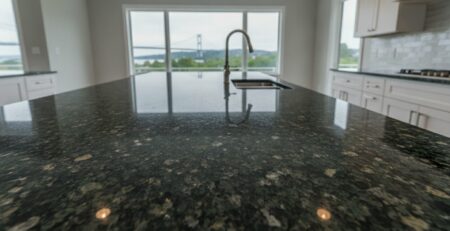
The best way to judge granite is to consider the actual slab in relation to the countertop it will become. A granite slab is the full piece of stone selected for templating and fabrication, not simply a small color sample. Learning how to select the perfect granite slab means picturing its pattern across your island and perimeter counters, where natural variation meets the lines and finishes of the room.
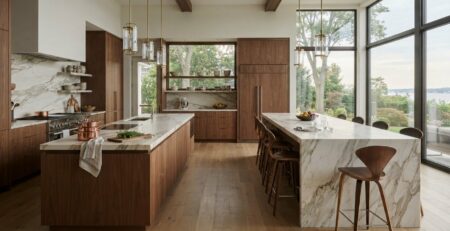
Look at the cabinetry, flooring, backsplash, and lighting together. Pale cabinetry and a quiet backsplash may suit a stone with pronounced movement, while patterned floors or strong cabinet grain may call for a more restrained pattern. Room scale matters, too: a bold pattern may make a generous island a focal point, but look busy across a compact counter. Granite’s natural composition contributes to its distinctive character; What is Granite offers background on its formation and properties.
For a visual overview of granite selection, watch this video:
What should you decide before visiting a granite slab showroom?
Prepare a simple project reference. Record the countertop dimensions, surfaces you plan to cover, sink locations, and any unusual cutouts. Bring cabinet, flooring, and backsplash samples if available, or clear photographs taken in good light. Decide whether you prefer a quiet pattern or more pronounced movement. These details help you compare stones against the room and intended layout instead of choosing by color alone.
Why does the full slab matter more than a small sample?
A sample can suggest the dominant color, but it may not show how that color and pattern are distributed across the full stone. Veining may gather in one area, while mineral features change in scale or density elsewhere. View the actual slab under clear lighting. Step back to take in its overall pattern before moving closer to inspect individual details.
Natural variation is part of granite’s character, not automatically a defect. Still, markings that concern you deserve a closer look. Ask a stone professional to assess suspected cracks, chips, or other condition issues and explain whether they may affect your planned countertop. Raise these questions before final approval, while the slab and project layout can still be considered together.
How to Evaluate Granite Color, Veining, and Natural Features
Use the same inspection sequence for every candidate: step back, scan the full slab, then move closer to examine individual areas. This helps keep one striking detail from overshadowing the overall composition. Notice where the pattern is concentrated, where it becomes quieter, and how mineral features travel across the stone.
Describe what you see specifically. Instead of calling a slab simply “light,” note whether its background reads as creamy white, warm gray, or another tone. Then identify its secondary colors and how prominent they are. A pale field with fine charcoal flecks will feel different from a similar field crossed by broad, warm veins. These distinctions make it easier to compare options and explain your preferences. For broader material context, consult the Natural Stone Institute’s industry standards for granite.
How can you compare granite color and pattern confidently?
Whenever possible, place cabinet or finish samples beside each candidate slab. View them together under clear lighting, then consider whether the pattern feels balanced across the countertop area it will serve. A bold feature may create a focal point, while a dense, evenly distributed pattern may look different across a long run of counters. Describe colors by their undertones and relationships, not just with broad light-or-dark labels.
Natural variation is the distinct pattern of colors and mineral features formed within the stone, not by itself evidence of a defect. The stone’s areas do not need to look identical for the slab to feel visually coherent. The goal is to understand its character and how that character will appear across the planned surface.
What natural features should you ask about?
Look closely for fissures, pits, filled areas, and irregularities. Don’t assume every mark is damage, or that every natural feature is harmless. Point out anything that gives you pause and ask a stone professional to explain what it is and whether it matters for your project. Location matters: note features near a sink, countertop edge, seam, or cutout, where fabrication decisions may affect the finished composition.
- Note the feature’s location and approximate size.
- Ask whether it is natural, filled, or a condition that needs further review.
- Confirm how it relates to the planned countertop layout before approval.
For homeowners considering granite countertops, discussing these observations during material selection brings visual preferences and practical questions into the same conversation. A professional review of the stone alongside the planned project can help clarify details before templating and fabrication. Explore granite countertop planning as you consider the next steps.
Matching Granite Slabs to Countertop Layout & Fabrication
A slab’s beauty must work with the dimensions and construction of the finished countertop. Before approving a piece, have the project measurements reviewed alongside the slab’s usable dimensions and pattern. The goal is not simply to determine whether the stone can be cut, but to understand how its most distinctive features will appear across each surface.
The slab quantity required depends on the project dimensions and fabrication layout, so don’t assume one slab will cover the entire countertop. Ask the fabricator to explain the proposed layout, including where seams may fall and how the pattern will meet across adjoining sections. The Natural Stone Institute’s selection guide offers further context on the design considerations involved in choosing stone.
Will one granite slab cover the entire countertop?
There isn’t a reliable slab count without reviewing measurements, slab dimensions, and planned cuts together. Corners, separate counter runs, and the direction of the pattern can all affect the layout. Before final approval, ask the fabricator to show where seams are expected and how visual continuity will be handled between adjoining pieces. This lets you assess the composition, not just the raw material.
How do seams, edges, and cutouts affect slab selection?
Sinks, cooktops, corners, and exposed edges influence which parts of the slab remain visible and where cuts must be made. Discuss whether prominent veining or other natural patterning can be positioned intentionally around a focal area, and how the chosen edge profile may frame the stone. If you’re considering how these decisions fit into the wider process, read this custom countertop craftsmanship guide.
Use this comparison to organize the conversation before fabrication:
| Layout consideration | Question to ask | Decision to confirm |
|---|---|---|
| Slab dimensions and project measurements | How does the proposed layout use the selected slab? | Whether the layout and required material are understood before approval |
| Seams and adjoining sections | Where will seams fall, and how will the pattern align? | Seam locations and the intended visual relationship between sections |
| Sink, cooktop, and other cutouts | Which visible features will remain around each opening? | Cutout locations and any pattern preferences near them |
| Exposed edges and edge profile | How will the selected profile frame the stone? | The edge treatment and its fit with the overall design |
Knowing how to select the perfect granite slab includes reviewing the proposed composition with the fabricator before templating and cutting begin. Clear decisions at this stage connect the stone’s natural pattern to the finished countertop with care.

What to Check Before You Approve a Granite Slab
Before fabrication begins, make sure the selected slab and the intended layout are clearly documented. A few careful checks can keep visual preferences, condition questions, and project details aligned. This final review is part of how to select the perfect granite slab with confidence: clarify what you’re approving and record any important questions.
What questions should you ask before approving the slab?
Ask which visible features are natural and whether any need particular care or consideration during fabrication. Confirm how the selected stone will be matched to the project measurements, sink or cooktop cutouts, seams, and edge details. If something remains unclear, ask who can address it and how concerns raised before fabrication will be reviewed. The answers should relate to your chosen stone and planned countertop, not just provide general guidance.
Handling, sealing, and maintenance questions also deserve stone-specific answers. Ask what care the selected material requires and whether any observed feature affects those recommendations. Don’t assume that advice for another granite slab, or for another stone, necessarily applies to yours.
How should you document your final selection?
Keep a concise selection record and review it with the project team before fabrication. Include:
- Slab identification: Record the identifier or other selection details provided by the supplier.
- Visual preferences: Note the features you want to emphasize and any areas you discussed with the stone professional.
- Photographs: Capture the full slab and closer views of specific features, if permitted.
- Layout decisions: Write down the agreed approach to measurements, seams, cutouts, and edge details.
- Open questions: List anything still needing clarification, including care guidance or concerns about a particular feature.
Before giving final approval, confirm that the selected material and intended layout match this record. If details have changed, ask the team to reconcile them before fabrication proceeds. Richmond Stone provides material sourcing, templating, fabrication, and professional installation, allowing homeowners to discuss slab selection in the context of the project’s next stages. Learn more through the countertop services overview.
For a considered next step, explore Richmond Stone’s countertop services.
Choose Your Granite Slab With a Fabrication Partner
Choosing a slab is one part of creating a granite countertop that feels considered in the finished room. Bring together what you’ve reviewed: how the stone relates to cabinetry and finishes, its pattern across the full slab, questions about natural features, and the planned countertop layout. This complete view is central to how to select the perfect granite slab, because the stone’s character and fabrication plan need to work together.
How does professional guidance support a better slab choice?
A fabrication partner can review slab dimensions alongside the planned layout and help clarify practical questions before work begins. Discuss how seams, cutouts, and edges may affect the visible pattern, and confirm how the selected material will move through templating and fabrication. This connects the slab you chose with the countertop it is intended to become.
Richmond Stone is a family-owned business with more than 30 years of experience. Its services include stone sourcing, templating, fabrication, and professional installation. Coordinating these stages gives homeowners the opportunity to discuss the material and its intended layout with the project team as the work progresses, rather than treating slab approval as separate from the finished result.
For additional perspective, explore the granite fabricator selection guide and the natural stone guide. They offer further reading on choosing fabrication expertise and appreciating the character of natural stone.
What is the next step for a granite countertop project?
Before discussing your project, gather any available measurements, cabinet or finish samples, and notes about preferred patterns or features that raised questions. Include sink and cooktop locations, anticipated seams, and edge details if you know them. You don’t need every decision settled. A clear list of priorities and open questions can make the conversation more useful.
Homeowners in Staten Island, New York City, and the New Jersey metro area can contact Richmond Stone about granite countertops to discuss their project. Bring the details you have, then confirm what else the project team needs to review before selection, templating, and fabrication proceed.
A considered result pairs granite’s natural character with careful craftsmanship. Selection gives the stone a place in the design, and fabrication brings that choice into the room.
Make Your Granite Selection With Confidence
Choosing a slab is about more than finding a color you love. A satisfying choice reflects the finished room, reveals its character across the full stone, and suits the countertop’s measurements, seams, and cutouts. Knowing how to select the perfect granite slab means weighing those visual and practical details together, then resolving questions about the stone before fabrication begins.
The process is easier when the project team can connect material sourcing, templating, fabrication, and professional installation. Richmond Stone is a family-owned business with more than 30 years of experience, serving homeowners across Staten Island, New York City boroughs, and the New Jersey metro area.
If you’re considering granite countertops, bring your measurements, finish references, and questions to the conversation. Discuss your granite countertop project with Richmond Stone and take the next step toward a surface shaped by the stone’s natural character and thoughtful craftsmanship.
Frequently Asked Questions
How do I choose the best granite slab for my kitchen?
Choose a granite slab by comparing its full appearance with your kitchen’s finishes and layout. Consider how its background color and mineral pattern relate to your cabinets, flooring, backsplash, and lighting. View the actual slab when practical, and note any features you want clarified. Before approval, discuss project measurements, seams, sink and cooktop cutouts, and edge details with the fabricator. This is the practical foundation for how to select the perfect granite slab.
Should I choose a granite slab in person?
Viewing the actual slab in person, when practical, gives you a better sense of its overall pattern and natural variation. A small sample can suggest a color direction, but it may not show how veins or mineral features are distributed across the full piece. Ask how your selection will be recorded and reviewed against the countertop layout. If you can’t view it in person, ask what documentation is available before confirming your choice.
What should I look for when inspecting a granite slab?
Start by stepping back to assess the slab’s overall color and pattern, then examine areas closely, especially those likely to remain visible in the finished countertop. Note irregularities or features near planned edges, seams, sinks, and cutouts. Record anything you want explained, and ask a stone professional to assess it in context. Don’t assume every natural mark is damage, or that every feature is inconsequential without review.
How can I tell if a granite slab has a crack or a natural fissure?
Ask a stone professional to assess any line or irregularity you’re unsure about, since appearance alone may not establish its nature or importance to fabrication. Point out exactly where it appears and whether it falls near a planned edge, seam, sink, or cutout. Ask what it means for your project and get clarification before approving the slab. Avoid treating every visible line as a defect or assuming it has no significance.
How many granite slabs will my countertop need?
The amount of granite required depends on your project measurements, slab dimensions, and fabrication layout. Corners, cutouts, seams, and the direction or placement of the pattern can affect how the stone is used. A general estimate can’t confirm the needs of a specific kitchen. Ask the fabricator to review the measurements and proposed layout with you before settling on a quantity, and clarify how seams and pattern continuity will be handled.
Can I choose where the pattern appears on my granite countertop?
You can discuss which areas of the pattern you’d like to emphasize, but placement depends on the slab’s natural features, countertop dimensions, and fabrication plan. Ask the fabricator how the pattern may align across adjoining sections and what will remain visible around seams, edges, and cutouts. Review the proposed layout against the actual slab and project measurements before fabrication. This helps set clear expectations without assuming every feature can be positioned exactly as requested.
What should I ask a granite fabricator before selecting a slab?
Ask how the slab will be matched to your measurements and how the team plans to address seams, cutouts, and edge details. Point out visible features you want assessed, and ask whether they have implications for the planned layout. Confirm how your slab choice and layout decisions will be documented, and request care guidance specific to that stone. Clear answers before fabrication help align your expectations with the countertop being made.