
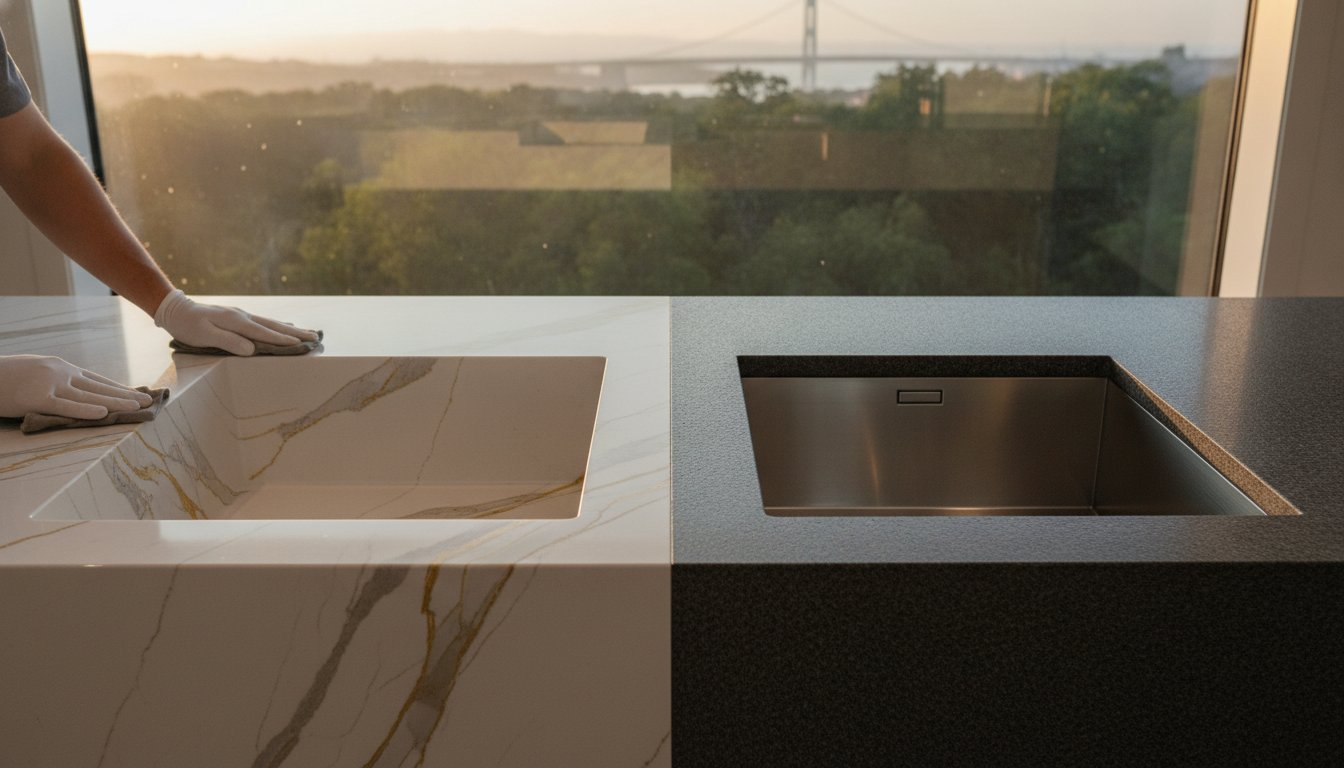
Integrated Sink vs. Undermount Sink: The Master Artisan’s Guide to Seamless Design
A single, irreversible cut into a slab of rare stone or architectural quartz defines the soul of a kitchen for decades. When you weigh the merits of an integrated sink vs undermount sink, you’re choosing between the quiet majesty of a continuous surface and the proven versatility of a classic installation. It’s natural to feel a sense of trepidation; the visual allure of a seamless basin is often tempered by the fear that a minor accident could compromise your entire countertop investment. You want a space that mirrors a high-end NYC aesthetic without inheriting a maintenance burden that disrupts the sanctuary of your home.
This guide serves as your master artisan’s perspective on these two distinct philosophies of design. You’ll discover the definitive architectural and functional differences that determine how these materials age within your environment. We’ll examine the specific lifespans of each style, provide expert advice on material compatibility for quartz and granite, and address the reality of grime accumulation versus the risk of irreversible chips. By the end, you’ll possess the confidence to select a sink that doesn’t just fit your cabinetry, but honors the legacy of the natural stone you’ve chosen for your home.
Key Takeaways
- Contrast the monolithic silhouette of a custom-fabricated basin with the modular elegance of a clamped design to define your home’s architectural soul.
- Evaluate the nuanced benefits of an integrated sink vs undermount sink, prioritizing either the peerless hygiene of a grout-free surface or the material versatility of a separate basin.
- Gain insight into the master artisan’s techniques, such as the mitered apron, and how they harmonize with materials like Quartz and Granite to elevate the final aesthetic.
- Secure your stone renovation investment by understanding the long-term maintenance cycles and resale considerations associated with bespoke architectural features.
- Learn how precision templating and expert fabrication transform raw slabs into perfectly realized elements that honor the heritage and permanence of your space.
Defining the Architectural Silhouette: Integrated vs. Undermount Sinks
The silhouette of a kitchen is defined by its transitions. Choosing between an integrated sink vs undermount sink is a decision that defines the room’s gravity. An integrated sink is meticulously fabricated from the same slab as your countertop, resulting in a continuous, monolithic surface that feels carved from a single block of earth. Conversely, the undermount sink serves as a separate basin, available in stainless steel, porcelain, or stone, which is clamped with surgical precision beneath a custom countertop cutout. This distinction isn’t merely technical; it’s an architectural decision that alters how light and space interact with your surfaces.
Understanding sink materials and history reveals that while the basin has evolved from simple stone troughs to high-tech alloys, the architectural integration remains the ultimate expression of bespoke design. Within the Staten Island luxury aesthetic, we’re seeing a distinct shift toward seamlessness in 2026. Homeowners are moving away from modular components, favoring environments that feel permanent and intentional. The monolithic appeal of integrated designs represents the precise intersection where the raw power of nature meets the calculated refinement of human skill.
To visualize the physical differences between these installation methods, consider this technical overview:
The Visual Language of Seamlessness
Minimalism isn’t just about less; it’s about the absence of visual noise. An integrated sink removes the distracting lip or seal that often breaks the visual plane of a premium slab. Through master stone fabrication, the transition from horizontal surface to vertical basin wall becomes a study in fluid geometry. This choice dictates the entire flow of a kitchen island, transforming a functional workstation into a sculptural centerpiece that anchors the room. It’s a statement of permanence. Every line is intentional, ensuring that the eye moves across the stone without interruption, highlighting the natural veining rather than the hardware.
The Functional Stakes for NYC Homeowners
Life in the NYC metro area demands a unique balance of form and endurance. When weighing an integrated sink vs undermount sink for a high-traffic kitchen, the functional stakes differ. Integrated sinks offer a grout-free environment that simplifies water management and hygiene by eliminating the crevices where bacteria often hide. However, the choice must be informed by a deep respect for natural stone heritage. Consider these primary functional drivers:
- Hygiene: Seamless transitions prevent the accumulation of moisture and food particles.
- Maintenance: Undermount basins are more easily replaced if the material is damaged over time.
- Aesthetic Longevity: Integrated designs offer a timeless, sculptural look that resists fleeting trends.
While seamlessness offers a modern edge, the undermount style provides a safety net of material flexibility. It allows for easier basin replacement should your lifestyle or aesthetic preferences evolve over the decades. Whether you’re outfitting a compact Manhattan galley or a sprawling suburban New Jersey kitchen, the choice remains a personal reflection of how you interact with the natural elements in your home.
The Integrated Sink: A Masterpiece of Custom Fabrication
An integrated sink represents the zenith of stone craftsmanship, where the boundary between surface and vessel dissolves entirely. When comparing the integrated sink vs undermount sink, the former stands as a testament to custom engineering and architectural intent. The allure of a grout-free environment is undeniable; it offers a sanctuary of hygiene where bacteria and moisture find no sanctuary in seams or silicone beads. This monolithic design isn’t merely a functional choice. It’s an emotional investment in the prestige of a custom-carved basin that feels as though it was born from the raw earth as a single, unified piece.
The mitered apron technique is the secret behind this seamless aesthetic. In high-end quartz and quartzite fabrication, master artisans cut the stone edges at precise 45-degree angles. These edges are then joined with high-strength, color-matched epoxy resins to create the illusion of a solid, deep-carved block. While highly veined natural marble possesses a haunting beauty, its inherent fragility and porosity often make it a secondary choice for this rigorous application. To explore how these materials can be tailored to your specific vision, you may wish to view our collection of bespoke kitchen surfaces.
The Technical Brilliance of Quartz Fabrication
Modern quartz fabrication in NYC has revolutionized the integrated design. Engineered stone provides the structural stability required for the flat, integrated bottoms that natural stone sometimes struggles to support without reinforcement. Because quartz is manufactured with consistent pigments and resins, fabricators can achieve perfectly matched veining that flows from the countertop down into the basin walls. This continuity creates a visual rhythm that is impossible to replicate with separate components. High-strength epoxy resins ensure these joints remain waterproof and invisible, maintaining the stone’s integrity through decades of temperature shifts and daily use.
Pros and Cons of the Monolithic Design
The primary advantage of the monolithic design is its unmatched aesthetic continuity and the effortless “wipe-into-the-sink” cleaning experience. There’s no lip to catch crumbs and no sealant to discolour over time. However, homeowners must consider the “Replacement Paradox.” Because the sink is an extension of the slab, a significant chip or crack in the basin could potentially put the entire countertop at risk of replacement. Expert artisans mitigate this by ensuring the stone is handled with reverence during every stage of the process.
- Pro: Seamless transitions eliminate the visual clutter of traditional sink rims.
- Con: Repairs are significantly more complex and costly than replacing a standard basin.
- Expert Tip: Always verify the slope of a custom-fabricated stone sink. Proper drainage requires a subtle, calculated pitch that only a master fabricator can execute with precision.
According to industry standards for 2026, bonding seams on stone integrated sinks may require inspection and minor refilling every 2 to 5 years. This small act of stewardship ensures the architectural silhouette remains as pristine as the day it was installed.
The Undermount Sink: Versatility Refined by Precision
While integrated basins offer a sculptural silhouette, the undermount sink remains the enduring choice for those who value material freedom and long-term flexibility. It’s currently the most requested style for custom countertops in Staten Island because it balances high-end aesthetics with practical longevity. In the ongoing debate of an integrated sink vs undermount sink, the undermount excels by allowing you to pair a Granite countertop with a heavy cast iron or artisanal hammered copper basin. This modularity ensures your stone remains the hero, while the sink serves as a replaceable, high-performance tool that can be updated as your needs evolve.
One of the most compelling arguments for this style is the ease of future-proofing. Unlike the integrated counterpart, which is permanently bonded to the slab, an undermount can be swapped out without compromising the structural integrity of your stone. Many homeowners fear the “grime” often associated with older installations, but it’s a concern that modern technology has largely resolved. By 2026, anti-microbial silicone sealants and precision-cut edges have transformed the interface between stone and steel into a clean, tight boundary that resists moisture and bacteria. This ensures your kitchen stays as hygienic as it is beautiful.
Understanding the Three Reveal Styles
The relationship between the stone edge and the sink rim is where the master fabricator’s skill is most visible. There are three primary reveal styles to consider:
- Positive Reveal: The countertop edge sits back, exposing a small portion of the sink rim. It’s easy to clean but adds a visual break to the surface.
- Negative Reveal: The stone slightly overhangs the sink walls. This is the preferred choice for a minimalist look, as it hides the rim and allows you to wipe debris directly into the basin.
- Flush Reveal: This is the fabricator’s ultimate test. The stone and sink walls are perfectly aligned, creating a smooth transition that requires surgical precision during the templating phase.
Durability in High-Usage Environments
For family-centric homes in New Jersey, the structural demands on a sink are significant. Heavy cast iron basins are often the preferred choice for their heat retention and classic look, but they require robust support systems. We utilize high-strength sink clips and professional bracing to ensure the basin remains immovable, even when filled to capacity. Matching the sink depth to your ergonomic needs is equally vital. A deeper basin might accommodate larger cookware, but it requires the fabricator to account for the additional weight and cabinet clearance. This level of detail ensures that your kitchen remains a functional masterpiece for generations, honoring both the material and the person who uses it.

The Critical Comparison: Maintenance, Durability, and ROI
A countertop is a legacy. When deciding between an integrated sink vs undermount sink, you’re weighing the daily ritual of maintenance against the long-term return on your investment. Integrated stone basins offer a seamless experience that eliminates the traditional grime of a silicone joint, yet they require a master’s eye for periodic stewardship. The permanence of an integrated stone vessel offers a sculptural finality that defines a home, while the adaptability of an undermount stainless steel basin ensures a kitchen can evolve with its inhabitants. While the integrated option removes the need for perimeter scrubbing, its bonding seams may require a professional refill every two to five years to maintain their invisible, waterproof integrity.
Resale value in the NYC luxury market is often a balance of trend and timelessness. A custom integrated sink can be a breathtaking selling point that signals uncompromising quality to a discerning buyer. However, it can also present a “Replacement Paradox” if that buyer has different functional needs or aesthetic tastes. Conversely, the undermount sink is the recognized gold standard for material versatility, offering a level of practicality that many future owners find reassuring. It’s a choice between the avant-garde and the enduringly practical.
The “Chip and Crack” Reality Check
The most common concern for any homeowner is the accidental impact of a heavy cast iron pot against the sink’s edge. In an undermount configuration, a chip is often a localized issue that a skilled technician can repair with resin without disturbing the surrounding slab. If the basin itself is severely compromised, it can often be replaced independently. An integrated sink presents a more complex challenge. Because the basin is an extension of the countertop itself, a significant structural crack requires master-level stone restoration and meticulous color matching to hide the trauma. For such intricate work, we recommend consulting experienced granite fabricators who understand the geological nuances of the material and the resins required for a flawless mend.
Cost vs. Craftsmanship
Choosing an integrated design is a commitment to artisanal labor. These features typically command a 30% to 50% premium in fabrication costs due to the precision required for mitered joints and hand-finished drainage slopes. The undermount style carries its own costs, including the procurement of a high-end basin and professional cutout fees, but it remains the more cost-effective path for high-traffic environments. Timeless materials like Marble, which possess a softer profile than Quartz, often favor the undermount style to protect the stone’s edges from the rigors of daily use. To ensure your investment matches your lifestyle and aesthetic goals, speak with our master artisans about the best configuration for your next renovation.
Realizing Your Vision: The Richmond Stone Artisanal Process
Richmond Stone has spent over 30 years refining the relationship between raw geology and refined architecture within the NYC metro area. Our family-owned heritage isn’t just a timeline; it’s a commitment to the permanence of every slab we touch. When you face the decision of an integrated sink vs undermount sink, you aren’t just choosing a plumbing fixture. You’re selecting a lifestyle. We position ourselves as the guardian of your home’s natural elements, ensuring that the intrinsic beauty of your chosen stone is preserved through every cut, polish, and joint.
The journey from a raw slab to a finished masterpiece begins at our Arthur Kill Rd showroom. Here, the subtle veining of Quartzite and the deep resonance of Granite are on full display, allowing you to touch and feel the materials that will define your sanctuary. Our master fabricators bring a level of poise and technical depth to the process that transcends simple installation. We treat every project as a unique, curated masterpiece, ensuring that the final realization of your kitchen or bathroom honors both the material’s history and your personal vision of luxury.
The Importance of Professional Templating
Precision is the foundation of elegance. We utilize advanced digital templating to capture the exact nuances of your space, ensuring that your custom kitchen cabinets are engineered to support the substantial weight of stone sinks. This is particularly critical for integrated designs, where the basin and countertop function as a single unit. Our commitment to on-site precision means that every transition is handled with a smooth, logical progression, from the initial sourcing to the final delivery.
Our expertise extends beyond the basin. We offer a holistic approach to stone design, allowing for the seamless integration of matching backsplashes, floor tiles, and fireplace surrounds. This ensures a cohesive visual language throughout your home. Whether you’re seeking a minimalist Manhattan aesthetic or a timeless Staten Island renovation, our process is designed to eliminate uncertainty and replace it with the quiet confidence of master craftsmanship. We don’t just install surfaces; we build the stability your home deserves.
Schedule Your Design Consultation
Creating an enduring environment requires more than a purchase; it requires a partnership. We invite you to step into our world and experience the artistry of raw stone slabs firsthand. Our team provides personalized guidance for both residential and commercial projects, helping you navigate the technical and aesthetic considerations of an integrated sink vs undermount sink. We believe that true quality isn’t rushed. It’s the result of careful consideration, time-honored techniques, and a deep respect for the natural world.
Begin your transformation with a Richmond Stone consultation and discover how our master artisans can elevate your next project. From the first template to the final installation, we stand as your trusted partner in the creation of a legacy that transcends fleeting trends.
Crafting Your Enduring Architectural Legacy
Choosing between the monolithic silhouette of a custom-carved basin and the modular precision of a separate vessel is a defining moment in any renovation. It’s a decision that balances the pursuit of a seamless, grout-free sanctuary with the practical need for material versatility and future-proofing. In the final assessment of an integrated sink vs undermount sink, your choice should reflect the rhythm of your daily life and your reverence for the natural stone that anchors your home. Whether you prioritize sculptural continuity or the adaptable elegance of a classic installation, the result must be a curated masterpiece of individual expression.
As master artisans in granite, marble, and quartz fabrication, Richmond Stone has spent over 30 years as a family-owned guardian of high-end design. We serve all five boroughs and the NJ Metro area with a commitment to white-glove installation and on-site precision. We invite you to move beyond the ordinary and embrace the intrinsic artistry of the natural world. Elevate your kitchen with a custom stone consultation from Richmond Stone and begin the journey toward a space that honors heritage and uncompromising quality. Your vision deserves the stability and permanence of a master’s touch.
Frequently Asked Questions
Can an integrated sink be made from any natural stone material?
While nearly any stone can be shaped by a master, we primarily recommend Quartz or dense Quartzite for integrated designs. Softer materials like Limestone or certain Marbles may struggle with the structural demands of a basin. These natural elements are more susceptible to thermal shock and staining, which can compromise the monolithic silhouette over time. Selecting a material with high density ensures your vessel remains as stable as the day it was installed.
How do you clean the seam between an undermount sink and the countertop?
Cleaning the interface of an undermount sink requires a gentle, steady hand and a soft-bristled brush. You should use a pH-neutral cleaner specifically formulated for natural stone to avoid etching the surface. Regular attention prevents the accumulation of moisture and organic matter in the silicone bead. Modern antimicrobial sealants help maintain a sanitary boundary, ensuring the transition between stone and steel remains pristine and hygienic for decades.
What happens if an integrated sink gets a major crack or chip?
A significant chip or crack in a stone basin demands the expertise of a professional restoration artist. We utilize color-matched resins to mend the trauma, though the invisibility of the repair depends on the stone’s veining and the severity of the damage. If the structural integrity is lost, the “Replacement Paradox” mentioned earlier may necessitate replacing the entire countertop section. This highlights the importance of choosing durable materials for high-traffic environments.
Is an integrated sink more expensive than an undermount sink?
An integrated sink involves a higher investment in artisanal labor compared to a standard installation. The complex mitered joints and hand-finished drainage slopes require significant time and precision from the fabricator. When comparing an integrated sink vs undermount sink, you’re weighing the cost of bespoke craftsmanship against the modular convenience of a separate basin. The final value lies in the sculptural permanence that an integrated design brings to your architectural vision.
Are integrated sinks hygienic enough for food preparation?
Integrated sinks represent the pinnacle of kitchen hygiene due to their seamless, grout-free construction. Without a traditional rim or silicone joint, there are no crevices where bacteria, mold, or food particles can hide. This makes them exceptionally well-suited for food preparation areas where cleanliness is a priority. The continuous surface allows you to wipe debris directly into the basin, maintaining a sanctuary of health within your home.
Do undermount sinks require special support for heavy materials like cast iron?
Heavy materials like cast iron or fireclay require a robust support system to ensure long-term stability. We utilize high-strength sink clips and professional bracing to distribute the weight across the cabinetry rather than relying solely on the stone’s adhesive bond. This meticulous approach prevents the basin from shifting or dropping over time. Proper support is a non-negotiable step in the artisanal process, protecting both the vessel and the surrounding countertop.
Which sink style is better for a small NYC apartment kitchen?
For a compact Manhattan galley, an undermount sink is often the more practical choice for daily endurance and material flexibility. It maximizes your usable countertop real estate while offering a safety net for easier basin replacement. However, if your goal is to create a high-end, minimalist aesthetic in a powder room or wet bar, the sculptural appeal of an integrated design can make a small space feel like a curated masterpiece.
Can I switch from an undermount to an integrated sink later?
It’s not possible to transition from an undermount to an integrated sink once the countertop is installed. An integrated basin must be planned and fabricated alongside the slab to ensure the mitered joints and veining are perfectly aligned. This decision is a foundational part of the design journey that must be finalized during the templating phase. If you’re debating the integrated sink vs undermount sink choice, it’s essential to commit to your vision before the first cut is made.