
Travertine vs Marble Countertops: A Master Artisan’s Guide to Timeless Stone (2026)
Could the very “imperfections” you fear in a natural slab actually be the secret to a home that grows more beautiful with every passing decade? When you begin the debate of travertine vs marble countertops, you’re doing more than picking a color palette. You’re deciding whether your home’s legacy should be written in the dramatic, sweeping veins of metamorphic rock or the warm, organic textures of mineral springs. It’s natural to feel a sense of hesitation. You want the prestige of a luxury surface, but the fear of permanent etching or a “too rustic” appearance often stalls the vision of a perfect kitchen.
We understand that a countertop is a significant commitment to your daily environment and your home’s future resale value. This artisan’s guide clarifies the nuanced geological and functional differences between these two legendary stones, ensuring you choose a material that aligns with your lifestyle. You’ll gain a clear understanding of how modern 2026 sealing technologies and specific finishes, such as honed or tumbled textures, can transform these raw elements into durable masterpieces. We’ll preview the maintenance realities and aesthetic possibilities that allow both travertine and marble to thrive in even the most contemporary spaces.
Key Takeaways
- Understand the distinct origins of these legendary stones, from marble’s metamorphic strength to travertine’s sedimentary warmth, to choose a material that resonates with your home’s narrative.
- Compare the visual impact of travertine vs marble countertops by exploring how polished lusters and organic matte finishes interact with the unique lighting of your living space.
- Learn how to navigate the “etching enigma” and utilize 2026 sealing advancements to protect your investment against common household acids.
- Align your stone choice with your daily rhythms, whether you require the cool, crisp theater of marble for entertaining or the resilient, lived-in feel of textured travertine.
- Recognize why master-level fabrication and precision templating are essential for ensuring these delicate natural elements become a permanent legacy in your home.
The Geological Genesis: Understanding the Heritage of Marble and Travertine
To appreciate the nuanced choice between travertine vs marble countertops, one must first respect the deep history etched into their very fibers. While both stones are siblings within the broader calcium carbonate family, their geological journeys diverge in profound ways. Marble is a metamorphic masterpiece, born from limestone that has been subjected to the crushing heat and pressure of the earth’s mantle. Travertine, conversely, is a sedimentary legacy, formed through the rapid precipitation of calcium carbonate at the mouths of geothermal hot springs or within the quiet darkness of limestone caves. This fundamental difference in origin dictates how each stone behaves under a craftsman’s tool and how it ultimately performs in a high-end kitchen.
Metamorphism and the Birth of Marble Veining
The iconic veining that defines a premium marble slab is the result of mineral impurities like clay, silt, or iron oxides that were present in the original limestone. Under intense subterranean heat, these minerals move and recrystallize, creating the flowing ribbons of color that designers and homeowners cherish. This process eliminates the stone’s original porosity, resulting in a dense, crystalline structure that allows marble to achieve a breathtaking, mirror-like polish. Metamorphism is the catalyst for marble’s enduring architectural prestige.
Sedimentation and the Organic Texture of Travertine
Travertine’s soul is found in its texture. As mineral-rich waters move, they deposit layers of stone, often trapping gas bubbles that eventually become “vugs” or characteristic pits. Understanding Travertine Formation reveals how these voids are not flaws, but rather the fingerprints of the earth’s thermal activity. When we handle these materials at our Staten Island fabrication facility, the specific cut of the slab determines the final aesthetic narrative:
- Vein-cut: Slicing across the bedding layers to reveal linear, striped patterns that showcase the passage of time.
- Cross-cut: Slicing parallel to the layers to expose flowery, circular motifs and a more uniform surface.
This sedimentary process ensures that every slab of travertine tells a specific environmental history. It offers an organic warmth that feels deeply connected to the natural world, providing a counterpoint to the more theatrical presentation of marble. Choosing between them requires an appreciation for how these ancient processes manifest in your modern living space.
Visual Poetics: Comparing the Aesthetic Impact of Each Stone
The aesthetic dialogue between travertine vs marble countertops is a study in light, shadow, and sensory depth. For the 2026 homeowner, this choice often mirrors the broader design shift toward ‘Quiet Luxury’ and ‘Warm Minimalism.’ While marble has long been the theater of dramatic veining and high-gloss reflection, travertine offers a more grounded, tactile experience. Selecting between them isn’t just about color; it’s about how the surface communicates with the surrounding architecture and the natural light of your specific environment.
Marble: The Statement of Classical Grandeur
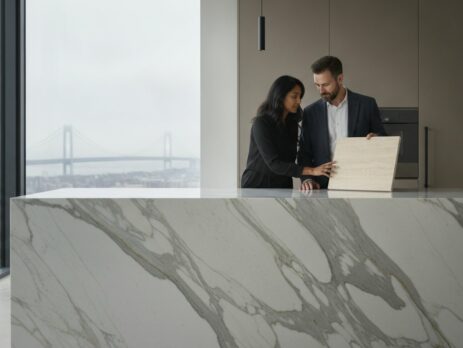
Marble remains the quintessential symbol of architectural prestige. In the high-ceilinged brownstones of Brooklyn or sleek Manhattan penthouses, the sweeping movement of high-contrast veining creates an immediate focal point. This stone’s versatility is unmatched, effortlessly anchoring traditional, transitional, or hyper-modern spaces. Because marble is dense and crystalline, it accepts a mirror-like polish that reflects light with brilliant clarity, making smaller kitchens feel expansive and luminous. To understand how these slabs are curated for such environments, you can explore our Natural Stone: A Master Artisan’s Guide.
Travertine: The Allure of Earthy Sophistication
Travertine offers an organic warmth that marble’s cooler palette sometimes lacks. Modern design has embraced ‘filled and honed’ travertine, a process where the stone’s natural pores are meticulously sealed with color-matched resin and ground to a smooth, velvet-like finish. This creates a surface that feels ancient yet looks remarkably contemporary. The Geological Genesis of Travertine results in rhythmic, linear patterns that pair beautifully with natural wood cabinetry and blackened steel accents. Varieties such as ‘silver’ travertine, with its smoky grays and hints of pewter, or ‘walnut’ travertine, with its deep coffee-colored layers, provide a sophisticated alternative to the more common beige varieties.
Light behaves differently on these surfaces. Marble reflects it, highlighting every sharp edge and clean line in a display of crystalline brilliance. Travertine, conversely, absorbs and softens light, diffusing the glow across its matte face to create a welcoming, lived-in atmosphere that feels permanent and stable. If you’re ready to see how these stones interact with your specific vision, we invite you to view our curated collection and experience the tactile nature of these legendary materials firsthand. Each slab we house is a unique piece of history, waiting to be refined into your home’s next legacy.
The Resilience of Natural Stone: Durability and Maintenance Realities
Evaluating the practicalities of travertine vs marble countertops requires moving past the common myth that these stones are fragile. They aren’t. They are simply reactive. Both materials occupy a similar space on the Mohs scale, typically ranging from 3 to 4, which makes them softer than granite or engineered quartz. This relative softness is what allows artisans to carve the intricate edge profiles and sophisticated details that define high-end cabinetry. However, because they are composed of calcium carbonate, they share a vulnerability to acids. According to Industry Standards for Natural Stone, these materials require a specific understanding of mineral composition to ensure their longevity as a home legacy.
The “Etching Enigma” is often the greatest concern for gourmet chefs. Etching occurs when acidic substances like lemon juice or red wine dissolve the surface minerals of the stone. It’s not a stain that sits on top; it’s a physical change in the stone’s texture. While marble’s dense structure might show a crisp, pale mark, travertine’s more textured, porous surface can sometimes mask these interactions more effectively. Many homeowners in the luxury market now embrace the “patina perspective,” viewing these marks as a storied record of a life well-lived. This organic aging process creates a sense of permanence that synthetic materials can’t replicate.
Protecting Your Investment: Sealing and Daily Care
Preserving the pristine state of your stone begins with high-grade impregnating sealers. These don’t sit on the surface like a plastic film. Instead, they penetrate the pores to repel liquids from within. Daily care should remain simple and intentional. Use pH-neutral cleaners and soft cloths while avoiding abrasive chemicals that strip the stone’s natural oils. Etching is a chemical reaction that alters the stone’s surface finish rather than a simple pigment stain.
Longevity in High-Traffic NYC Kitchens
In the bustling environments of Manhattan or Staten Island, the performance of your countertop depends heavily on the caliber of its fabrication. A professional installation ensures that the stone is properly acclimated and sealed before it ever encounters a spill. At Richmond Stone, we act as the guardians of these materials. We understand that The Art of Custom Countertops in Staten Island involves more than just cutting stone; it requires a commitment to long-term resilience through expert templating and precision sealing. This meticulous approach ensures your chosen material thrives in a high-traffic family environment.

Curating Your Environment: Selection Framework for the 2026 Homeowner
Selecting the right surface requires an honest appraisal of your daily life. It’s a balance of theater and utility. When you weigh the merits of travertine vs marble countertops, you aren’t just choosing a color; you’re choosing a partner for your culinary and social rituals. A gourmet chef who treats the kitchen as a stage may require a different material than a minimalist entertainer who values visual serenity above all else. This choice defines the atmosphere of your home for decades.
Lighting plays a decisive role in how these stones perform within the unique architectural spaces of NYC and NJ. In a north-facing Manhattan apartment where light is often cool and consistent, marble’s reflective properties can brighten the room, acting as a natural light amplifier. Conversely, in a south-facing New Jersey estate with abundant warmth, travertine’s ability to absorb and soften glare creates a grounded, tranquil environment. To achieve a truly cohesive vision, these natural elements must be paired with custom kitchen cabinets that respect the stone’s unique character and weight.
From a financial perspective, natural stone remains a blue-chip investment for property appraisal. Real estate experts in 2026 suggest that high-end countertop upgrades can increase a home’s resale value by approximately 25% of the installation cost. Whether you’re in a Bergen County colonial or a Staten Island modern, the permanence of these materials signals a commitment to quality that mass-produced surfaces simply cannot match.
When Marble is the Indisputable Choice
Marble is the premier choice for those who view the kitchen as a place of precision and prestige. It’s the traditional favorite of bakers because its naturally cool surface temperature prevents dough from sticking or warming too quickly. In formal dining areas or primary bathroom vanities, marble provides a high-contrast focal point that feels timeless. Pairing a dramatic Calacatta slab with sleek, modern cabinetry creates a sophisticated tension that defines high-end 2026 interiors.
When Travertine Wins the Day
Travertine is the ideal solution for homeowners seeking “Old World” charm or a Mediterranean aesthetic. It’s particularly well-suited for outdoor kitchens and sun-drenched breakfast nooks where its matte, “honed” finish excels at hiding minor scratches and dust that a polished surface might highlight. The organic, pitted texture of travertine offers a tactile warmth that feels lived-in and comfortable. It’s a stone that doesn’t demand perfection; it celebrates the beauty of natural evolution. If you’re ready to select the specific slab that will define your home’s legacy, we invite you to consult with our master fabricators to begin your custom realization.
Master Fabrication: The Richmond Stone Approach to Natural Elements
The journey of a slab from a remote quarry to your kitchen island is a narrative of geological history meeting human skill. When deciding between travertine vs marble countertops, the caliber of the fabricator is as important as the stone itself. For over 30 years, our family-owned firm has served as the premier guardian of these natural elements, specializing in custom stone realization from initial sourcing to final installation. We understand that high-stakes stone projects require more than just equipment; they require a legacy of expertise that respects the intrinsic artistry of the natural world. This historical perspective allows us to navigate the complexities of these materials with quiet confidence.
Bespoke Fabrication in the Heart of Staten Island
Our custom fabrication facility in Staten Island is where raw stone is refined into a legacy. We serve discerning homeowners across Brooklyn, Manhattan, and the New Jersey Metro Area, providing a level of detail that mass-produced surfaces cannot replicate. Precision templating is the cornerstone of our process. It’s where the human touch meets technical accuracy, ensuring a perfect fit within NYC’s unique architectural spaces. We believe that slab viewing is a non-negotiable part of the luxury experience. You should select the specific piece of marble or travertine that will grace your home, as the veining and movement are as unique as a thumbprint. Our artisans hand-finish every edge, transforming a simple surface into a sculpted masterpiece that reflects your personal style.
Professional Installation: The Final Act of Artistry
Professional installation represents the final act of this artistic journey. The sheer weight of a premium stone slab demands a technical evaluation of your cabinetry’s structural integrity to ensure long-term stability. Our team handles every slab with reverence, ensuring that every joint is tight and every surface is level. We provide a seamless, white-glove installation experience that respects the sanctity of your living environment. We don’t just deliver a product; we realize a vision that has been years in the making. This commitment to precision ensures that your chosen material remains a stable, permanent fixture in your home for decades to come. To begin your own journey with these legendary materials, we invite you to Experience the Richmond Stone difference and book a consultation.
Defining Your Home’s Architectural Legacy
Choosing between travertine vs marble countertops is an invitation to bring the earth’s ancient history into your daily environment. Whether you’re drawn to the theatrical veining of metamorphic marble or the organic, textured warmth of sedimentary travertine, your selection represents a commitment to enduring quality. We’ve explored how 2026 sealing technologies and master fabrication ensure these materials thrive within the high-traffic rhythms of modern living, transcending fleeting trends to offer something of lasting value. This choice isn’t just about utility; it’s about the sensory depth and permanence that only natural stone can provide.
At Richmond Stone, we’ve spent over 30 years as the premier guardians of these natural elements. Our family-owned expertise and dedicated Staten Island custom fabrication facility ensure that every project is handled with the reverence it deserves. We don’t just supply stone; we curate a unique architectural masterpiece tailored to your specific lifestyle and vision. This intersection of nature and human skill ensures your home’s legacy is written in the finest materials available, resulting in a character that feels both traditional and contemporary.
Ready to define your home’s next chapter? Request a Private Consultation with our Stone Artisans today to begin your custom stone realization. We look forward to helping you select the perfect slab that will elevate your environment for decades to come.
Expert Insights: Frequently Asked Questions
Is travertine more durable than marble for a kitchen island?
Both materials offer comparable durability, as they typically fall within the 3 to 4 range on the Mohs scale of mineral hardness. While they are resilient enough for daily use, marble is generally denser and less crystalline than travertine. This density makes marble slightly more resistant to deep moisture absorption. However, the performance of travertine vs marble countertops on a kitchen island ultimately depends on the quality of the fabrication and the consistency of the sealing schedule.
Do travertine countertops have holes in them when installed?
Most travertine slabs intended for indoor countertops are “filled and honed” to create a smooth, hygienic surface. The stone’s natural pores, known as vugs, are filled with a color-matched resin during the fabrication process in our Staten Island facility. This ensures that the organic beauty of the stone remains visible without leaving open voids where debris could collect. Unfilled travertine is typically reserved for wall applications or specific rustic design aesthetics where texture is the primary goal.
Can I use marble in an outdoor kitchen in the New Jersey climate?
Marble is a viable choice for New Jersey outdoor kitchens, though it will naturally evolve and patina over time due to seasonal exposure. The freeze-thaw cycles of the Tri-State area require a meticulous installation and high-grade impregnating sealers to prevent moisture from compromising the stone’s integrity. Many homeowners find that travertine remains cooler to the touch in direct sunlight, making it a functional favorite for sun-drenched outdoor culinary spaces that require a comfortable prep surface, while professional resources like patioblackspotremoval.com.au can help you maintain these environments to prevent slippery surfaces.
How often do I need to seal my marble or travertine countertops?
We recommend sealing your natural stone every six to twelve months to maintain its protective barrier against liquids. The exact frequency depends on the intensity of use and the specific mineral composition of your slab. A simple water test can determine if it’s time for a new application. If water no longer beads on the surface but begins to soak in, the stone’s internal defense needs to be replenished to prevent deep-seated staining.
Will lemon juice permanently damage my marble countertop?
Lemon juice causes a chemical reaction known as etching, which creates a dull, pale mark on the stone’s surface. Because marble is calcium-based, the acid physically dissolves a microscopic layer of the material. This isn’t a simple stain that can be wiped away; it’s a physical change in the stone’s texture. While professional refinishing can restore the original luster, we encourage homeowners to view these marks as part of the material’s natural, lived-in history within a working kitchen.
What is the best way to clean travertine to prevent bacteria buildup?
The most effective way to clean travertine is with a pH-neutral stone soap and a soft, non-abrasive cloth. Avoiding acidic or “citrus-based” cleaners is essential to prevent surface damage. For filled travertine, the smooth finish prevents bacteria from colonizing the stone’s natural pores. Regular cleaning combined with a high-quality impregnating sealer ensures the surface remains sanitary and resistant to grime in high-use areas like kitchens and primary bathroom vanities.
Is travertine considered a type of marble by interior designers?
Designers recognize travertine as a distinct sedimentary stone within the limestone family, though it’s often grouped with marble due to their shared calcium-based chemistry. While they share some visual similarities, they are geologically different. Marble’s metamorphic origin gives it a crystalline structure and dramatic veining. Travertine’s sedimentary heritage results in linear layers and a more earth-toned, organic palette. Understanding these differences is key to selecting the right stone for your project’s specific architectural narrative.
Does marble or travertine add more value to a Staten Island home?
Both materials significantly enhance the resale value of a Staten Island home, often returning approximately 25% of the installation cost in property appraisal. Marble traditionally carries a higher sense of classical prestige in luxury real estate listings, which can be a decisive factor in high-end neighborhoods. However, the warm, Mediterranean allure of travertine is increasingly sought after for its organic, tactile aesthetic. The true value lies in the quality of the custom fabrication and the permanence of the installation.


