

Troubleshooting a Sticky Cabinet Door: A Master Artisan’s Guide to Restoring Grace and Function
Is that sudden resistance in your bespoke cabinetry a sign of structural failure, or simply the wood’s silent way of breathing? When troubleshooting a sticky cabinet door, it’s natural to feel a sense of rising anxiety as the once-fluid motion of your kitchen becomes labored and abrasive. You might worry that the foundation is shifting or that the fine timber has begun to warp beyond repair. We understand that for those who value heritage and uncompromising quality, even a minor friction feels like a profound disruption of the home’s inherent grace.
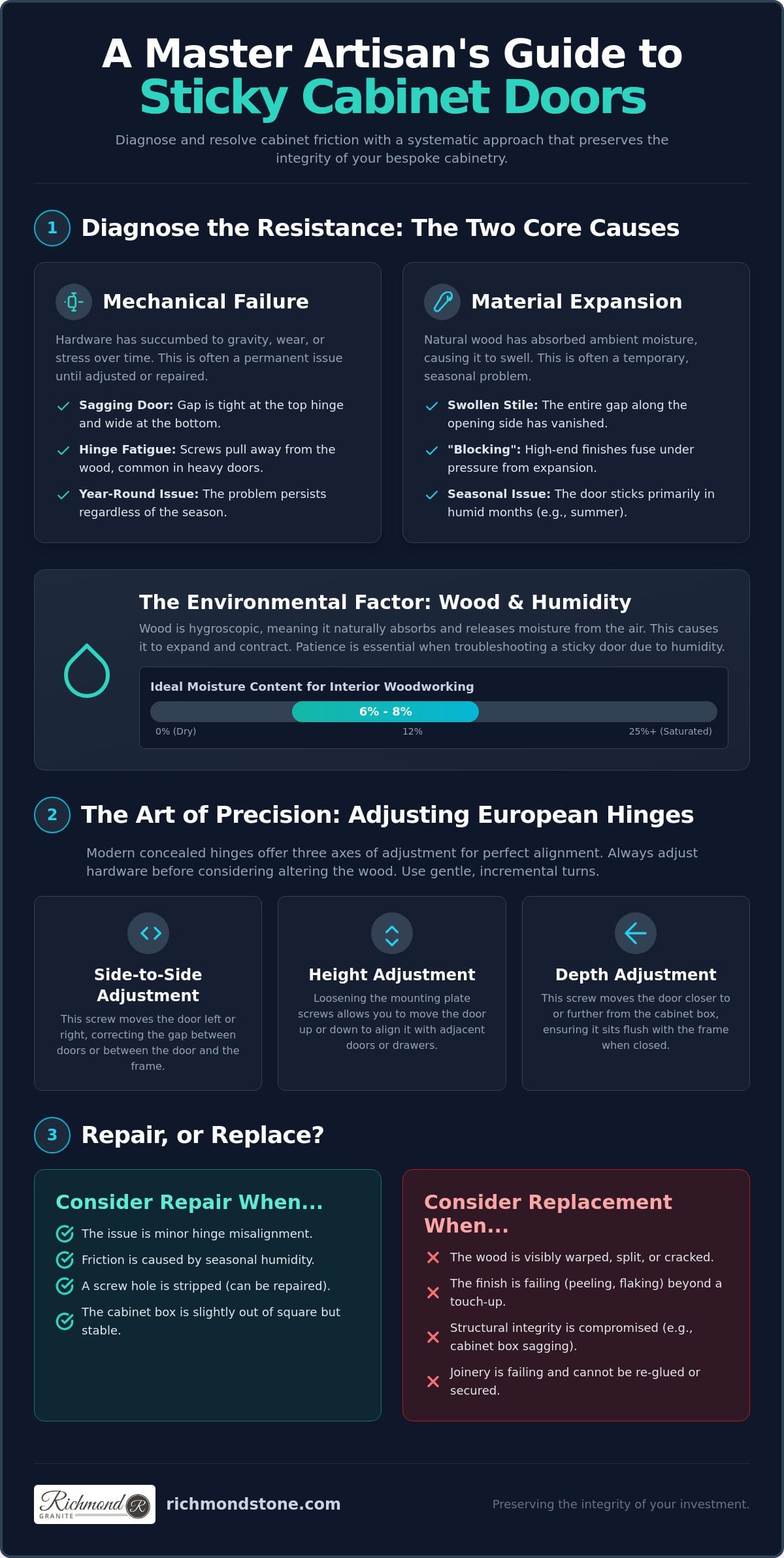
This master artisan’s guide promises to help you diagnose and resolve cabinet friction through a systematic approach that preserves the integrity of your investment. You’ll gain the confidence to perform precise adjustments while learning how environmental factors like moisture content, which should ideally remain between 6% and 8% for interior woodworking, influence the life of your furniture. We’ll explore the nuances of modern concealed hinges and the subtle shifts in humidity that dictate the behavior of natural materials, ensuring your doors return to a state of silent, flush perfection.
Key Takeaways
- Distinguish between mechanical hinge fatigue and natural material expansion to isolate the precise source of cabinet friction.
- Master the three-axis adjustment method for European hinges to restore the silent, flush alignment of your bespoke cabinetry.
- Understand how seasonal shifts influence wood hygroscopy and why patience is essential when troubleshooting a sticky cabinet door.
- Evaluate the structural relationship between heavy natural stone surfaces and cabinet box squareness to ensure lasting stability.
- Identify the critical signs of material failure that indicate when a bespoke replacement is necessary to preserve your home’s aesthetic standards.
Diagnosing the Resistance: Why Cabinet Doors Lose Their Grace
A home of distinction relies on the silent, effortless movement of its components. When that movement falters, it isn’t merely a nuisance; it’s a disruption of the sanctuary’s inherent flow. Troubleshooting a sticky cabinet door begins with understanding that “sticking” is rarely a singular event. It’s a misalignment between the door leaf and the cabinet carcass, a subtle protest from the materials against their current state. To restore grace, one must differentiate between mechanical friction, where hardware has succumbed to gravity or wear, and material friction, where the wood itself has expanded.
This distinction is vital because the remedy for a sagging hinge differs entirely from the solution for a swollen stile. Understanding how wood reacts to moisture is the first step in determining if the issue is a temporary seasonal shift or a permanent mechanical failure. Before reaching for tools, perform the Visual Gap Test. Examine the “reveal,” the consistent space between the door and the frame. A master artisan looks for where this line vanishes. If the gap is tight at the top but wide at the bottom, the door has likely tilted. If the gap has vanished entirely along the strike side, the wood may have absorbed ambient humidity, requiring a more patient approach.
We view cabinet health through three essential pillars: hardware integrity, environmental stability, and structural squareness. If any pillar falters, the closure loses its elegance. By systematically isolating these factors, you can address the root cause without compromising the finish or the joinery.
The Anatomy of a Malfunctioning Closure
Inspect the edges for “rub points,” where the finish has begun to dull or flake. This wear reveals exactly where the friction occurs. In heavy, bespoke doors, hinge fatigue is common; the weight of premium timber can slowly pull screws from the substrate over years of use. Whether your cabinetry is a traditional face frame design or a contemporary frameless style, identifying these points of contact is the foundation of any repair. A door should glide, not grind.
Environmental vs. Mechanical Failure
A door that sticks only in the summer is likely swollen, while one that drags year-round is often sagging. When troubleshooting a sticky cabinet door, use the “Paper Test” to confirm your suspicions. Slide a single sheet of paper into the gap and move it along the perimeter; where the paper catches, the friction hides. Blocking is the tendency of high-end finishes to fuse under pressure, often occurring when a door is closed firmly against a tacky or expanding frame. Recognizing these subtle material behaviors ensures you don’t apply a mechanical fix to a natural, environmental problem.
The Art of Precision: Adjusting Hinges and Hardware
Restoring the seamless alignment of a luxury kitchen requires the steady hand of a craftsman. When troubleshooting a sticky cabinet door, the hierarchy of intervention is paramount; always begin with the hardware before addressing the substrate. Modern cabinetry often utilizes sophisticated European hinges, designed specifically to account for the minute shifts in a home’s environment. These components offer three distinct axes of movement, allowing for a level of precision that ensures every door sits flush and operates in silence. This step-by-step guide to adjusting cabinet hinges illuminates the technical path forward, but the artisan knows that the feel of the resistance is just as important as the visual alignment.
Caution is necessary during this process. Over-tightening screws is a common mistake that can compromise the integrity of custom cabinetry by stripping the delicate wood fibers within the stile. A gentle, incremental approach is best. If you encounter a screw that spins without catching, the wood has likely lost its grip. A master’s remedy is to remove the screw, insert a wooden toothpick dipped in a small amount of wood glue into the hole, and trim it flush. Once dry, this creates a fresh, dense substrate that allows the hardware to bite with renewed strength, ensuring the door remains secure for years to come.
Mastering the 3-Way Adjustable Hinge
The horizontal screw is your primary tool for centering the door within its opening, moving it left or right to correct uneven gaps. To combat the natural sag caused by the door’s weight and gravity, utilize the vertical screw to lift or lower the entire leaf. Finally, the depth screw is essential for ensuring the door sits perfectly flush against the cabinet box. Proper adjustment of this third axis prevents the door from “bouncing” or sitting proud of the surrounding frames, maintaining the crisp lines of your architectural design.
Hardware Lubrication and Cleaning
Sometimes, what feels like a structural obstruction is merely the accumulation of microscopic kitchen grease and dust. This buildup creates a sluggish stiffness within the hinge mechanism. Clean the hardware with a soft cloth and a mild degreaser before applying a lubricant. We recommend dry silicone sprays over traditional oil-based products; silicone provides a slick surface without attracting the airborne particles that eventually lead to mechanical fatigue. If the hinge remains recalcitrant or shows visible signs of metal wear, it may have reached the end of its lifecycle and require a precise replacement. Such attention to detail ensures your custom kitchen cabinetry remains a testament to enduring quality and functional art.
Managing Material Expansion: Humidity and Seasonal Shifts
Wood is an organic, breathing medium; it possesses an innate desire to remain in equilibrium with its surrounding atmosphere. In the coastal air of Staten Island or the varied climate of the New York metro area, this means your cabinetry is in a constant state of subtle respiration. When troubleshooting a sticky cabinet door during the peak of summer, one must resist the impulsive urge to reach for a plane or sandpaper. Removing material from a swollen door is a permanent, often destructive solution to a temporary environmental shift. Once the dry heat of winter arrives and the wood inevitably contracts, you’ll be left with unsightly, oversized gaps that compromise the visual continuity of your bespoke kitchen.
Instead, we advocate for the “Wait and Watch” rule. Allow your home’s HVAC system to stabilize the internal environment for several days before attempting any physical alteration. Fine woodwork thrives when the relative humidity is maintained consistently between 35% and 50%. While our premium moisture-resistant finishes offer a significant layer of protection, they don’t render the wood entirely impervious to the atmosphere. They serve as a sophisticated shield, not a total seal; the organic soul of the timber still responds to the world around it with quiet persistence.
The Impact of Local Climate on NYC Cabinetry
The New York and New Jersey corridor presents a unique challenge for natural elements. The transition from the heavy, moisture-laden air of July to the parched, radiator-driven heat of January creates a dramatic cycle of expansion and contraction. Professional troubleshooting a sticky cabinet door often reveals that the joinery is perfectly sound, but the local atmosphere has pushed the material beyond its intended tolerances. Maintaining a stable indoor climate is the most effective way to preserve the precision of your architectural investment and ensure the longevity of every cabinet leaf.
Non-Invasive Friction Reduction
For minor points of contact that persist despite environmental stabilization, look to non-destructive lubricants to restore ease of movement. Paraffin wax or a thin layer of refined beeswax applied precisely to the stile and rail contact points can provide the necessary glide without marring the artisanal finish. These natural substances offer a silent, invisible barrier against friction. Additionally, small silicone or felt bumpers can be strategically placed to prevent finish-to-finish sticking. If seasonal swelling remains a recurring theme in your home, a dedicated dehumidifier is more than an appliance; it’s a vital guardian for the maintenance of your cabinetry’s structural legacy.
Structural Integrity: When Countertops and Cabinets Intersect
While previous sections focused on the nuances of hardware and the respiration of timber, troubleshooting a sticky cabinet door often requires a broader architectural perspective. A cabinet box is a rigid geometry, yet it remains susceptible to the immense gravitational force of the surfaces it supports. The relationship between natural stone surfaces and cabinet box squareness is one of mutual dependence. When a 3cm granite or quartzite slab is installed, its significant weight can reveal subtle weaknesses in floor leveling or wall plumbness that were previously invisible to the naked eye.
This phenomenon, often referred to as “box torque,” occurs when the cabinet frame is pulled out of its perfect ninety degree alignment by external pressures. If a floor settles or a wall bows, the cabinet box may twist slightly to follow the contour of the home. Even a high end hinge cannot compensate for a carcass that has lost its squareness. In these instances, the artisan must look beyond the door itself, inspecting the toe kick and the base leveling to ensure the foundation of the cabinetry remains uncompromised. Restoring function may require shimming the base rather than merely turning a screw.
The Weight of Elegance: Stone Slabs and Cabinet Load
The installation of heavy materials demands a master’s touch during the planning phase. Professional custom countertops in Staten Island are meticulously templated to ensure weight is distributed evenly across the vertical gables of the cabinetry. If you notice a door beginning to bind shortly after a stone installation, it’s a primary sign that your cabinets may need structural reinforcement. A “Level Check” is essential here; verifying that the cabinet carcass remains plumb under the load of marble or quartz ensures the door leaf has the necessary clearance to swing without obstruction.
Floor Settling and Cabinet Alignment
NYC’s historic architectural foundations are prone to subtle shifts over decades, which can eventually impact the alignment of modern custom kitchen cabinets. When a floor settles, the cabinet box can sag, causing the door to strike the frame at the top corner. It’s a mathematical reality of joinery that a 1/16th-inch shift at the base can result in a 1/4-inch stick at the top of the door. By using cedar shims to gently lift the low point of the box, you can restore the squareness of the frame and allow the door to close with its original, silent grace. If your cabinetry requires a more foundational intervention to match the prestige of your home, consider the enduring stability of our custom kitchen cabinetry solutions.
When to Transition from Repair to Bespoke Replacement
Troubleshooting a sticky cabinet door is an exercise in patience and precision, yet even the most skilled artisan recognizes when a material has reached its zenith. There is a definitive point of no return where the structural integrity of the cabinetry is fundamentally compromised. Wood rot, persistent warping, or the collapse of the mounting substrate often render standard adjustments futile. In these moments, continuing to pursue patchwork repairs incurs a significant aesthetic cost. A luxury environment loses its prestige when the joinery feels labored and the finishes appear mismatched across the facade.
Transitioning to a professional kitchen remodel allows for a holistic resolution to chronic alignment issues. Rather than fighting against a shifting foundation or failing materials, a bespoke renovation introduces superior engineering from the outset. Richmond Stone’s approach is rooted in this philosophy, harmonizing master cabinetry with precision stone fabrication to create a kitchen that operates with the same effortless grace as the natural elements from which it is crafted. We don’t just fix a door; we redefine the architectural harmony of the space.
Evaluating the Longevity of Your Current Cabinets
Assessing the substrate is critical. Often, a sticky door is merely a symptom of low-quality, builder-grade materials like particle board that swell and crumble when exposed to the humidity cycles of the New York metro area. Investing in 3/4-inch plywood construction provides a stable, rigid anchor for hardware that will not yield to the weight of the door over time. Bespoke design ensures that every door and drawer operates with permanent precision. This longevity is the hallmark of a curated home, where the materials are chosen for their endurance as much as their beauty.
Defining Your Next Chapter in Design
When repair is no longer a viable path, the opportunity for a unique masterpiece emerges. Consulting with a master artisan allows for the seamless integration of quartz fabrication in NYC with custom-engineered cabinetry. This synergy ensures that the weight of the stone and the strength of the wood are perfectly balanced. The Richmond Stone promise remains steadfast. It’s a place where nature’s raw beauty meets human technical perfection, resulting in an environment that transcends fleeting trends.
Discover our bespoke cabinetry and stone collections at Richmond Stone.
Preserving the Architectural Harmony of Your Sanctuary
Restoring the silent grace of your cabinetry requires more than a simple turn of a screw; it demands an intimate understanding of the materials that define your home. We’ve explored how the intersection of hardware precision and environmental stability dictates the movement of every leaf. Whether the solution lies in the subtle recalibration of a three-axis hinge or in managing the natural respiration of timber through seasonal shifts, troubleshooting a sticky cabinet door is a vital act of stewardship for your investment. When the structural limits of repair are reached, the transition to bespoke engineering ensures that your environment remains a testament to uncompromising quality.
With over 30 years of master craftsmanship in NYC and NJ, our family-owned team remains dedicated to the enduring luxury of the natural world. From the careful sourcing of raw stone to the meticulous installation of custom cabinetry, we provide a comprehensive service that honors the heritage of your space. Refine your home’s heart with Richmond Stone’s bespoke cabinetry and stone solutions. Your home deserves the permanence and artistry that only a master artisan can provide.
Frequently Asked Questions
Why is my cabinet door sticking only in the summer months?
Seasonal sticking is typically the result of wood expansion caused by high ambient humidity. Because timber is a hygroscopic material, it absorbs moisture from the summer air, causing the fibers to swell and the door to bind against its frame. Maintaining a consistent indoor climate between 35% and 50% relative humidity is the most effective way to prevent this natural respiration from disrupting the precision of your cabinetry’s closure.
Can I use WD-40 on my kitchen cabinet hinges?
We recommend avoiding oil-based sprays like WD-40 on high-end kitchen hardware. While they provide immediate relief, these lubricants attract airborne grease and dust, eventually creating a thick, abrasive paste that accelerates mechanical wear. Instead, utilize dry silicone lubricants or a thin layer of refined beeswax. These options provide the necessary glide without compromising the cleanliness or the longevity of the hinge’s internal mechanisms.
How do I know if my cabinet hinges need to be replaced entirely?
Hinges require replacement when they exhibit visible metal fatigue or when the door continues to sag despite reaching the limits of its adjustment screws. If you notice fine metal shavings around the hinge or if the hydraulic soft-close feature has failed, the component has reached the end of its lifecycle. For bespoke cabinetry, replacing worn hardware with matching, high-grade components is essential to maintain the structural integrity and silent operation of the kitchen.
Will my heavy granite countertops cause my cabinet doors to misalign over time?
The significant weight of 3cm granite or marble slabs can indeed cause a cabinet box to shift if the floor or foundation isn’t perfectly stable. This structural load can lead to “box torque,” where the frame is pulled slightly out of square, causing doors to bind. Professional installation ensures that weight is distributed evenly across the gables, but older homes may experience settling that requires shimming the base to restore alignment.
Is it safe to sand down the edge of a sticky cabinet door myself?
Sanding or planing a door should be a last resort rather than a primary step when troubleshooting a sticky cabinet door. Removing material is a permanent alteration that often leaves the door with oversized gaps once the wood contracts in drier winter months. It also compromises the artisanal finish. Always attempt to resolve friction through hinge adjustments or environmental stabilization before considering any destructive changes to the timber itself.
What are the best types of hinges for heavy, custom-made cabinet doors?
Heavy, bespoke doors are best supported by high-capacity European concealed hinges that offer three-way adjustability. These components allow for precise control over depth, height, and side-to-side alignment, ensuring the door remains flush despite its weight. Look for hinges with integrated soft-close dampers and a high load rating. This technology provides the necessary strength to support premium timber while maintaining the minimalist aesthetic favored in contemporary high-end design.
How often should I check the alignment of my kitchen cabinetry?
A biannual inspection is ideal, particularly during the transitions between the humid summer and the dry, heated winter. These seasonal shifts are when wood movement is most pronounced and when subtle misalignments first become apparent. By proactively checking the “reveal” or visual gap around your doors twice a year, you can make minor adjustments to the hardware before friction causes permanent damage to the finish or the joinery.
What is the ‘Paper Test’ for troubleshooting cabinet friction?
The “Paper Test” is a non-invasive diagnostic tool used to identify the exact point of contact between a door and its frame. Simply slide a single sheet of paper into the gap and move it along the perimeter of the closed door. Where the paper catches or meets resistance, you’ve found the hidden friction point. This allows you to target your adjustments with surgical precision, ensuring you only address the specific area causing the obstruction.