
Should I Choose a Light or Dark Countertop? A Master Artisan’s Guide to Tonal Selection
What if the most significant architectural decision in your home wasn’t about the layout, but about the way light interacts with the very surfaces you touch every day? When standing before a rare slab of quartzite or marble, the question of should I choose a light or dark countertop becomes an inquiry into the very atmosphere you wish to curate. It’s a choice that dictates whether your kitchen feels like a sun-drenched sanctuary or a moody, sophisticated retreat.
We understand the weight of this selection. You want a space that feels both prestigious and profoundly livable, yet it’s natural to worry about the longevity of your design or the maintenance of a high-end surface in a busy NYC apartment. This guide will provide the clarity you need to move forward with poise. You’ll discover how different tones influence the perceived scale of a room and how to ensure your stone choice complements your custom cabinetry for decades to come.
In the following sections, we’ll explore the technical nuances of light interaction, the practicalities of various stone finishes, and the aesthetic principles that transform a simple workspace into a curated masterpiece of enduring elegance.
Key Takeaways
- Master the concept of Light Reflective Value to manipulate the perceived scale and emotional weight of your kitchen environment.
- Explore the enduring legacy of light marble and quartzite, materials that invoke a sense of timeless luminosity and architectural breath.
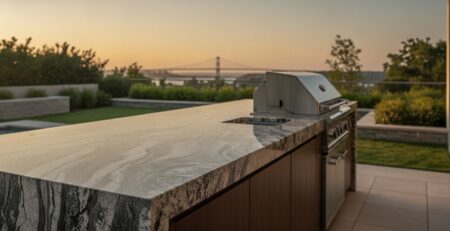
- When deciding should I choose a light or dark countertop, consider the dramatic anchoring effect and sophisticated depth that deep-toned granite or soapstone provides to a curated space.
- Understand the practical maintenance nuances between tonal extremes, from the visibility of acidic spills on light stone to the prominence of water spots on dark surfaces.
- Learn the importance of viewing full-scale slabs under professional showroom lighting to ensure your chosen material harmonizes perfectly with your existing cabinetry and architecture.
The Atmospheric Influence: How Tonal Value Shapes Your Kitchen
The selection of a stone surface is an exercise in managing the physics of light. Every slab possesses a specific Light Reflective Value (LRV), a metric that determines how much illumination the stone absorbs or casts back into the room. This isn’t merely a technicality; it’s the foundation of how your environment feels at dawn, noon, and twilight. When clients ask should I choose a light or dark countertop, they’re often seeking a balance between the architectural constraints of their home and their personal aesthetic vision.
In the dense residential landscapes of Staten Island and Manhattan, natural light is a precious, shifting resource. A kitchen tucked into a pre-war apartment faces different challenges than a sun-drenched suburban estate. You must consider how your choice of various countertop materials will interact with the specific shadows cast by neighboring buildings or the soft glow of a north-facing window. The right tone can either amplify the meager sun or embrace the sophisticated shadows of an urban dwelling.
Luminosity and the Illusion of Space
Light surfaces act as a mirror for the soul of the home. For those navigating the compact footprints of NYC galley kitchens, a pale Quartzite or a classic Marble Countertop can be transformative. These stones catch stray beams of light and distribute them across the room, effectively pushing the walls outward. It’s a design strategy that favors a sense of surgical cleanliness and airy openness. By pairing light stone with matching natural stone flooring, you create a seamless, cohesive flow that makes even the most intimate kitchen feel expansive and unburdened.
The Anchoring Effect of Dark Surfaces
If light surfaces are about expansion, dark surfaces are about intention. A deep black Granite or a velvet-textured Soapstone Countertop provides a sophisticated visual foundation that grounds an open-concept New Jersey home. These darker tones don’t just sit in a room; they command it. They create a deliberate contrast that allows the intricate craftsmanship of your custom cabinetry and the precision of your hardware to stand out. It’s an anchoring effect that feels permanent and stable. Professionals often favor these surfaces because they absorb light rather than reflecting it, creating a moody, intimate atmosphere that feels private and secure.
Light Countertops: Invoking Luminosity and Timeless Sophistication
Light stone surfaces have long served as the canvas for architectural excellence. From the sprawling estates of Staten Island to the refined minimalist lofts of Brooklyn, the choice of a pale surface suggests a commitment to clarity and grace. When homeowners ponder the question, should I choose a light or dark countertop, they’re often drawn to the way light surfaces celebrate the intricate, organic veining that only nature can produce. These surfaces don’t just occupy space; they invite the eye to wander across delicate grey filaments and golden plumes frozen in time.
While aesthetics are paramount, the functional diversity of these materials is equally significant. According to reports on the best types of kitchen countertops, materials like marble and quartzite remain at the pinnacle of luxury due to their unique geological history. Modern Quartz Countertops also offer a compelling alternative for those seeking a consistent, flawless aesthetic that requires minimal intervention to maintain its pristine state.
The Classic Appeal of Marble and Quartzite
The legacy of natural stone is one of permanence. White marble, with its soft, ethereal glow, has been the standard of prestige for centuries. However, for the modern environment that demands both beauty and resilience, Quartzite Countertops have emerged as a premier choice. Quartzite provides the sought-after appearance of marble but possesses a crystalline structure that offers superior resistance to the rigors of daily life. Selecting a rare, light-colored slab is more than a design choice; it’s an investment in a piece of the earth’s heritage that will endure for generations.
Pairing Light Surfaces with Custom Cabinetry
Achieving a sophisticated “all-white” kitchen requires a delicate touch to avoid a clinical atmosphere. The secret lies in the interplay of textures. A honed marble surface paired with matte custom kitchen cabinets creates a layered, tactile experience that feels warm and inviting. Conversely, light stone can serve as a vital counterpoint to dark wood finishes, preventing a large kitchen from feeling overly heavy or enclosed.
To create a truly seamless architectural statement, many designers extend the countertop material into a full-height Backsplash. This technique connects the horizontal work surface to the vertical plane of the room, drawing the eye upward and emphasizing the height of the space. If you find yourself still weighing the nuances of tone, we invite you to explore our curated collection of artisan slabs to see these interactions firsthand.
Dark Countertops: Depth, Drama, and the Art of the Anchor
While light surfaces offer an ethereal expansion, dark surfaces provide an undeniable sense of permanence and gravitas. A kitchen anchored by deep tones feels intentional and secure, serving as a sophisticated sanctuary from the outside world. When homeowners ask should I choose a light or dark countertop, they’re often choosing between the airy breath of the morning and the rich, velvety depth of the evening. Dark stone doesn’t merely sit in a room; it commands the space, providing a prestigious foundation for an avant-garde aesthetic that feels both modern and deeply rooted in heritage.
Professional chefs and seasoned entertainers often gravitate toward darker palettes for their inherent resilience and discretion. Beyond their striking appearance, dark materials possess a unique “hiding power.” Minor surface imperfections or the inevitable signs of a life well-lived tend to recede into the complex, shadowy depths of a darker slab. This makes them an exceptional choice for high-use environments where the kitchen is the true engine of the home, allowing the space to maintain its composure even in the midst of culinary creation.
The Resilience of Dark Granite and Soapstone
Darker natural stones are frequently celebrated for their exceptional physical properties and low-maintenance profiles. Deep-hued granite countertops remain the gold standard for durability, offering a crystalline density that resists heat and scratches with effortless ease. For those seeking a more traditional or tactile experience, soapstone provides a unique alternative. Its natural, non-porous surface develops a rich matte patina over time, telling the story of the home through its changing luster. These materials aren’t just surfaces; they’re enduring witnesses to the daily rituals of the household.
Design Strategies for Moody Kitchens
The fear that a dark surface will make a room feel cramped is a misconception that ignores the power of strategic lighting. In intimate spaces, a dark countertop paired with warm under-cabinet lighting creates a layered, theatrical effect. This illumination catches the subtle textures of the stone, ensuring it feels luxurious rather than heavy. Dark tones also serve as the perfect backdrop for metallic accents. Brass, copper, and chrome hardware pop with renewed brilliance against a midnight-hued slab, highlighting the precision of the cabinetry craftsmanship. These elements are central to many exquisite kitchen remodel ideas for the coming year, where the focus is on creating a moody, sophisticated atmosphere that feels private and secure.

The Practical Reality: Maintenance, Longevity, and the Lifestyle Test
The ultimate resolution to the question, should I choose a light or dark countertop, often reveals itself through the lens of your daily rituals. While we have explored the atmospheric and aesthetic virtues of these tones, the practical reality of living with stone requires a sober assessment of maintenance. A light marble surface is a testament to elegance, yet it remains susceptible to the tannins in a morning espresso or the deep pigments of a spilled Cabernet. Conversely, while dark stone possesses a remarkable ability to hide minor structural imperfections, it acts as a stark canvas for the ephemeral: dust, fingerprints, and the crystalline residue of hard water spots.
The finish you select further dictates this interaction. A polished surface, whether light or dark, provides a mirror-like clarity that amplifies color but highlights every smudge. A honed or matte finish offers a softer, more diffused aesthetic that is increasingly favored in 2026 for its ability to mask fingerprints. However, a honed dark surface may require more frequent wiping to prevent oils from leaving visible “ghost” marks. It’s a delicate balance between the visual weight of the material and the physical labor of its upkeep.
The Sealing and Care Protocol
Light natural stones, particularly marble and limestone, possess a higher porosity that demands a disciplined sealing protocol. We recommend a professional-grade impregnating sealer to create an invisible barrier against acidic etching and deep-seated stains. Darker granites and quartzites are often denser and more resistant to liquid penetration, yet they require their own maintenance ritual. To keep a dark surface streak-free and lustrous, it’s essential to use pH-neutral cleaners and microfiber cloths that don’t leave lint or residue behind.
Seams and Fabrication Nuances
From the artisan’s perspective, the tonal value of a slab significantly impacts the final architectural silhouette. Our quartz fabrication NYC specialists often find that hiding seams is a more intuitive process with dark, solid-toned materials. The deep pigments allow for a nearly invisible transition between slabs. Light stone, especially varieties with dramatic, wide-spread veining, presents a more complex challenge. Matching the flow of a light quartzite across a seam requires a master’s eye for book-matching to ensure the organic movement isn’t interrupted by a jarring structural break.
The edge profile also plays a role in tonal perception. A thick, mitered edge on a light slab emphasizes its monolithic, sculptural quality, while the same edge on a dark stone can feel exceptionally heavy if not balanced by proper cabinetry. Before you commit to a specific slab, we encourage you to consult with our master artisans to ensure your chosen tone aligns with both your aesthetic vision and your lifestyle demands.
Navigating Your Selection: The Richmond Stone Consultation
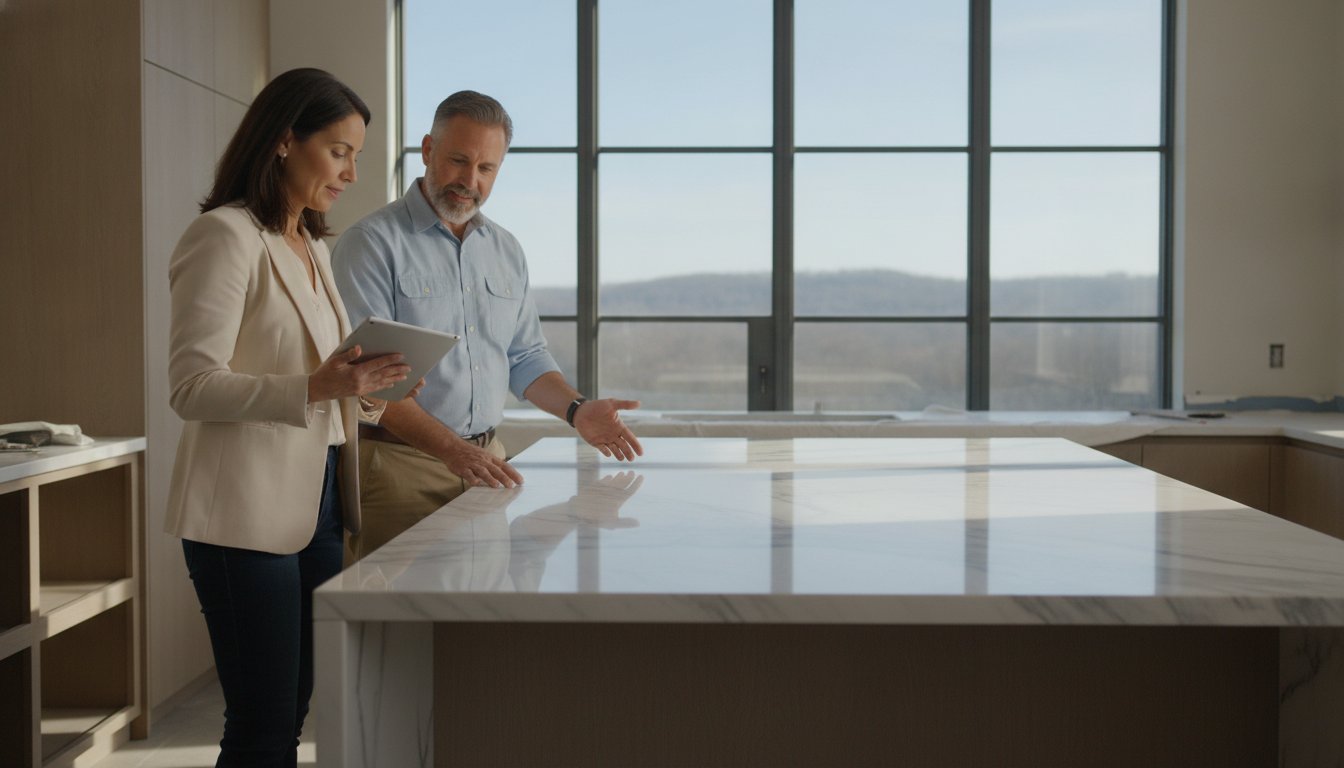
The final resolution to the inquiry of should I choose a light or dark countertop shouldn’t be found in a digital gallery or a sterile catalog. It requires a physical encounter with the stone itself. A four-inch sample is merely a whisper of the material’s true character; it cannot convey the sweeping movement of a Quartzite vein or the crystalline depth of a dark Granite slab. To make a selection with absolute confidence, you must observe how these natural elements respond to light in a professional environment that mirrors the sophistication of your own home.
Our approach is rooted in the belief that a countertop is the soul of the kitchen. It must harmonize with the specific architectural language of your space, whether you’re restoring a historic Staten Island estate or finishing a sleek, modern penthouse in Manhattan. As a single-source partner, we provide a cohesive design experience where your stone selection and Custom Kitchen Cabinetry are developed in tandem. This ensures that the tonal weight of your surfaces perfectly complements the wood grains and finishes of your storage, creating a kitchen that feels curated rather than assembled.
The Staten Island Showroom Experience
The journey begins in our gallery. Here, you’ll step away from the distractions of the city and immerse yourself in a curated collection of Marble Countertops, exotic Quartzite, and durable Quartz. It’s an opportunity to consult with our master artisans on the suitability of each material for your specific lifestyle. We’ll help you navigate the nuances of Light Reflective Value (LRV) and surface finishes, ensuring the stone you choose today remains a source of pride for decades. Seeing a full-scale slab allows you to witness the manual refinement of the natural world firsthand.
From Inspiration to Flawless Installation
Once your selection is finalized, our meticulous process ensures your vision is realized without compromise. We don’t believe in hurried results. Our work involves:
- Precision Templating: Utilizing advanced technology to capture the exact dimensions of your NYC or NJ home.
- Artisan Fabrication: Hand-finishing edges and matching seams to preserve the organic flow of the stone.
- Professional Installation: Our dedicated teams manage the final placement across all NYC boroughs and New Jersey with quiet, expert efficiency.
The result is more than a functional surface. It’s a permanent architectural feature. It’s a testament to enduring quality. By choosing a partner who respects the heritage of the material, you ensure your environment reflects the prestige and uncompromising standards you value most. We invite you to schedule a consultation and discover the perfect stone for your enduring environment.
Crafting an Environment of Lasting Distinction
Selecting the right tonal value for your home is more than a design preference; it’s an investment in the emotional resonance of your most central space. Whether you’re drawn to the ethereal luminosity of light quartzite or the commanding depth of black granite, the question of should I choose a light or dark countertop is best answered through a lens of both artistry and daily utility. You’ve seen how these surfaces interact with urban light and how their maintenance profiles must align with your personal rituals.
At Richmond Stone, we bring over 30 years of family-owned mastery to every project. We maintain absolute control over the quality of your stone through in-house templating, fabrication, and installation, serving homeowners across all NYC boroughs and the NJ Metro area. This commitment ensures that your chosen material transcends fleeting trends to become a permanent architectural anchor. We invite you to move beyond samples and experience the intrinsic beauty of our curated slabs in person.
Begin your journey toward an enduring kitchen with a Richmond Stone consultation. Your vision deserves the precision of a master’s touch.
Frequently Asked Questions
Will dark countertops make my small kitchen feel cramped?
Dark countertops won’t inherently make a room feel smaller if they’re balanced with strategic illumination and lighter vertical surfaces. In a compact NYC footprint, a dark stone provides a sophisticated visual anchor that adds depth and gravitas. When paired with under-cabinet lighting and light custom cabinetry, these surfaces create a moody, intimate atmosphere that feels intentional rather than enclosed.
Are light-colored countertops more prone to permanent staining?
The color of the stone doesn’t dictate its porosity, though light surfaces are certainly less forgiving regarding the visibility of spills. While a white Marble Countertop will show the deep pigments of wine or coffee immediately, professional-grade sealing prevents these liquids from becoming permanent. Proper care ensures that even the most luminous light quartzite remains a pristine architectural feature for decades.
Which shows more scratches: light or dark stone?
Darker stones, particularly those with a highly polished finish, tend to reveal surface scratches and etches more prominently than lighter materials. If you’re weighing the question of should I choose a light or dark countertop for a high-activity area, a light quartzite or a honed dark granite is often the more practical choice. These options mask the inevitable signs of a life well-lived much more effectively than a midnight-hued polished slab.
Do dark countertops go out of style faster than light ones?
Neither tonal extreme is subject to fleeting trends when you invest in authentic, high-quality natural elements. The choice between light and dark is an architectural decision rooted in the light and scale of your home rather than a temporary fashion. Both palettes have served as the foundation of prestigious design for centuries, ensuring your investment remains a timeless testament to your personal aesthetic.
How does the finish (honed vs. polished) affect the color of the stone?
A polished finish acts as a saturating lens, deepening the stone’s natural pigments and bringing the sharpest detail to its veining. Conversely, a honed finish diffuses light across the surface, resulting in a softer, more muted color palette. This matte approach is often favored for its organic, tactile quality, though it may require more frequent wiping to manage natural oils from fingertips.
What is the best countertop color for a high-traffic family kitchen?
A stone with significant organic movement and mid-range tonal values is typically the most resilient choice for a bustling household. Patterns found in certain granites or quartzites are exceptionally forgiving, hiding crumbs and minor spills until you have a moment to attend to them. This allows the kitchen to remain a prestigious focal point that doesn’t demand constant, anxious maintenance.
Should my countertop color match my kitchen floor?
Your surfaces don’t need to match perfectly, but they must exist in a state of architectural harmony. Often, the most sophisticated designs use the countertop as a transitional element that bridges the gap between the floor tiles and the cabinetry. Whether you choose a complementary or contrasting tone, the goal is to create a cohesive environment that feels balanced and grounded.
Can I pair light countertops with light cabinets without it looking washed out?
You can achieve a stunning, layered luxury by pairing light surfaces, provided you introduce a variety of textures and subtle tonal shifts. Mixing a polished light stone with matte-finished cabinetry and a textured backsplash prevents the space from feeling clinical or flat. This approach creates a sun-drenched, airy sanctuary that feels both expansive and deeply comfortable.