

Artisan Guide: Backsplash Tiles for White Cabinets
A white kitchen is not a finished room; it is a pristine canvas that demands the hand of an artisan to achieve its true potential. While the purity of white cabinetry offers a sense of timelessness, the wrong choice can leave a space feeling cold or uninspired. You likely recognize that selecting the perfect backsplash tile for white cabinets is a high-stakes endeavor, as this vertical surface must harmonize with both your cabinetry and your investment in premium stone countertops. It’s the bridge where light, texture, and material heritage converge.
We understand the weight of these decisions. You deserve a space that reflects a legacy of quality rather than a fleeting trend. This guide will show you how to transform pristine white cabinetry into a bespoke masterpiece through the meticulous selection of texture, material, and light. We will examine the enduring elegance of natural stone, the organic variation of handmade Zellige, and the seamless luxury of full-slab porcelain. You will gain the clarity needed to choose materials that offer both visual prestige and lasting durability, ensuring your kitchen remains a curated sanctuary for years to come.
Key Takeaways
- View the backsplash as a vital architectural bridge that anchors your cabinetry to your natural stone surfaces with deliberate artistic intent.
- Master the selection of the ideal backsplash tile for white cabinets by exploring the tactile soul of marble, quartzite, and hand-molded artisanal tiles.
- Discover how geometric rhythms like herringbone and chevron introduce a sense of movement and permanence to a refined kitchen landscape.
- Learn to balance your palette through the serene depth of tone-on-tone textures or the commanding presence of high-contrast natural elements.
- Understand the critical role of professional templating and master installation in achieving a flawless finish that transcends standard design.
The Philosophy of the White Canvas: Why Backsplash Choice Matters
In the architecture of a high-end kitchen, the backsplash functions as the critical visual bridge between your cabinetry and the raw elegance of natural stone countertops. White cabinets provide a necessary neutrality, a quiet confidence that allows for bold architectural statements without overwhelming the senses. This relationship is defined by how light interacts with the surfaces; white cabinetry amplifies natural illumination during the day and softens ambient light in the evening to create a layered atmosphere. Choosing the right backsplash tile for white cabinets is the decisive moment where a standard kitchen becomes a curated environment. The meticulous selection of material determines whether the room feels expansive or intimate. The white canvas serves as the ultimate foundation for enduring luxury.
To visualize the breadth of possibilities this canvas offers, explore these curated design concepts:
The Enduring Legacy of White Cabinetry
White has long held a position of prestige in premium kitchen design, evolving from a symbol of utilitarian cleanliness to a hallmark of bespoke luxury. Historically, monochromatic palettes have graced the most distinguished European estates, signaling a commitment to order and light. It’s a choice that maintains exceptional resale value precisely because it offers a timeless aesthetic that transcends fleeting trends. While some might view white as a safe option, the master artisan sees it as an opportunity for precision. By selecting a sophisticated backsplash tile for white cabinets, you transition from a simple functional space to a room characterized by architectural depth and personal expression. This permanence is why white remains the preferred choice for those who value heritage and uncompromising quality in their homes.
Establishing Your Design Narrative
Your backsplash dictates the mood of the room, whether you seek the sharp lines of Modern Minimalism or the layered textures of an Avant-Garde sanctuary. Modern Minimalists might favor large-format porcelain slabs for a seamless look, whereas those pursuing a Timeless Classic aesthetic often lean toward the rhythmic patterns of hand-cut stone. It’s essential to consider how your custom kitchen cabinets finish interacts with your tile. A high-gloss cabinet might require a matte stone to ground the space, while matte cabinetry often benefits from the reflective qualities of glass or polished marble. This dialogue between finishes ensures a cohesive narrative that feels both intentional and permanent. We focus on these nuances to ensure that every material, from the grout line to the tile edge, contributes to a unified aesthetic vision.
Materiality and Texture: Selecting the Soul of Your Backsplash
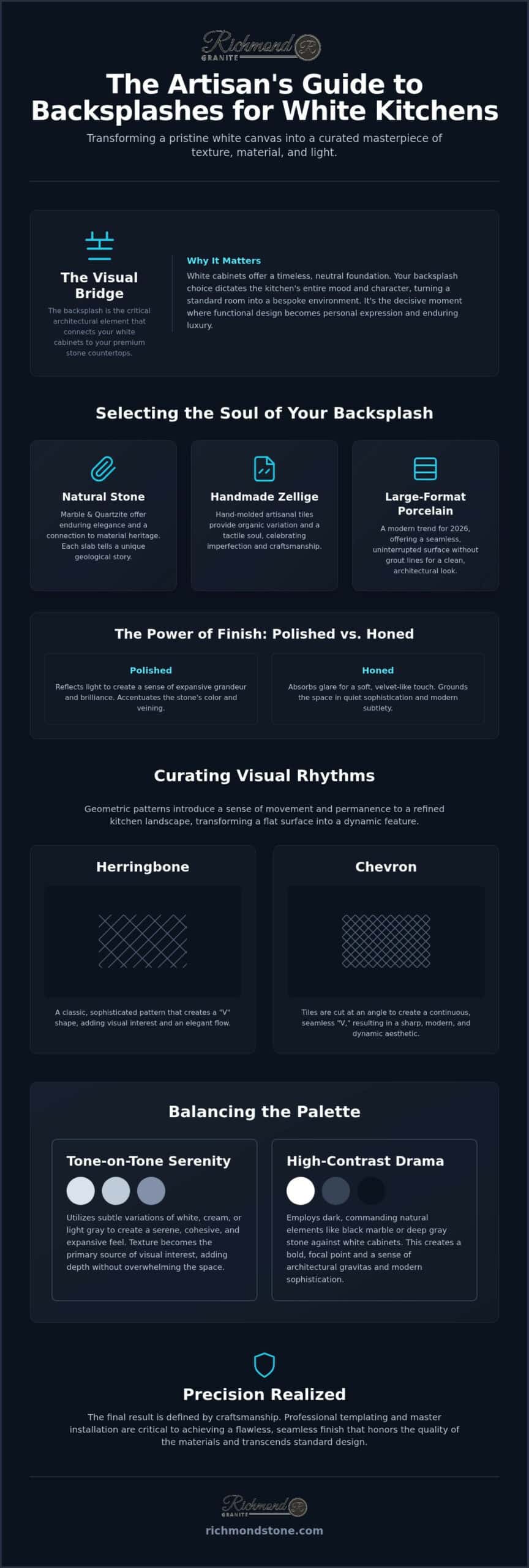
The selection of a backsplash tile for white cabinets is an exercise in tactile storytelling. Beyond the visual appeal of color, the soul of a kitchen resides in the physical properties of its materials. We believe that true luxury is felt as much as it is seen. The choice between a polished or honed finish, for instance, fundamentally alters the room’s energy. While polished surfaces reflect light to create a sense of expansive grandeur, a honed finish offers a velvet-like touch that absorbs glare and grounds the space in quiet sophistication. This interplay of light and texture ensures that your kitchen remains a dynamic environment, shifting in character as the sun moves across the horizon.
For those seeking a modern, uninterrupted aesthetic, large-format porcelain slabs have emerged as a definitive trend for 2026. These expansive surfaces eliminate traditional grout lines, allowing the material’s inherent beauty to flow across the wall without distraction. This seamless approach mirrors the permanence of the natural world, providing a clean, architectural backdrop that highlights the precision of your cabinetry.
The Timeless Allure of Marble and Quartzite
Natural stone remains the pinnacle of high-end design. Utilizing varieties like Calacatta or Carrara marble introduces organic movement that breathes life into monochromatic spaces. The bold, sweeping veins of Calacatta provide a dramatic focal point, while the softer, ethereal clouds of Carrara offer a more subtle elegance. If durability is your primary concern, quartzite offers a compelling alternative; it possesses the sophisticated look of marble but with a crystalline structure that resists the rigors of a high-traffic kitchen. Achieving a cohesive look often involves integrating these stone elements with custom countertops in Staten Island, ensuring a flawless transition from the horizontal work surface to the vertical backsplash.
Handcrafted Textures and Artisanal Finishes
In a world of mass production, the deliberate imperfections of artisanal tile offer a rare sense of character. Zellige tile, a handcrafted terracotta known for its subtle tonal variations and irregular edges, has become a cornerstone of soulful design. These tiles catch the light at different angles, creating a shimmering effect that prevents white-on-white palettes from feeling sterile or clinical. Similarly, the rise of 3D and fluted tile designs adds an architectural layer to the kitchen, using shadow and relief to create visual interest. This artisanal approach ensures that your backsplash tile for white cabinets feels like a unique, curated masterpiece. If you are ready to refine your vision, our master fabricators can help you select the perfect material to anchor your design.
Curating Patterns: Visual Rhythms for the Modern Kitchen
The arrangement of stone and ceramic is the cadence of your kitchen’s design. While material provides the soul, the pattern establishes the rhythm. Choosing a backsplash tile for white cabinets offers a unique opportunity to manipulate the perception of space through geometric precision. Even the most traditional materials, such as the classic subway tile, can be elevated through intentional layout. A vertical stack creates an immediate sense of height and modern rigor, whereas a traditional offset pattern maintains a connection to heritage. Scale and proportion are equally vital; larger tiles can make a modest kitchen feel expansive by reducing visual clutter, while smaller mosaics invite closer inspection of the material’s intricate details.
For those seeking a truly bespoke environment, the integration of stone and metal inlays transforms a functional surface into a mosaic masterpiece. These intricate compositions serve as a testament to human skill, blending the permanence of natural elements with the deliberate hand of the artisan. Every line and angle must be considered to ensure the pattern harmonizes with the cabinetry’s architectural lines.
Herringbone and Chevron: Dynamic Movement
Directional patterns introduce a sense of energy that static layouts cannot replicate. It’s essential to understand the technical distinction between these two classic forms. A Chevron pattern features tiles cut at an angle to meet perfectly in a continuous “V” shape, creating a sharp, sophisticated arrow that draws the eye upward or outward. In contrast, Herringbone utilizes rectangular tiles set in a broken zig-zag, offering a more textured and traditional rhythmic flow. These patterns can effectively make a kitchen feel taller or wider depending on their orientation. Achieving perfection requires master-level alignment, particularly around outlets and corners, to maintain the pattern’s integrity without jarring interruptions.
The Statement Focal Point: Above the Range
The area above the range serves as the kitchen’s natural altar, a place where the design narrative can reach its crescendo. Creating a “picture frame” effect with contrasting stone or a specialized medallion allows for a bold architectural statement. Waterjet-cut stone offers limitless possibilities for bespoke center-pieces, from intricate floral motifs to sharp geometric icons. When selecting a backsplash tile for white cabinets in this focal area, balance is paramount. A complex, high-contrast pattern above the stove works best when anchored by the serene simplicity of white cabinetry and a more understated tile layout throughout the rest of the room. This ensures the focal point commands attention without creating a sense of visual exhaustion. Our fabrication process emphasizes this balance, ensuring that every custom element feels like a permanent, intentional part of the architectural whole.
The Art of Contrast: Balancing the Palette
Achieving balance in a white kitchen is a study in tonal values and visual weight. When you select a backsplash tile for white cabinets, you’re deciding how much drama the space should hold. For some, the goal is a sanctuary of sophisticated serenity, achieved through a tone-on-tone approach. By layering various shades of white, cream, and alabaster, you create a room that feels expansive and ethereal. This monochromatic strategy relies on the subtle interplay of finishes, where the cabinets might be a soft satin and the tile a high-reflectance glass or polished stone. It’s a quiet luxury that doesn’t scream for attention but rewards the observer who lingers on the details.
The visual impact of your chosen tile is often finalized by a detail many overlook: the grout. Grout color can fundamentally change the appearance of your installation. A dark charcoal grout paired with a white tile creates a sharp, graphic grid that emphasizes the geometry of the layout. Conversely, a color-matched grout allows the tiles to blend into a singular, monolithic surface. Beyond stone and ceramic, integrating metallic accents like brass or copper inlays can introduce a touch of warmth that mirrors your kitchen’s hardware, providing a cohesive thread that ties the entire architectural narrative together.
The Sophistication of High Contrast
For those who prefer a commanding presence, high-contrast palettes offer a sense of permanence and depth. Pairing pristine white cabinetry with dark soapstone or matte black porcelain creates a focal point that is both bold and grounded. In smaller kitchens, using a dark, reflective tile can actually add a sense of infinite depth, as the polished surface mimics the effect of a mirror. This contrast is most effective when balanced with your choice of hardware and faucets. A matte black stone backsplash, for instance, finds its perfect partner in brushed gold or polished nickel fixtures, creating a layered look that feels intentionally curated rather than coincidental.
Subtle Nuance: The Warmth of Neutrals
If the starkness of high contrast feels too industrial, look to the warmth of neutral tones like greige, taupe, and mushroom. These earthier hues provide a bridge between the clinical purity of white and the organic elements of the home. Creamy limestone or travertine tiles introduce a soft, tactile quality that makes a kitchen feel lived-in yet refined. For a more rustic touch that retains modern durability, wood-look porcelain tiles offer the visual grain of oak or walnut without the maintenance concerns of natural timber. This subtle nuance ensures your kitchen feels welcoming, using a gentle palette to highlight the precision of your cabinetry. If you are ready to explore these palettes in person, view our gallery of custom backsplash installations to see how these materials transform a space.
Precision Realized: The Richmond Stone Installation Standard
True elegance is found in the absence of error. While selecting the ideal backsplash tile for white cabinets is a vital creative act, the realization of that vision depends entirely on the precision of the installation. We view the kitchen as a singular stone and cabinetry ecosystem where every joint must be seamless and every edge must be deliberate. Our 30 years of family-owned expertise ensures that we don’t just supply materials; we curate environments where nature and human skill intersect with absolute clarity. A backsplash is not a standalone feature but the final, anchoring element of a sophisticated architectural narrative.
A critical component of this process is the harmony between vertical and horizontal surfaces. When we perform quartz fabrication in NYC, we design the countertop and the backsplash in tandem. This holistic approach allows for transitions that feel organic rather than forced, ensuring that the movement of the stone remains uninterrupted as it travels from the workspace to the wall. It’s this commitment to the artisan’s touch that separates a standard kitchen from a bespoke architectural masterpiece, where even the most complex backsplash tile for white cabinets is executed with surgical precision.
Templating and Fabrication Excellence
The foundation of a flawless kitchen is a perfect measurement. Our professional templating process uses advanced technology to map the unique contours of your space, accounting for every subtle shift in your cabinetry and walls. This precision prevents unsightly gaps or awkward tile cuts that often plague less rigorous installations. When working with custom-cut stone slabs for backsplashes, we ensure that the veining aligns perfectly with your countertops. This meticulous attention to architectural alignment ensures that the final installation feels like a permanent, intentional part of the home’s structure rather than an afterthought.
The Final Polish: Grouting and Sealing
The longevity of your kitchen relies on technical details that are often invisible to the untrained eye. We utilize high-performance, stain-resistant grouts that are specifically selected to complement the tonal values of your tile and cabinetry. This technical choice ensures that the grout lines remain pristine, even in the high-moisture environment above a range. Furthermore, the necessity of sealing natural stone cannot be overstated; it is the essential act of preservation that protects the material’s legacy from the rigors of daily use. Our final luxury-standard checklist includes a thorough inspection of every edge detail, ensuring that your stone surfaces are as durable as they are beautiful. This measured, steady approach to finishing ensures that your investment remains a source of pride for decades to come.
Refining Your Architectural Vision
The meticulous selection of a backsplash tile for white cabinets represents the final, decisive chapter in your kitchen’s architectural narrative. It’s the bridge where the raw elegance of natural elements meets the refined precision of human skill. By harmonizing texture, light, and geometry, you move beyond mere decoration toward the creation of a permanent sanctuary. This journey from a pristine canvas to a bespoke masterpiece requires a partner who values legacy as much as you do.
Richmond Stone brings over 30 years of family-owned artisan excellence to every project in Staten Island and the NYC metro area. As master fabricators of premium granite, marble, and quartz, we don’t just install surfaces; we preserve the intrinsic artistry of the natural world. Our commitment to enduring quality ensures that your kitchen remains a curated environment of sophisticated design for generations to come.
Begin your journey toward a bespoke kitchen masterpiece with Richmond Stone. We look forward to helping you realize a space that is truly extraordinary.
Frequently Asked Questions
Should my backsplash be lighter or darker than my white cabinets?
The choice between a lighter or darker backsplash depends entirely on the desired architectural mood of your kitchen. A tone-on-tone approach using alabaster or cream tiles creates a serene, ethereal environment that amplifies natural light and feels expansive. Conversely, choosing a darker stone like charcoal soapstone or deep navy ceramic provides a grounded, sophisticated contrast that anchors the room. Both paths are valid; the decision should reflect whether you seek a sanctuary of soft light or a space of commanding drama.
Is marble a high-maintenance choice for a kitchen backsplash?
Marble is a living material that requires a commitment to preservation, though it’s perfectly manageable for a vertical surface. While it is susceptible to etching from acidic substances, it remains a prestigious choice for a backsplash where it faces less direct wear than a countertop. We recommend professional sealing upon installation and periodic reapplication to protect its crystalline structure. This maintenance is a small investment in a material that offers a unique, organic legacy that synthetic alternatives cannot replicate.
How do I choose the right grout color for white subway tile?
Grout color is the final brushstroke that defines the visual rhythm of your backsplash tile for white cabinets. Selecting a color-matched white grout results in a seamless, monolithic surface that feels expansive and quiet. If you prefer an industrial or graphic aesthetic, a soft grey or charcoal grout will highlight the geometry of the layout. This choice shifts the focus from the material itself to the precision of the installation pattern, allowing you to dictate the room’s cadence.
Can I use the same stone for both my countertop and backsplash?
Utilizing the same stone for both the countertop and the backsplash is the hallmark of a bespoke, high-end kitchen. This “full-slab” approach creates a continuous flow of veining that eliminates the visual interruption of grout lines. Our master fabricators at Richmond Stone specialize in this technique, ensuring that the transition from the horizontal work surface to the vertical wall is handled with surgical precision. It’s a choice that signals uncompromising quality and a commitment to architectural permanence.
What tile pattern is best for making a small kitchen look larger?
To make a small kitchen feel larger, prioritize large-format porcelain slabs or vertical tile layouts. Reducing the number of grout lines minimizes visual clutter, allowing the eye to travel across the surface without distraction. A vertical orientation, such as a stacked subway pattern, draws the eye upward to emphasize ceiling height. These subtle geometric shifts can transform a modest space into one that feels expansive, airy, and intentionally designed, proving that scale is a vital tool for the artisan.
What are the most durable backsplash materials for a busy kitchen?
For a high-traffic environment, quartzite and porcelain represent the pinnacle of durability. Quartzite offers the sophisticated beauty of marble with a crystalline structure that resists scratching and heat. High-performance porcelain is equally resilient, providing a non-porous surface that is impervious to moisture and staining. Both materials ensure that your kitchen remains a functional sanctuary without sacrificing the aesthetic prestige of a masterfully crafted backsplash tile for white cabinets. These surfaces are designed to endure the rigors of a modern home.
How does the cabinet finish (matte vs. gloss) affect tile selection?
The finish of your cabinetry dictates the light-play of your chosen tile and should be balanced with intent. Glossy cabinets often benefit from a matte or honed stone backsplash to ground the space and prevent excessive glare. Conversely, matte cabinetry creates a perfect foundation for reflective glass or polished marble, which introduces a sense of depth and movement. This dialogue between finishes ensures that the kitchen feels layered and sophisticated rather than flat, clinical, or visually overwhelming.
Do I need to seal my backsplash tile after installation?
Professional sealing is essential for all natural stone and porous ceramic tiles to preserve their integrity. This protective barrier prevents oils and pigments from penetrating the material’s surface, ensuring that its beauty remains untarnished by daily culinary activities. While porcelain and glass don’t require sealing, the grout lines between them often do. We include this as a standard part of our luxury installation process, drawing on 30 years of expertise to ensure the longevity of your kitchen’s design.