Butcher Block vs. Granite for Kitchen Islands: A Master Artisan’s Comparison
The most enduring centerpiece of a home isn’t found in a catalog; it’s discovered in the deliberate marriage of raw geological history and refined human craft. You likely desire a kitchen island that invites intimate conversation without sacrificing the rigorous durability required by a high-traffic NYC household. Selecting the best stone for kitchen island installations often feels like a difficult choice between the soul of the forest and the strength of the earth. It’s a decision that defines the atmosphere of your most vital social space.
While you might worry that granite feels too sterile for a social hub or that wood invites the quiet anxiety of water damage, the truth lies in the master artisan’s application. This comparison reveals the definitive balance between the organic warmth of butcher block and the enduring prestige of natural stone. We will examine how these materials influence your home’s resale value, noting that stone installations often recover up to 80 percent of their cost according to industry data. You’ll gain a clear understanding of the maintenance rituals and aesthetic impact of each choice, ensuring your centerpiece remains a functional workspace and a permanent architectural legacy.
Key Takeaways
- Understand how your selection of material dictates the architectural gravity and social movement within the modern kitchen.
- Learn why granite is consistently regarded as the best stone for kitchen island projects that require uncompromising heat resistance and artistic individuality.
- Assess the sensory benefits of butcher block, including its softened acoustics and suitability for direct culinary preparation.
- Contrast the maintenance cycles and long-term durability of natural stone against the evolving character of organic wood.
- Gain insight into the master artisan’s process for selecting and installing surfaces that serve as permanent anchors for your home’s heritage.
The Kitchen Island as an Architectural Anchor: Selecting Your Centerpiece
The modern New York kitchen revolves around a single, central axis. In the historic brownstones of Brooklyn or the expansive estates of Staten Island, the kitchen island has evolved far beyond mere utility. It serves as an architectural anchor; it’s a silent conductor of household energy that dictates how we move, interact, and create within the home. This centerpiece provides the visual gravity for the entire room, acting as the bridge between the rigorous demands of a professional-grade workspace and the soft requirements of a social sanctuary. Selecting the right surface is a foundational decision that influences the atmosphere of your home for decades.
The psychological impact of your material choice shouldn’t be underestimated. A cold, polished surface offers a sense of clinical precision and permanence, while a natural wood surface provides an immediate tactile softness that invites guests to linger. Achieving the perfect balance requires an understanding of how materials interact with their environment. For instance, the resonance of a wine glass meeting a stone surface carries a different acoustic weight than the muted thud of wood. These sensory details define the “feel” of a luxury renovation.
Defining the Function of Your Island
Before selecting a material, you must define the island’s primary role. Is it a dedicated station for heavy meal preparation, or is it the stage for casual dining and evening entertaining? In many open-concept NYC residences, the island must perform both roles simultaneously. It acts as a barrier that protects the chef’s workflow while providing a welcoming ledge for guests. The choice between stone and wood significantly affects the room’s lighting and acoustics. A reflective granite slab can brighten a dimly lit kitchen by bouncing ambient light, whereas a rich walnut surface absorbs light to create a mood of quiet intimacy. For a comprehensive overview of countertop materials and how they serve different functional needs, homeowners should consider how hardness and porosity impact daily use.
Material Heritage: Nature vs. Craft
Granite Countertops: The Unyielding Elegance of Natural Stone
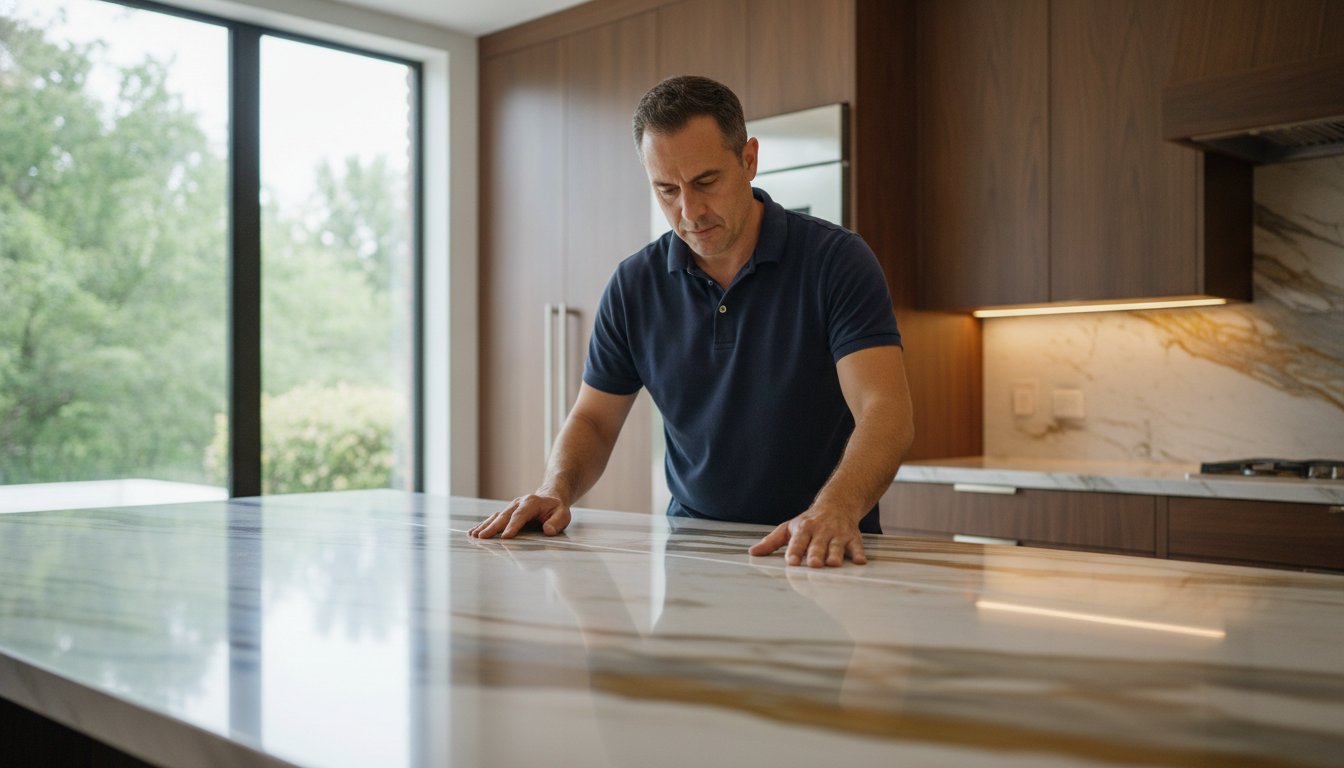
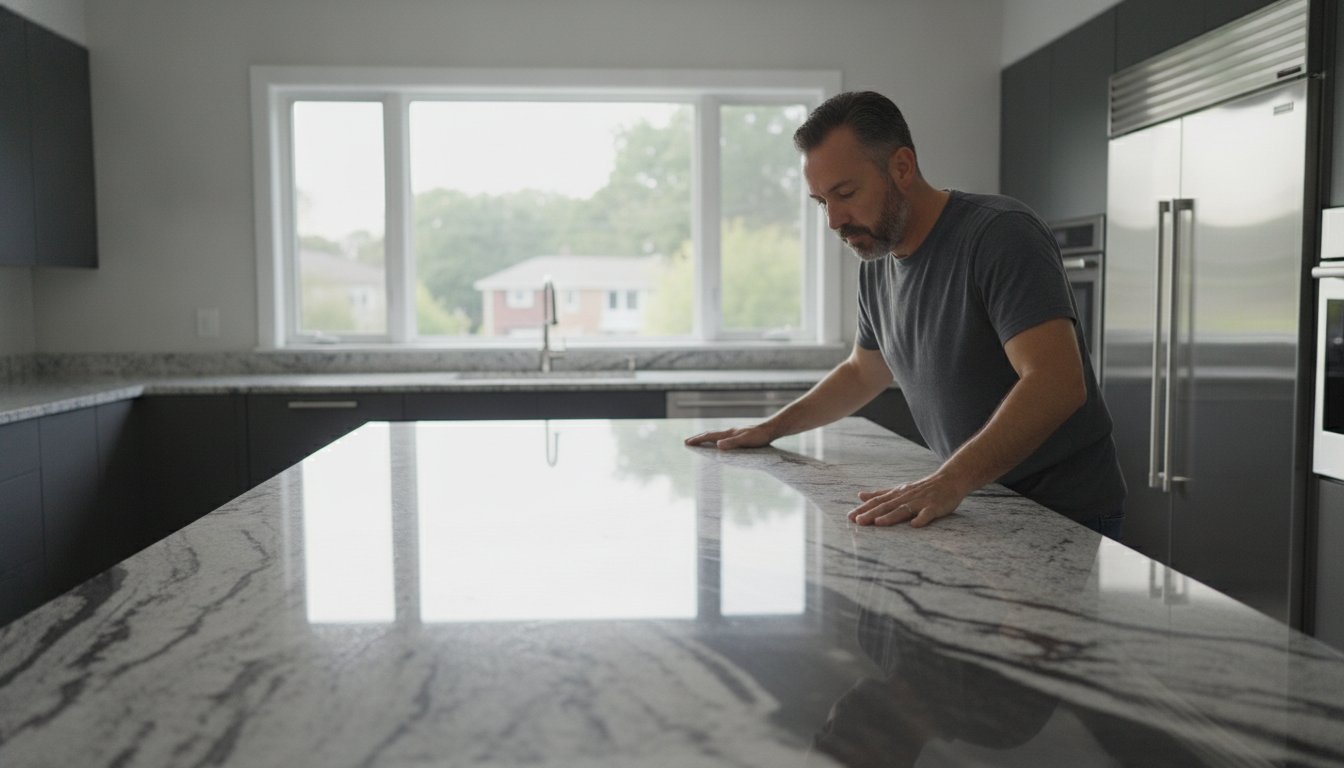
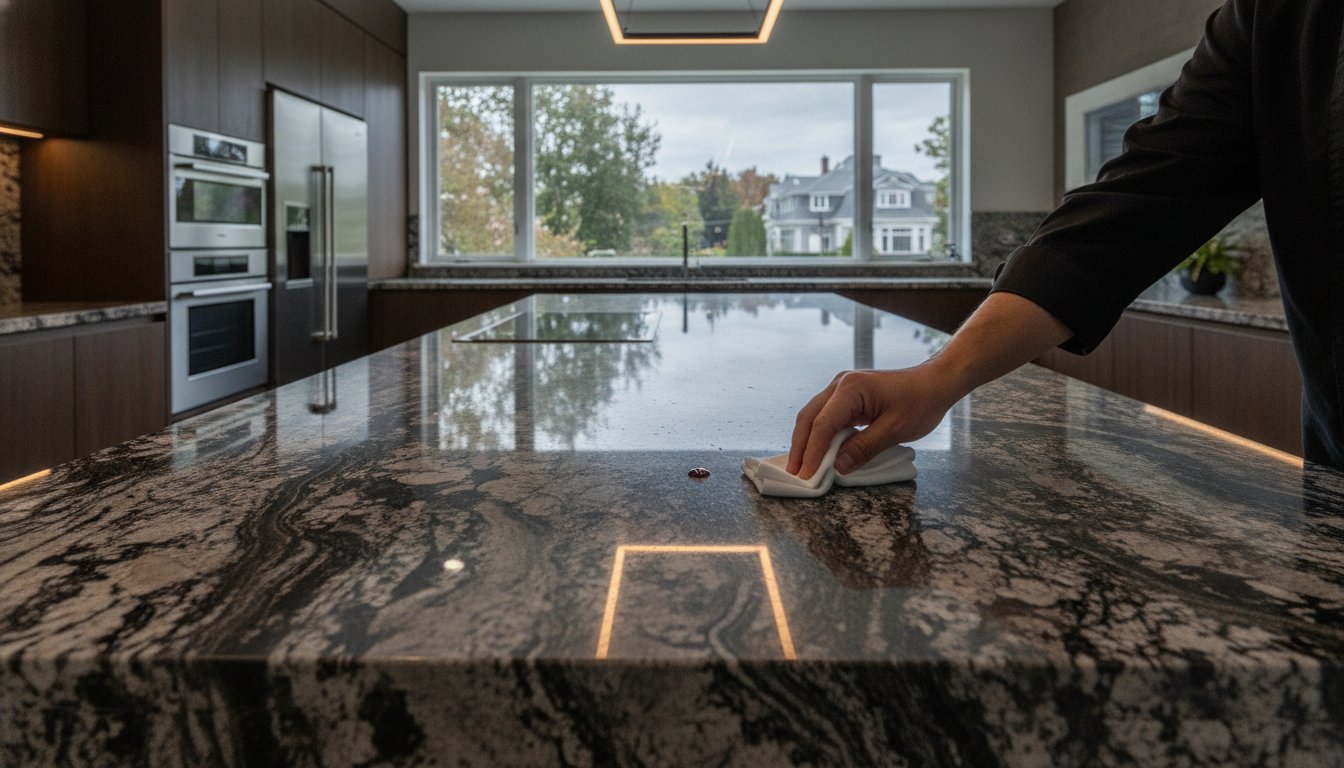
Granite represents the pinnacle of geological permanence. It’s a material forged in the intense heat of the earth’s crust, resulting in a dense, crystalline structure that remains virtually impervious to the chaotic environment of a professional-grade kitchen. For those seeking the best stone for kitchen island installations, granite offers a level of utility that synthetic materials simply cannot replicate. It’s naturally resistant to heat, scratches, and common household chemicals; it allows you to move a searing cast-iron skillet directly from the range to the island without the lingering fear of thermal shock or surface damage. Every slab is a singular work of art. No two islands in New York will ever share the same mineral thumbprint, ensuring your home remains a unique, curated masterpiece.
The decision between different surfaces often comes down to how they handle the rigors of a social household. In a detailed analysis of Butcher Block Countertop vs. Granite, the unyielding nature of stone consistently proves superior for longevity and hygiene. When professionally sealed, granite becomes a non-porous fortress against bacteria and deep-set stains. This prestige factor is more than just aesthetic; it’s a sound financial investment. According to the National Association of Home Builders, homeowners often recover 60 to 80 percent of their stone countertop costs at the time of resale, anchoring the home’s value in a volatile market.
The Geological Narrative of Granite
High-end granite is a complex tapestry of mica, quartz, and feldspar. These minerals determine the stone’s physical properties and its visual depth. As we look toward 2026 design trends, we’re seeing a shift away from sterile whites toward rich, evocative tones. Deep forest greens, midnight navies, and warm, earthy burgundies are becoming the preferred choices for statement islands. These dramatic palettes often serve as the perfect foundation for custom countertops in Staten Island, where residents value a blend of traditional heritage and modern innovation. The intricate veining of an exotic slab creates a sense of movement that anchors a large room without overwhelming it.
The Artisan Fabrication Difference
The true beauty of a stone island is realized through the precision of the master artisan. At Richmond Stone, we source premium slabs with a focus on structural integrity and aesthetic continuity. Our process involves meticulous digital templating to ensure a perfect fit, followed by hand-finishing that respects the stone’s natural character. The edge profile you choose, whether it’s a clean eased edge or a more ornate ogee, defines the island’s final silhouette. This attention to detail ensures that your centerpiece isn’t just a surface, but a permanent architectural feature. You can explore our curated granite selection to find the slab that speaks to your vision of luxury.
Butcher Block Surfaces: Tactile Warmth vs. Practical Realities
If natural stone represents the unyielding strength of the earth, wood provides the living, breathing pulse of the forest. Butcher block surfaces offer an immediate sensory appeal that stone cannot replicate. They possess a softened acoustic profile; the sharp, crystalline clink of fine glassware is replaced by a muted and rhythmic grace. Wood is naturally warmer to the touch, making the island a comfortable harbor for guests to lean against during long winter evenings in suburban New Jersey. This material has become a hallmark of the “Rustic Modern” aesthetic, where the organic textures of the natural world are used to soften the clean lines of contemporary architecture.
For the dedicated home chef, the appeal is often found in pure utility. A high-quality wood surface allows for direct food preparation, turning the entire island into a functional workspace. However, this utility comes with significant caveats that stone simply doesn’t share. While granite remains a top contender for the best stone for kitchen island installations due to its impervious nature, wood is inherently vulnerable. It reacts to its environment. It’s susceptible to scorching from heat, swelling from moisture, and deep staining from acidic ingredients like red wine or citrus. Choosing wood is a commitment to a material that requires active participation to maintain its integrity.
Wood Species and Grain Orientations
The durability of a wood island depends heavily on its construction. End grain surfaces, where the wood fibers stand vertically, are the premier choice for heavy chopping because they “self-heal” as the blade slips between the fibers. Edge grain is more common for social islands where aesthetics take priority. Hard Maple is the traditional standard for its density, while Walnut and Cherry offer rich, deep tones that undergo beautiful color shifts as they age. Sourcing these from sustainable Appalachian hardwood forests ensures your island carries a legacy of environmental stewardship alongside its visual prestige.
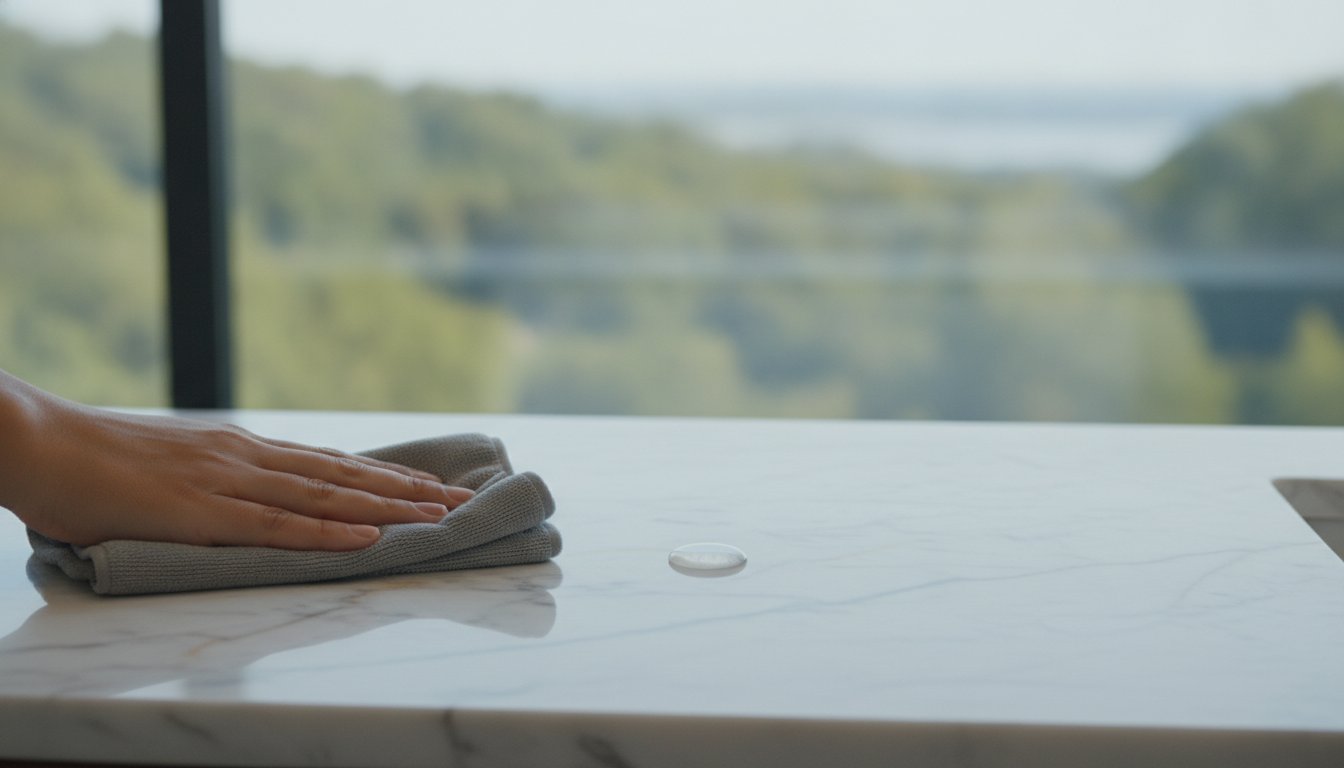
The Maintenance Ritual of Wood
Owning a butcher block island involves a recurring maintenance ritual that stone owners often find daunting. To remain food-safe and water-resistant, the wood must be treated with food-grade mineral oil or beeswax at least once a month. Over time, knife marks and minor burns will occur. While some homeowners embrace this as a “patina” that tells a story of a life well-lived, others view it as damage. Periodic sanding and refinishing can restore the surface, but this is a labor-intensive process. Integrating wood near a sink is a particularly high-risk design choice, as constant water exposure can lead to rot or warping if the protective barrier isn’t meticulously maintained. For those who prioritize a “set and forget” lifestyle, the best stone for kitchen island projects remains the more practical architectural solution.

The Comparative Ledger: Maintenance, Longevity, and Resale Value
Choosing between natural stone and organic wood requires a sober assessment of the ledger of time and effort. Granite remains the premier choice for those seeking a “set and forget” architectural feature. It requires a professional sealing ritual only once every 12 to 24 months to maintain its crystalline luster and non-porous integrity. Wood, by contrast, demands a monthly commitment to mineral oils and beeswax to prevent the fibers from desiccating and cracking. This maintenance gap is the primary reason why granite is frequently cited as the best stone for kitchen island projects where durability is the non-negotiable standard.
Thermal stability is another area where the materials diverge sharply. Granite handles the transfer of a searing pan directly from the range without scarring or thermal shock. Wood is far more sensitive; it burns, scars, and discolors permanently when exposed to extreme heat. This vulnerability directly impacts the lifespan of the surface. While a masterfully installed granite slab is a 30-year investment that often outlasts the home’s original plumbing, butcher block surfaces typically require replacement or aggressive refinishing within 10 to 15 years. In the competitive real estate markets of Staten Island and New Jersey, natural stone acts as a high-demand anchor that signals quality and uncompromising standards to potential buyers.
The Art of the Hybrid Island
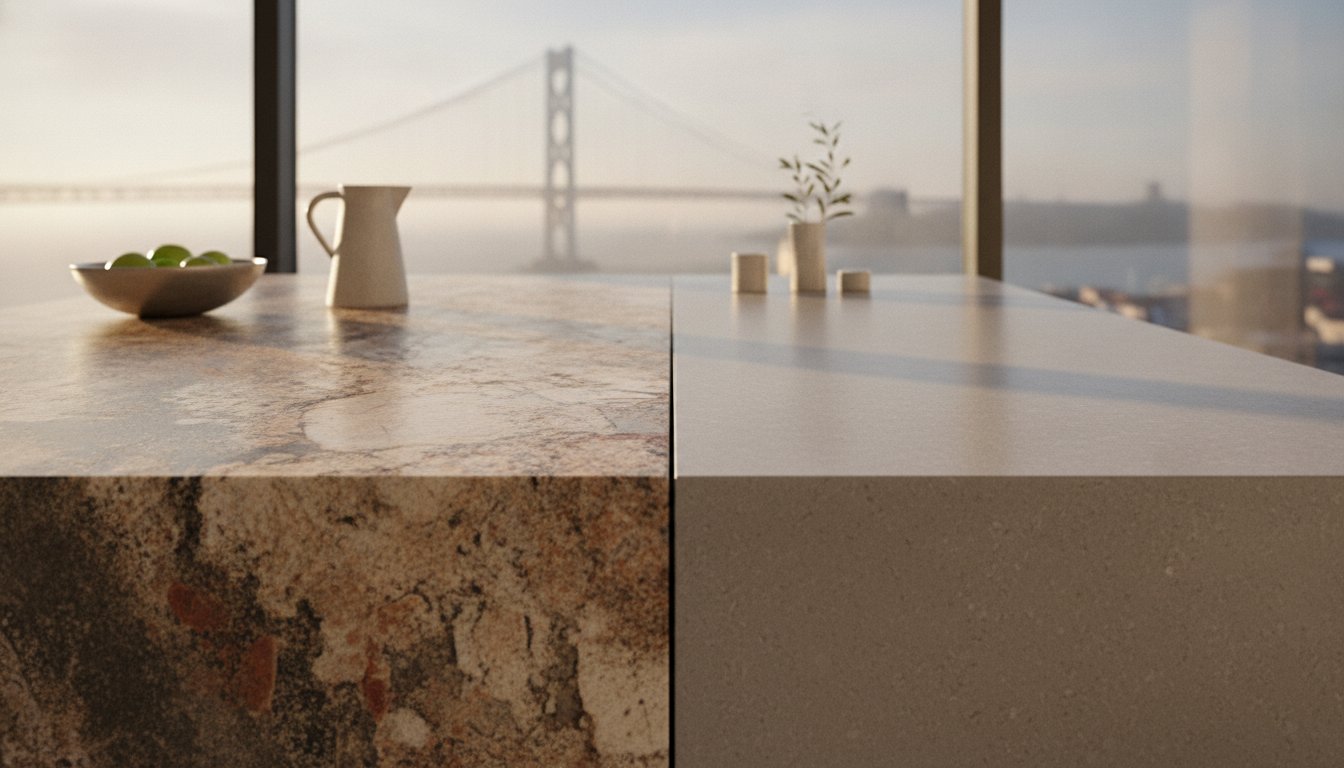
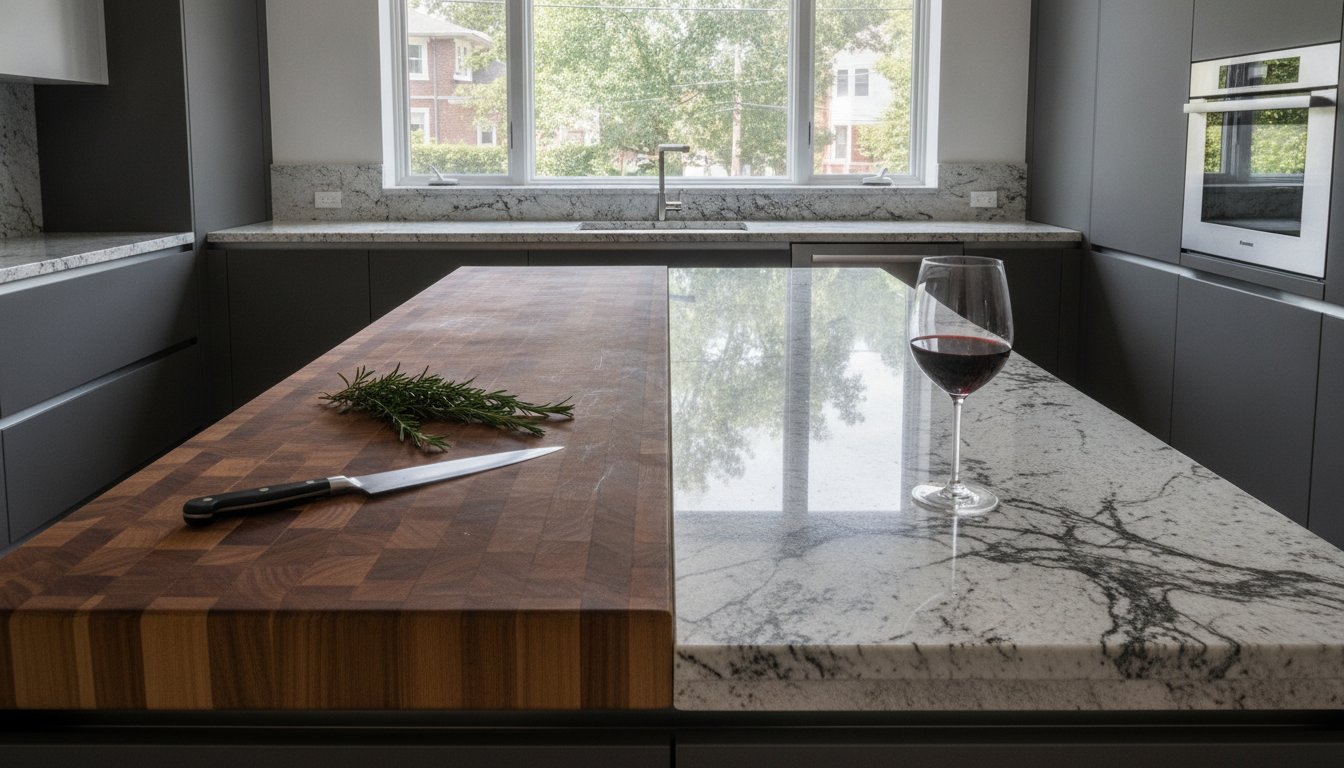
The most sophisticated modern designs often reject the binary choice between stone and wood in favor of a hybrid solution. This approach zones the island for specific tasks. A granite main surface provides the unyielding durability for social interaction and heavy cleaning, while a butcher block “chopping station” is inset as a dedicated culinary zone. Transitioning between these materials requires a master’s touch to ensure the seams are hygienic and the visual flow remains uninterrupted. Integrating custom cabinetry is essential here; the substructure must be engineered to support the disparate weight requirements of a heavy stone slab alongside the shifting organic nature of wood.
Cost vs. Value in the 2026 Market
Analyzing the total cost of ownership over a 20-year period reveals that the initial investment in granite often pays significant dividends. While the upfront cost of premium stone may be higher, its resistance to the daily wear of a busy household eliminates the recurring refinishing expenses associated with wood. This durability translates directly into home appraisal value. To ensure your investment stands the test of time, you must partner with a master granite fabricator near me who understands the nuances of slab selection and structural installation. A properly executed stone island is more than a countertop; it’s a permanent piece of your home’s legacy. Contact Richmond Stone today to begin curating the centerpiece of your kitchen.
Crafting Your Vision: Why Richmond Stone is the Premier Choice for NYC Islands
The creation of a truly bespoke kitchen island requires more than a mere supplier; it demands a guardian of materials who understands the weight of legacy. For over 30 years, Richmond Stone has operated as a family owned beacon of mastery in stone fabrication and custom cabinetry. We recognize that the best stone for kitchen island installations is only as enduring as the skill used to shape it. Our heritage is built upon a quiet confidence in our craft, ensuring that every slab we source and every cabinet we build meets an uncompromising standard of elegance. We provide a seamless, comprehensive “Source-to-Installation” experience that removes the fragmentation often found in high-end renovations, serving the five boroughs and the NJ metro area with dedicated white-glove service.
The Richmond Stone Fabrication Process
Our methodology begins long before the stone reaches your home. It starts with precision digital templating, a process that ensures a flawless fit for even the most complex or curved island silhouettes. This technical accuracy allows us to respect the natural flow of the material while meeting the architectural requirements of your space. Once the template is set, our artisans engage in the rhythmic work of hand-polishing. Whether you desire a mirror-like high polish or a sophisticated honed finish, the edges of your island are refined with a level of detail that mass-produced surfaces cannot achieve. Our fabrication process serves as the definitive intersection of nature’s raw beauty and meticulous human precision. This steady, measured approach ensures that the crystalline depth of your granite or the soft veining of your quartzite is preserved for generations.
Beyond the Surface: Complete Kitchen Renovation
An island is a complex structural entity that must support immense physical weight while maintaining aesthetic grace. Because natural stone is significantly heavier than synthetic alternatives, the substructure is just as vital as the surface itself. We specialize in coordinating custom kitchen cabinets that are specifically engineered to bear the load of premium granite. By acting as a single-source partner for stone, tile, and cabinetry, we eliminate the communication gaps that lead to installation delays or structural failures. This holistic vision ensures that the wood’s warmth and the stone’s permanence work in total harmony. We invite you to experience this artistry firsthand and schedule a design consultation at our Staten Island showroom. Let us help you curate a centerpiece that transcends fleeting trends and becomes a permanent architectural anchor for your home.
Securing Your Architectural Legacy
The choice between the geological permanence of granite and the tactile warmth of butcher block is more than a design preference; it’s a decision regarding the legacy of your home. While wood offers a softened acoustic profile and immediate sensory appeal, granite remains the best stone for kitchen island installations that demand unyielding heat resistance and a lifespan measured in decades. By understanding the maintenance cycles and long-term appraisal value of these materials, you can transform your kitchen from a mere utility space into a permanent social anchor.
With over 30 years of local NYC and NJ expertise, Richmond Stone operates as a family owned artisan workshop dedicated to the manual refinement of the natural world. We provide a comprehensive full-service experience, managing everything from initial sourcing and precision fabrication to final installation. This holistic approach ensures your vision is realized with meticulous attention to detail and structural integrity. Begin your journey toward an enduring kitchen masterpiece, contact Richmond Stone today. Your home deserves a centerpiece that reflects the uncompromising quality of your lifestyle.
Expert Insights for Your Kitchen Island
Can I cut directly on a granite island like I can on butcher block?
You should not use your granite surface as a direct cutting board because the stone’s extreme hardness will immediately dull your professional cutlery. While butcher block is specifically designed to absorb the impact of a blade, granite acts as an unyielding anvil. Repeated cutting in a single area can also compromise the protective sealant and lead to localized dulling of the stone’s refined polish.
Is butcher block more affordable than granite for a large kitchen island?
The cost difference depends entirely on the rarity and construction of the materials you select. While standard edge-grain maple is often more accessible, custom end-grain walnut or exotic hardwoods can reach price points that rival premium stone. When seeking the best stone for kitchen island projects, remember that granite offers a 30 year lifespan that often makes it the more cost-effective long-term investment.
How often do I really need to seal my granite countertops?
Most high-end granite installations require professional sealing once every 12 to 24 months. The exact frequency depends on the mineral density of your specific slab and the intensity of your daily kitchen activity. Darker, denser granites often require less frequent attention than lighter, more porous varieties to maintain their resistance to deep-set staining and bacterial absorption.
Will a butcher block island lower my home’s resale value in NYC?
A wood island doesn’t inherently lower value, but it lacks the universal prestige and “turn-key” appeal that New York buyers typically expect. Natural stone is viewed as a permanent architectural feature that requires minimal effort from the next owner. Investing in the best stone for kitchen island surfaces ensures a broader market appeal and a higher return on investment during resale.
What happens if I put a hot pan on a butcher block surface?
Placing a hot pan directly on wood will cause permanent scorching, charring, or thermal discoloration. Unlike granite, which can handle temperatures exceeding 400 degrees without structural damage, wood is an organic material that reacts poorly to extreme heat. You must always use trivets or heat pads to protect the delicate fibers of a butcher block surface from irreparable scarring.
Can I install a sink in a butcher block island without it rotting?
You can install a sink in wood, but it demands meticulous vigilance to prevent moisture damage. Constant exposure to standing water around the sink’s edge can lead to warping or black mold within the wood’s grain over time. This is why many master artisans recommend stone for the sink area and reserve wood for dry prep zones or social ledges.
Which material is more hygienic for a family kitchen?
Granite is the more hygienic choice for a busy family kitchen due to its non-porous nature when properly sealed. While certain woods possess natural antimicrobial properties, deep knife scars in butcher block can trap food particles and moisture. Stone provides a smooth, impenetrable surface that is easily sanitized with simple cleaners, ensuring a safe environment for daily meal preparation.
Does Richmond Stone provide both the stone and the custom cabinetry for islands?
Yes, we provide a complete, integrated solution that includes both premium stone fabrication and custom kitchen cabinetry. Our workshop handles the entire lifecycle of the project, from sourcing raw materials to the final installation in your home. This single-source approach ensures that your island’s substructure is perfectly engineered to support the substantial weight of a natural stone centerpiece.