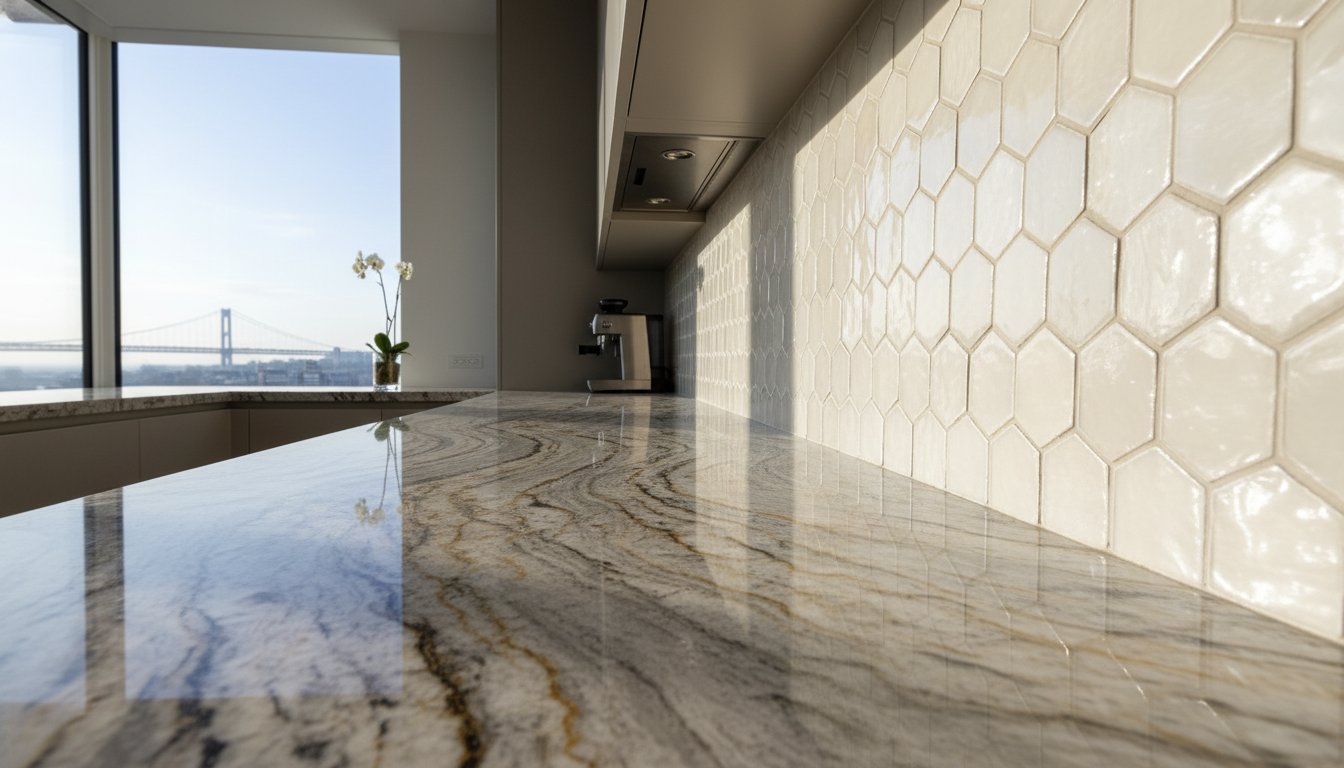

Choosing Between Honed and Polished Marble for Your Space
A glossier finish isn’t automatically more forgiving. When choosing between honed and polished marble, consider how each shows wear: both can etch when exposed to acids, but etch marks tend to be more visible on polished marble. Honed marble has a matte surface that can make those marks less noticeable, while polished marble reflects light and emphasizes the stone’s veining and color.
That difference matters in a room where marble is used every day. Honed marble may suit busy surfaces or bathroom floors, while polished marble can add luminous definition to a focal area. Neither finish is immune to stains or etching, and both need thoughtful care.
This guide compares the finishes in appearance, porosity, stain resistance, and everyday performance. Use the practical guidance to match marble to your space, routines, and design preferences, keeping etching in mind.
Key Takeaways
- Choose a glossy finish to reflect light and emphasize marble’s veining; a matte finish offers a quieter visual character.
- Both finishes need thoughtful care because marble is porous, and sealing helps protect against stains.
- Acids can etch either finish, but marks tend to be more visible on polished marble.
- Honed marble may be a practical option for bathroom floors and hardworking spaces where a less slippery surface is desirable.
- Match the finish to your daily routines and design priorities rather than treating one as universally better.
✨ What is Polished Marble?
Polished marble has a glossy finish that reflects light and emphasizes natural veining. Honed marble is less reflective and has a matte appearance; when wet, it is less slippery than polished marble.
Polished Marble’s Gloss and Light Reflection
A polished finish gives marble a smooth, reflective surface. Light moves across its gloss, making a room feel brighter and the stone’s color variations more prominent. Dramatic veining becomes a focal point, especially across a broad countertop or a statement wall. Polished marble is often finished up to 3000 grit, creating a lustrous surface that contrasts with honed marble’s softer, less reflective character.
Surface Feel and Appearance
Polished marble feels smooth and sleek beneath the hand, while honed marble has a smooth, matte or velvet-like texture. Honing stops the sanding process before the stone becomes glossy; a honed finish is described at around 400 to 600 grit. This difference shapes the room’s character: polished stone appears bright and dramatic, while honed stone feels understated and authentic.
Honed marble can also make surface imperfections less noticeable than polished marble. Its understated appearance suits spaces where a reflective focal point isn’t the goal. For example, a honed floor can balance a polished marble mosaic backsplash, creating contrast through texture and sheen rather than adding another material.
Slip Resistance When Wet
Honed marble is less slippery than polished marble when wet, making it a potential choice for bathroom floors. Its matte surface feels different from the slick, reflective face of polished stone. That distinction matters where water regularly reaches the floor, such as beside a shower or bathtub. Finish alone, however, doesn’t make every marble floor suitable for every space.
In a high-use area, consider how the finish will stand up to daily routines. Honed marble’s softer appearance can work well where visual calm matters, while polished marble adds reflection to a focal area. Natural veining varies from slab to slab, so the same finish can look different across pieces. View the actual stone in the room’s lighting before deciding how it will look.
| Finish | Appearance | Surface feel | Wet-floor slip resistance |
|---|---|---|---|
| Polished | Glossy, reflective, dramatic veining | Smooth and sleek | More slippery than honed |
| Honed | Matte, understated, softer contrast | Smooth with a velvet-like texture | Less slippery than polished |
Choose polished marble for a brighter, more dramatic appearance, or honed marble when a matte look and greater resistance to slipping on a wet floor better suit the space.
Stain resistance and porosity
Marble is porous, so both honed and polished surfaces need sealing to help protect against stains. Their finishes differ in porosity: honed marble is more porous than polished marble. As a result, spills may penetrate honed marble more readily if left on the surface. In a kitchen, promptly wiping up oil, wine, or coffee helps reduce absorption and visible staining.
Porosity and Sealing
Sealing helps limit absorption, but it doesn’t make marble impervious. Honed marble should be sealed regularly, and Design Surfaces recommends sealing honed stone every 6 to 12 months. Polished marble should also be sealed as needed, depending on the stone type. A regular care routine supports the finish, while the stone’s natural veining remains visible beneath it.
Sealer doesn’t prevent every kind of surface change. Marble can etch regardless of the sealer used, so stain protection and etch protection are separate considerations. A sealed kitchen counter can still develop a dull mark after contact with an acidic ingredient. Understanding this difference helps set practical expectations for marble.
Cleaning and Spill Response
Use a pH-neutral cleaner made for stone on honed marble. Avoid vinegar and lemon-based cleaners, which are acidic and can damage the surface. Blot or wipe up fresh spills promptly instead of letting liquid sit. Polished stone also needs gentle care: avoid abrasive pads and powders, which can scratch the surface and dull its glossy appearance.
- Wipe spills promptly, especially oil, wine, and citrus juice.
- Choose a pH-neutral stone cleaner for routine cleaning.
- Keep acidic products and abrasive cleaning tools away from marble.
- Follow a regular sealing routine suited to the finish and stone.
Scratches, Stains, and Daily Use
Polished marble can show fingerprints, smudges, and scratches more readily. Its reflective surface can make a scratch or dull patch stand out against the surrounding shine. Honed marble’s softer appearance tends to conceal small imperfections better, though its greater porosity makes prompt spill cleanup important. Neither finish prevents etching from acid contact.
In a frequently used kitchen, honed marble may feel more forgiving because small marks are less conspicuous. That visual advantage doesn’t remove the need for sealing and careful cleaning. Polished marble may suit a less-used surface where reflective elegance matters more than disguising everyday marks. Compare the finishes against your habits, not appearance alone.
For a considered kitchen scheme, connect finish decisions with the surrounding materials and stone finish planning. A consistent care routine, prompt spill response, and suitable cleaner help preserve the character of either surface.
How honed and polished marble show etching
Etching is a change to marble’s surface caused by contact with acidic substances. Lemon juice, vinegar, and some foods can leave dull marks on either finish. Sealer helps reduce staining, but it doesn’t prevent acid from etching the stone. The key difference is often visibility: polished marble shows etch marks more clearly, while honed marble’s matte texture can make them less conspicuous.
Why the Same Etch Looks Different
Polished marble reflects light evenly, so a dull patch interrupts its sheen. On a polished countertop, a lemon-juice ring may appear as a pale, less reflective spot. It can stand out against the surrounding gloss even after the liquid is wiped away. Scratches may also catch the light and become more visible against a polished surface.
Honed marble has a softer, matte appearance that scatters light instead of reflecting it sharply. An etched area can therefore blend more subtly with the surrounding texture. The surface has still changed; the finish simply makes that change less obvious. On honed marble countertops, daily marks may look less pronounced than on polished stone.
Acid, Sealer, and Staining
Etching and staining are different concerns. A stain develops when a substance enters porous stone and leaves discoloration. Etching alters the surface after acid contact, often leaving a dull spot. A sealed marble slab can still etch from vinegar or citrus because sealer doesn’t make the stone acid-proof. In a kitchen, promptly clean up acidic spills even on a sealed counter.
That distinction matters when planning a backsplash beside marble countertops. A backsplash may encounter splashes from tomato sauce or lemon, while a counter sees food preparation and drink spills. Either finish can etch in these situations. The finish affects how clearly the mark appears, not whether acid can affect the stone.
What to Expect in Daily Use
Consider lighting as well as activity. A polished surface near a bright window can make an etch easier to notice as daylight shifts across the stone. Under softer lighting, the same mark may be less apparent. In a showroom, view a marble sample from several angles and notice how reflections reveal surface changes.
Choose the finish according to which marks you’re most willing to see. Polished stone emphasizes veining and creates a luminous look, but dull etches can contrast with its gloss. Honed stone has a quieter appearance, though it remains vulnerable to acidic contact. Neither finish removes the need for careful use.
For day-to-day care, use these steps:
- Wipe acidic spills, such as lemon juice or vinegar, promptly.
- Use a pH-neutral cleaner made for natural stone.
- Avoid abrasive powders and pads that can scratch polished marble.
- Expect possible etching on both finishes, including sealed marble.
Honed marble can be the more forgiving visual choice for an active kitchen, while polished marble suits those who value a reflective surface and accept more visible marks. Compare a sample with your countertop lighting and routines before deciding.

Uses for honed marble in bathrooms and high-function spaces
Honed marble brings a smooth, matte surface to rooms shaped by daily routines. In a bathroom, it is less slippery than polished marble, making it a potential floor choice. Its subdued appearance also tempers the reflective quality of mirrors, metal fittings, and glazed tile. The stone’s natural beauty remains, expressed more softly than with a glossy finish.
Bathroom Floors and Wet Areas
For a bathroom floor, honed marble is less slippery than polished marble. It may be worth considering in a space where splashes are common, but the finish alone does not determine how safe a floor will feel. That relative advantage doesn’t mean every floor is equally slip-resistant. Tile size, grout joints, layout, and conditions of use also affect how the finished floor feels underfoot.
View the actual marble under bathroom lighting before choosing. A honed tile beside a shower can look understated against reflective glass, while a polished mosaic backsplash adds contrasting sheen. This pairing uses differences in texture deliberately, rather than asking every surface to make the same visual statement.
Vanities and Everyday Use
A honed marble vanity top suits a bathroom where a subdued surface complements natural wood, pale cabinetry, or brushed metal. Its matte finish can make small surface imperfections less noticeable than they would be on polished stone. Honed marble can also develop a natural patina with use, so the surface may gradually reflect the rhythms of the household.
That character can suit high-use areas beyond bathrooms. For example, a honed finish on a kitchen island used for meal preparation won’t spotlight every small mark. Honed marble still needs prompt spill cleanup and regular sealing, particularly where liquids and acidic products are part of daily use.
Care That Fits the Room
Build care into the room’s routine. In a bathroom, wipe water and toiletry spills from a honed vanity rather than letting them linger. Use a pH-neutral cleaner made for stone, and keep vinegar or lemon-based cleaners away from the marble. Sealing helps protect against stains, but it doesn’t prevent acid etching.
In a kitchen, keep a soft cloth close to the island and clean spills promptly. This simple step limits the time liquids have to absorb into the more porous honed surface. One Houzz commenter reported being very happy with honed marble countertops after 9 years, an individual experience rather than a care guarantee.
Use these considerations to match the finish to the space:
- Choose honed marble for a bathroom floor when its relative wet slip resistance is a priority.
- Consider a honed vanity top for a matte, understated look.
- Pair honed floor tile with a polished mosaic backsplash for contrast.
- Plan regular sealing and prompt cleanup for honed surfaces in busy rooms.
The right choice balances lifestyle, maintenance, and appearance. A bathroom floor where a less slippery finish is a priority may favor honed marble; a design centered on reflected light may call for polished stone elsewhere.
What is the difference between honed and polished marble finishes?
The difference begins with how the stone is finished. Honed marble is sanded until smooth, then left without a gloss. Polished marble receives further refinement to produce a reflective surface. That choice changes how light, veining, and everyday imperfections appear, so compare the finish with the room’s purpose.
How the Finishes Are Made
A honed finish is made by stopping the sanding process before the marble becomes glossy. It is described at around 400 to 600 grit, with a smooth, matte or velvet-like surface. Polished marble is often finished up to 3000 grit. Its refined surface reflects light and makes natural color variations and bold veining more prominent.
These finishes are not a ranking of quality. The appropriate treatment depends on the atmosphere and use you want. Honing gives a slab a soft, understated presence; polishing brings out contrast and a more luminous appearance. Both retain natural marble’s distinctive patterning.
Compare the Practical Differences
Use the comparison below to focus on how each finish looks and feels in a room. It doesn’t make one finish universally better; it clarifies the trade-offs behind the decision.
| Criterion | Honed marble | Polished marble |
|---|---|---|
| Surface treatment | Stopped before gloss, around 400 to 600 grit | Often finished up to 3000 grit |
| Appearance | Matte, soft, and understated | Glossy, reflective, and dramatic |
| Veining and color | Subtler visual contrast | More prominent natural variation |
| Imperfections | Can conceal small surface irregularities more easily | Scratches and marks can be more visible |
| Character over time | Can develop a natural patina | Preserves a bright, reflective look |
For a bathroom floor or a busy room, consider honed marble’s matte appearance and lower slipperiness when wet. For a focal wall or a surface intended to reflect light, polished marble can make veining more striking. A honed floor paired with a polished mosaic backsplash also creates contrast without changing the stone.
Before deciding, view the slab and finish in lighting similar to the room’s. Check the stone from several angles, since reflections can change as daylight moves. Consider whether you prefer a surface that softens visible imperfections or one that heightens color and sheen. These priorities matter more than treating either finish as the default choice.
- Choose honed for a softer look and a surface that can develop patina.
- Choose polished to emphasize veining, color contrast, and reflected light.
- Match the finish to the room’s use, lighting, and care routine.
For a closer look at how marble finishes shape a space, explore marble finish options.
Richmond Stone: Granite Countertops
Richmond Stone offers marble, granite, quartz, and quartzite countertops to help you make a considered choice. If you like honed marble’s softer look but its care needs don’t suit your kitchen, comparing these materials can clarify which surface better fits your priorities. If marble remains your preference, consider the honed or polished finish alongside the slab’s veining, the room’s lighting, and your daily routines.
Bring your design direction and practical concerns into the conversation, especially if you’re weighing visible etching against a reflective appearance. That gives the material choice context beyond the finish alone. For a personalized next step, contact Richmond Stone or visit richmondstone.com.
Shape a Finish That Feels Like Yours
Base the decision on the atmosphere you want to live with, not a passing design trend. A countertop is part of the room’s daily rhythm, and its finish influences how cabinetry, lighting, and materials come together. As you’re choosing between honed and polished marble, picture the surface in morning light and during an ordinary evening at home. The right choice should feel considered in both moments.
Richmond Stone offers marble, granite, and quartz countertops, giving you natural and engineered surfaces to consider as your plans take shape. Bring your priorities into the conversation, whether you’re drawn to marble’s individual veining or comparing it with another countertop material. A thoughtful selection can make the space feel distinctly yours, with beauty grounded in how you use it.
Contact Richmond Stone about marble to take the next step toward a surface that belongs in your home. Let your vision guide the choice.
Frequently Asked Questions
🔍 What is Honed Marble?
Honed marble is natural stone finished with a smooth, non-glossy surface. Its muted appearance can complement materials with more shine, such as polished metal fixtures or glazed tile. Each slab has distinct veining, so no two honed pieces look identical. For a cohesive room, compare the actual slab with cabinetry and tile samples to see how its color and pattern work with the surrounding finishes.
What Are The Maintenance Needs Of Each Finish?
Both finishes need regular care, gentle cleaning, and sealing suited to the stone. For a practical routine, wipe spills promptly, use a pH-neutral stone cleaner, and avoid acidic cleaners and abrasive pads. A polished surface may make smudges easier to notice, while honed marble’s greater porosity makes prompt spill cleanup especially useful. Follow the care guidance for the specific stone and sealer rather than assuming every slab needs the same treatment.
Where Does It Shine & Make a Scene?
Polished marble makes its strongest visual statement where reflected light and pronounced veining are part of the design. Consider it for a focal wall, fireplace surround, or backsplash that catches light above a work surface. Honed marble suits a quieter composition, such as a low-sheen vanity top paired with reflective fittings. In either setting, view the slab beside nearby materials before deciding.
Which Marble Finish Is Best for Each Room?
Choose according to the room’s use and the effect you want. Honed marble may suit a bathroom floor because it’s less slippery when wet than polished marble. In a kitchen, honed stone can make everyday marks less conspicuous, while polished marble suits a feature area where shine is desired. For a layered look, pair a honed floor with a polished mosaic backsplash to balance texture and reflection.
Which Stones Look Best Honed or Polished?
No single marble slab is best with one finish in every room. Polishing can bring out a slab’s natural veining and color contrast; honing gives the same stone a softer, more understated expression. Examine the specific piece, since pattern and color vary from slab to slab. Compare finish samples alongside your cabinetry, wall color, and lighting to see which treatment supports the overall design.
🔄 Can You Change Finishes After Installation?
Yes, an installed polished marble surface can be honed, but the work changes the stone’s exposed surface. Abrasive honing may affect softer and harder minerals differently, potentially leaving an uneven finish or high spots. The edges and corners also need consistent treatment to match the main surface. Consider the desired result and the stone’s condition before deciding to alter a finished countertop or floor.
How do honed and polished marble compare in appearance and color?
Polishing makes marble’s colors and veining appear more pronounced by adding gloss and reflection. Honing preserves the same stone’s pattern but gives it a softer, matte quality, so contrasts can seem less dramatic. The slab determines the color; the finish changes how light interacts with it. View a sample in both finishes beside the room’s actual materials and under its usual lighting.
Which marble finish is more resistant to scratches and etching?
Neither finish prevents scratches or acid etching. Polished marble can show scratches and etch marks more clearly because damage interrupts its reflective sheen; honed marble often disguises those marks better. That makes honed stone visually more forgiving, not immune to surface changes. When choosing between honed and polished marble, distinguish how easily marks show from whether the stone can be affected, then consider your room’s daily use.