
Common Problems with Marble Countertops: Causes, Care, and Solutions
Could a pale ring on marble be an etch in the polish rather than a stain? A splash of lemon juice, a wine spill, and a scratch can leave marks that look similar but call for different responses. The common problems with marble countertops are easier to manage when you know what you’re seeing. Cleaning or treating a mark before identifying it can make the damage more noticeable.
It’s understandable to wonder whether everyday kitchen use will harm marble, or whether sealing can prevent every mark. Marble is a natural stone with distinctive depth and veining, but it does ask for considered care. Sealer can help reduce staining, for example, yet it offers little protection against acid etching.
This guide explains how to distinguish etching, staining, scratches, and other signs of wear; how to clean and protect marble; and when a professional assessment may help you choose a next step. You’ll also learn when marble’s evolving patina may suit your home, and when a different material, such as quartz or quartzite, may better match your preferences.
Key Takeaways
- The common problems with marble countertops can look alike. Note a mark’s appearance, location, and likely cause before choosing a cleaning or care response.
- Marble’s natural mineral composition and variation from slab to slab shape both its distinctive character and how it responds to kitchen use.
- Build a simple protection routine: wipe spills promptly, use a stone-appropriate cleaner, and reach for cutting boards and trivets.
- When marks are extensive or their cause is unclear, seek an assessment before deciding whether repair, refinishing, or replacement is appropriate.
- Compare marble’s natural variation and visible aging with quartz, granite, and quartzite to find a surface that suits your care preferences.
Common Problems with Marble Countertops: What Homeowners Notice First
A new mark on a marble countertop can be unsettling, especially when its cause isn’t clear. Common problems with marble countertops include etching, stains, scratches, chips, dullness, and questions about upkeep. Start by observing the mark rather than reaching for a treatment. A cause-first approach helps prevent you from treating one kind of damage as another.
Marble is natural stone, and each slab has its own mineral pattern, veining, and character. That variation affects how a mark appears against the surface. Before cleaning or attempting a fix, note the mark’s location, check it in natural light, and consider what may have contacted or struck the stone.
For a visual overview of marble’s advantages and considerations, watch this short video:
Which marble countertop marks are most common?
Etching changes the surface sheen, often after contact with acidic substances such as citrus or vinegar. A stain appears as discoloration when a substance penetrates the stone. Scratches and chips are physical changes: scratches can interrupt the surface, while a chip removes a small fragment. Broad dullness may signal wear, residue, or a change in finish. Marble’s calcite-rich composition helps explain its sensitivity to acids; learn more about the geological properties of marble.
A mark can look different depending on the finish, lighting, and stone pattern. A pale spot on polished marble, for instance, may reflect altered sheen rather than absorbed color. Appearance is a useful clue, not a diagnosis. If possible, photograph the mark in consistent light and note any spill or product used nearby.
Are marble countertop problems signs the stone is ruined?
No. A visible blemish doesn’t automatically mean the countertop needs replacement. Some concerns call for routine, stone-appropriate care. A deep chip, persistent discoloration, or widespread change in finish may warrant assessment by a qualified stone professional. The right next step depends on the stone, finish, extent of damage, and suitable treatment.
A change in surface sheen may be a care concern, while a deep chip or extensive damage deserves professional assessment before you decide what to do. No treatment can be assumed to remove every mark completely, so identify the likely cause before attempting a remedy.
Why Marble Countertops Etch, Stain, Scratch, or Lose Their Shine
Marble’s natural composition helps explain how it responds to spills and contact. Marble contains calcite, a mineral that reacts with acids. A splash of lemon juice, vinegar, or an acidic cleaner can alter the polished surface, leaving a dull spot even when no colored residue remains.
This change is called etching. It affects the finish rather than creating a stain, and it may be more visible on polished marble than on a honed surface. Not every dull area has the same cause, however. Wear, residue, or a change in finish may look similar. For broader technical guidance on stone use and care, consult the Natural Stone Institute standards and resources.
What causes etching on marble countertops?
Acidic substances can react with calcite and disturb the stone’s surface sheen. The result may look like a pale ring or cloudy patch, not a colored mark. Location and appearance offer clues, but they don’t confirm the cause or determine a repair method. Avoid abrasive scrubbing or experimenting with treatments until you understand what changed.
What causes marble stains, scratches, and chips?
Stains occur when liquids or other substances penetrate the stone. How far they travel and how visible they become depends on the material, exposure, and sealer condition. A penetrating sealer can slow absorption, but it can’t make marble impervious to every spill.
Scratches and chips are physical changes. Abrasive particles dragged across the surface or a heavy impact may contribute, while unsuitable cleaners can leave residue or affect the finish. Ordinary use doesn’t mean damage is inevitable. Edges, seams, lighting, finish, and the slab’s natural pattern all influence how an imperfection looks.
Sealing can help reduce stain absorption, but it doesn’t prevent acid etching. Protection from one does not replace precautions against the other. That distinction is central to understanding the common problems with marble countertops and choosing a sensible response. For care guidance suited to your particular surface, consult a qualified stone professional before attempting a repair.
Careful material selection and fabrication are part of the countertop’s long-term experience. If you’re considering marble for a kitchen or another space, you can explore marble countertop options and weigh the stone’s character alongside its care requirements.
Marble Countertop Problems Compared: Identify the Mark Before Acting
Use a mark as a clue, not a diagnosis. Common problems with marble countertops can overlap in appearance, and lighting, finish, veining, seams, and previous treatments may all affect what you see. Check the mark in natural light, note its location and appearance, and choose a cautious first step rather than immediately applying a cleaner or polish.
| Visible symptom | Possible cause | Sensible first response |
|---|---|---|
| Dull spot or ring | Etching, residue, wear, or a finish change | Check whether the sheen differs from nearby stone; don’t scrub aggressively. |
| Discolored area | Absorbed liquid or another substance, though other causes are possible | Blot any fresh spill and record what contacted the surface, if known. |
| Fine line or scratch | Surface abrasion or another physical change | Inspect gently in angled light; avoid abrasive pads. |
| Small missing fragment | Chip from impact or edge stress | Protect the area from further knocks and note its location. |
| Widespread loss of shine | Wear, residue, or changes to the finish | Compare with a less-used area and seek advice before polishing. |
How can you tell etching from a stain?
Etching often changes the sheen, appearing dull or cloudy without a clear color shift. A stain is discoloration that may seem to sit within the stone. The two can overlap, and veining or lighting can make the difference hard to see. Photograph the mark in consistent light and note any spill or cleaning product involved. Before choosing a cleaner or treatment, review these Natural Stone Institute cleaning guidelines.
When does a marble countertop problem need professional attention?
Seek qualified advice for deep chips, spreading cracks, recurring marks, or damage near a seam, edge, or cutout. Those areas may need closer assessment before honing, polishing, or other refinishing is considered. Don’t assume a treatment is suitable based on a photograph alone. The stone, finish, previous care, and extent of damage can all affect the appropriate approach.
Identify the stone and the likely problem before applying a cleaner or treatment. If the cause remains uncertain, pause and have the surface assessed rather than risk making the mark more pronounced.

How to Prevent Common Problems with Marble Countertops
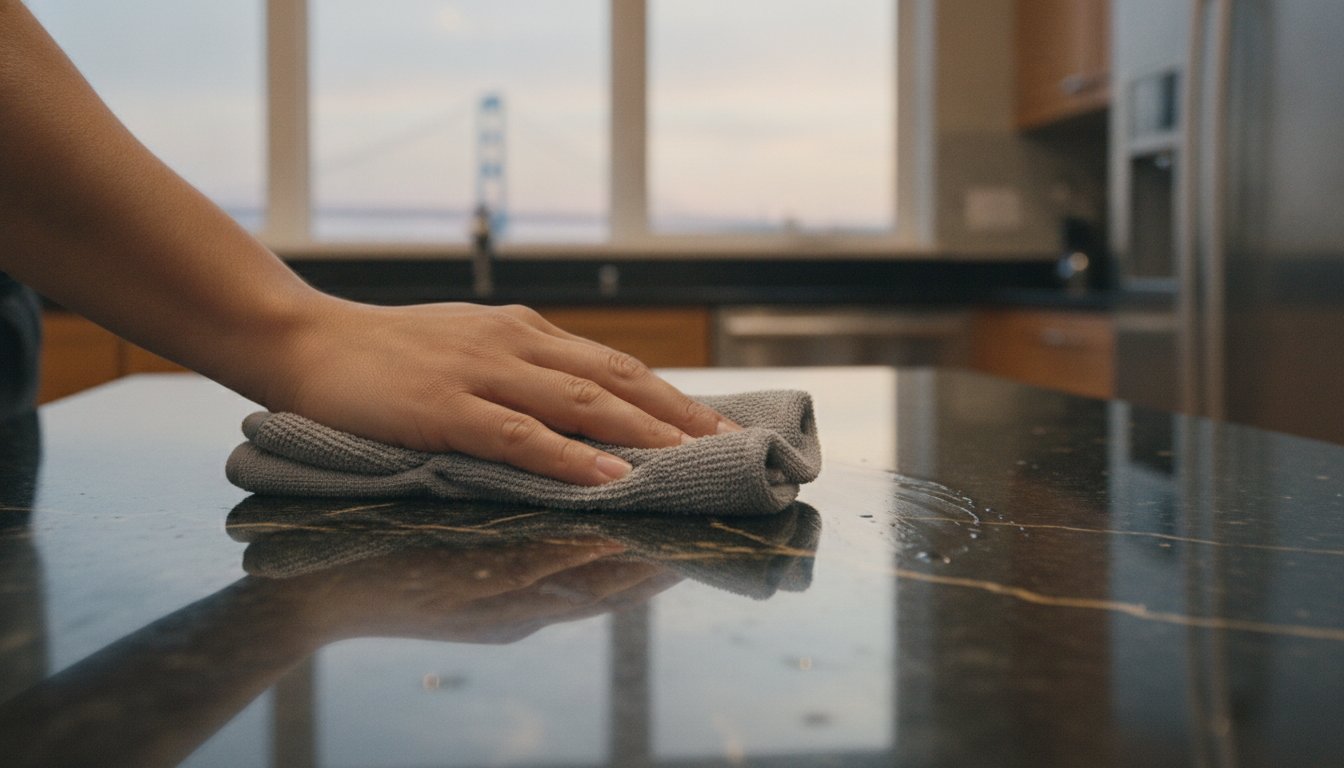
A few consistent habits can help preserve marble’s finish and reduce avoidable wear. Wipe spills promptly, especially around food preparation and serving areas, and use a soft cloth rather than an abrasive pad. For routine cleaning, choose a pH-neutral cleaner labeled for natural stone and follow its directions. Avoid acidic household cleaners and products not intended for marble, since they may affect the surface.
Use cutting boards for food preparation and trivets beneath hot cookware. These barriers help limit scratches, impacts, and exposure to direct heat. Clear away crumbs before wiping so grit isn’t dragged across the stone. If you’re considering an unfamiliar cleaning product, check its label and test it in an inconspicuous spot only if the product guidance allows it.
What cleaning habits help protect marble?
Keep the routine gentle and consistent: remove spills, wipe with a soft cloth, and use a suitable stone cleaner. Don’t use vinegar, lemon juice, or abrasive powders as shortcuts. If a mark remains after gentle cleaning, pause before trying a stronger product. The cause may call for a different response than ordinary residue.
Does marble need sealing, and how often?
Sealing can help reduce the amount of liquid absorbed into marble, but it doesn’t make the stone stain-proof or protect it from etching. There isn’t one resealing schedule that suits every countertop. The right interval depends on the particular stone, the sealer used, how the surface is used, and the product manufacturer’s guidance.
Follow the instructions for the sealer applied to your countertop, including preparation and maintenance recommendations. If you don’t know whether the stone has been sealed or aren’t sure what treatment was used, ask a qualified stone professional before applying another product. A small water test may offer a clue about absorption, but it can’t identify an existing sealer or establish a complete care plan.
Marble’s long-term performance begins before daily care, with a considered material choice and careful fabrication for the intended space. If you’re weighing marble against your household’s routines, speak with an experienced countertop team about surface suitability and care expectations. Discuss countertop material options before making your selection.
Should You Keep Marble or Choose Another Countertop Material?
Choosing marble means valuing more than a pristine surface. Each slab has its own veining and mineral character, and the stone can develop visible signs of use over time. Some homeowners welcome that evolving patina; others prefer a surface that asks for less vigilance. Neither preference is wrong. The right choice depends on how you cook, how promptly you can tend to spills, and what kind of beauty you want to live with every day.
Is marble right for a busy kitchen?
A busy kitchen doesn’t automatically rule out marble. Consider whether your household can use cutting boards and trivets, wipe spills promptly, and accept that marks may become part of the surface’s story. If visible aging would frustrate you, compare materials before committing. Natural wear is a personal design and lifestyle consideration, not a sign that marble is inherently unsuitable.
As you weigh common problems with marble countertops, compare materials by character as well as care:
- Marble: Natural variation and distinctive veining, with a finish that may show etching or wear.
- Quartz: An engineered surface with design options that can offer a more consistent pattern than natural stone.
- Granite: Natural stone with its own individual pattern and material-specific care considerations.
- Quartzite: Natural stone with distinctive veining. Assess the particular slab and its care needs rather than assuming every stone behaves alike.
Ask to review the actual slab, not just a small sample. Pattern, color movement, and finish can feel different across a full surface, and no alternative fully duplicates marble’s natural depth and variation.
How can a countertop professional help you decide?
A countertop professional can help you discuss slab variation, finish, seams, edges, fabrication details, and your household’s needs before you choose. Richmond Stone sources, templates, fabricates, and professionally installs marble and other stone surfaces. The family-owned and operated business serves Staten Island, New York City, and the New Jersey metro area.
Bring practical questions to the conversation: How will the surface look under your kitchen’s lighting? What care does the specific stone and finish call for? How might your cooking habits affect the choice? Clear answers can help you select a countertop with realistic expectations, whether marble’s expressive character or another material better suits your home.
If you’re planning a kitchen, explore countertop materials with an experienced team and discuss a custom countertop plan shaped around your space, style, and everyday routines.
Choose Marble with Confidence
Common problems with marble countertops are easier to approach when you identify the cause before treating a mark. Etching, stains, scratches, and chips can look alike, yet each calls for a considered response. Gentle cleaning, prompt spill care, and realistic expectations about sealing help protect the surface without promising it will remain untouched by daily life.
Marble’s natural variation and evolving patina may be exactly what makes it right for your home. If you prefer different care demands or a more consistent appearance, compare it with quartz, granite, or quartzite before deciding. The best surface is the one that suits both your design vision and the way you use your kitchen.
Richmond Stone is family-owned and operated and has specialized in custom countertops, cabinetry, and tile for more than 30 years. Its services include sourcing, templating, fabrication, and professional installation of marble and other stone surfaces. Explore custom marble countertop options with Richmond Stone and discuss a surface that fits your space and care preferences.
Frequently Asked Questions
What are the most common problems with marble countertops?
The most common problems with marble countertops include etching, stains, scratches, chips, and a gradual loss of shine. Etching changes the surface sheen, often after contact with acidic substances, while stains appear as discoloration from absorbed material. Scratches and chips are physical changes. Since lighting, finish, and natural veining can affect how marks look, identify the likely cause before trying a cleaner or treatment.
Can you remove etching from a marble countertop?
Etching may sometimes be improved, but the right approach depends on its depth, extent, and the countertop’s finish. A qualified stone professional can assess whether honing or polishing is appropriate. Don’t assume a household cleaner or abrasive product will restore the surface; it may worsen the finish. Results aren’t guaranteed, and a professional should examine the stone before recommending treatment.
Does sealing marble prevent stains and etching?
No. A penetrating sealer can reduce how readily marble absorbs some staining substances, but it doesn’t make the stone stain-proof. Sealer also doesn’t prevent etching, which occurs when acids alter the stone’s surface. Wipe spills promptly and avoid acidic products on marble, even if the countertop has been sealed. Follow the specific sealer’s instructions for application and ongoing care.
What cleaner should you use on marble countertops?
Use a pH-neutral cleaner labeled for natural stone and follow its directions. For everyday wiping, a soft cloth helps avoid scratching the surface. Avoid vinegar, lemon juice, acidic cleaners, abrasive powders, and scouring pads, which can damage or dull marble. If you’re considering an unfamiliar product, check its label and test it in an inconspicuous area only if the manufacturer’s guidance permits.
Can scratched or chipped marble countertops be repaired?
Some scratches or chips may be addressed by a stone professional, but the suitable method depends on the stone, finish, location, and extent of damage. Deep chips or damage near an edge, seam, or cutout deserve careful assessment before repair or refinishing is considered. Don’t assume every mark can be removed completely. Avoid DIY treatments until you understand the likely cause and risks.
Is marble a bad choice for a kitchen countertop?
Marble isn’t automatically a bad choice for a kitchen. It’s a natural material with distinctive veining that may develop visible signs of use. Consider your cooking habits, willingness to wipe spills promptly, and comfort with patina. If you prefer a surface that needs less attention, compare marble with options such as quartz, granite, and quartzite. The best fit depends on your priorities and care expectations.
How often should marble countertops be sealed?
There isn’t one resealing interval that applies to every marble countertop. Timing depends on the stone, the sealer, how the surface is used, and the product manufacturer’s recommendations. Follow the guidance for the specific sealer already applied, and avoid layering products without confirming compatibility. If you don’t know whether the marble has been sealed or what treatment was used, ask a qualified stone professional for advice.