

DIY vs. Professional Countertop Installation Cost: What You’re Really Paying For
The cheaper countertop quote may not mean the less expensive project. A DIY materials estimate can look appealing beside a professional quote, but the two may cover very different work. The real DIY vs professional countertop installation cost depends on what’s included, from tools and fabrication to delivery, cutouts, removal, and the risk of damaging a costly slab.
It’s reasonable to want control over your budget and to consider which tasks you could take on yourself. But measuring, cutting, lifting, and fitting stone or quartz require more than confidence. The material, layout, equipment, and room for error all matter. A headline price alone won’t show the full picture.
This guide compares project scopes, explains the skills and equipment DIY work may require, and identifies costs and risks that can change the calculation. You’ll also learn what to check in a professional estimate, including whether templating, fabrication, delivery, removal, and installation are included, so you can choose an approach that fits your countertop and project constraints.
Key Takeaways
- Compare complete project scopes, not just labor or materials, to understand the real DIY vs professional countertop installation cost.
- Account for tools, transport, protective equipment, and waste when assessing whether DIY work fits your budget and capabilities.
- Consider how material, layout, and experience affect the measuring, lifting, cutting, and fitting involved.
- Check which stages a professional estimate covers, from templating and fabrication to delivery and on-site installation.
- Prepare your measurements, material preference, sink and cooktop details, and access conditions before requesting a written scope.
DIY vs. professional countertop installation cost: what belongs in the comparison?
A materials quote and an installation quote rarely describe the same project. A DIY estimate may show only the countertop material, while a professional estimate may include several stages of work. To compare the DIY vs professional countertop installation cost fairly, list the work from measuring and fabrication through delivery, fitting, and finishing, then check which tasks each estimate covers.
The right scope depends on the material, layout, site access, and services selected. A straightforward run of counters and a design with multiple sections, a sink, a cooktop, or a backsplash involve different details to plan. Use a comparison table as a prompt for questions, not as a substitute for estimates based on your project.
A real-world example can help illustrate what a DIY material choice may involve. This video reviews concrete countertops several years after a DIY installation:
Which tasks are included in a countertop installation?
Separate the choice and purchase of material from the work needed to turn it into a finished surface. Depending on the project, the scope may involve:
- Planning: selecting material and confirming dimensions, layout, and details.
- Preparation: templating, fabrication, edge finishing, and coordinating sink or cooktop openings.
- Delivery and fitting: transporting pieces to the site, positioning them, and completing installation.
- Related details: aligning the countertop with a backsplash, sink, cooktop, or chosen edge profile.
Confirm in writing which tasks are included, which are excluded, and who is responsible for each. In particular, check whether existing-countertop removal, cutouts, and backsplash work are part of the scope or need separate arrangements. This prevents gaps between buying the material and getting a finished installation.
Why DIY and professional quotes can look different
A DIY materials-only figure may leave out fabrication, specialized equipment, transport, protective supplies, and finishing. A professional quote may bundle material sourcing with templating, fabrication, delivery, and on-site installation, so its total reflects a broader scope. Ask for an itemized breakdown and compare the same tasks before drawing conclusions.
Material selection and fabrication both affect the finished result. You can also consult this overview of countertop materials for background on the range of surfaces used in kitchens and other spaces. The goal is not simply to compare totals, but to understand what each one covers.
DIY countertop installation costs: tools, time, and material-specific risks
Doing the work yourself doesn’t make the supporting costs disappear. Alongside the material, account for measuring and cutting tools, consumables, transport, protective equipment, and waste. Consider the time needed to plan the work, prepare the space, and resolve fit issues, too. These categories make the DIY vs professional countertop installation cost comparison more realistic, even before you decide which tasks you can manage.
What tools and preparation might a DIY project require?
Start by identifying the equipment and working conditions required for the chosen material. Accurate measuring tools help establish dimensions. Suitable lifting support and enough capable helpers matter when moving slabs. Cutting and polishing equipment may be needed for adjustments and finished edges. Plan for dust control, protective equipment, a safe work area, and transport that can accommodate the material without improvisation.
Before purchasing, ask the material supplier about handling, fabrication, and installation requirements. Confirm what tools are appropriate and whether the work can be carried out in your available space. Tool access, helper availability, and room to maneuver all affect whether DIY is practical.
Why stone and quartz projects can be demanding
Natural stone and quartz are different materials, so don’t assume the same handling or fabrication approach applies to both. Follow the supplier’s requirements for the specific slab. In either case, accurate templating matters: seams, sink and cooktop cutouts, and edge details need to be planned for the actual layout. Slabs also require careful handling and transport suited to their size and form.
Each task calls for different skills. Measuring establishes the template; cutting and polishing shape the piece; lifting and fitting place it accurately. An error at any stage can mean rework or damage to the material, though that doesn’t mean every DIY project will go wrong. It does mean experience, equipment, and a considered plan belong in the decision.
Understanding the steps involved in quartz fabrication can help you judge which parts of the work you’re prepared to take on and which may call for specialist skill. Ask the supplier what fabrication work is included and what, if anything, you would need to arrange separately.
- Tools and supplies: measuring equipment, cutting or finishing tools, consumables, and protective gear.
- Logistics: transport, lifting support, helper availability, and a suitable workspace.
- Risk planning: time for preparation and the possibility of rework or material waste if measurements or fitting are incorrect.
If you’re weighing a custom stone or quartz project, you can discuss your countertop project details and clarify which stages may be included in a professional scope.
Professional countertop installation cost: what expertise and coordination cover
A professional installation quote can reflect more than the time spent fitting a countertop. When work is coordinated from templating through fabrication, delivery, and on-site installation, each stage informs the next. Measurements guide fabrication; fabrication must account for the layout and specified details; and delivery and installation depend on access and site readiness. Reviewing the stages together shows what the estimate covers, without assuming professional installation is automatically right for every project.
A coordinated process can also make responsibilities clearer. Richmond Stone is a family-owned business with over 30 years of experience in custom countertops, cabinetry, and tile. Its services can include material sourcing, templating, fabrication, delivery, and professional installation. Confirm which stages are included in the estimate for your project. The full DIY vs professional countertop installation cost comparison depends on that specific scope, as well as your material, layout, and readiness to manage the work yourself.
What to ask about a professional installation quote
Request a written breakdown before comparing estimates. Ask whether the proposed scope includes:
- Project stages: templating, fabrication, delivery, installation, and edge finishing.
- Coordination: responsibility for sink or cooktop cutouts and any required site preparation.
- Project conditions: how access, scheduling dependencies, exclusions, and changes may affect the work.
Review material selection, planned seams, cutouts, edges, access routes, and site conditions with the provider. Ask who handles each detail. Clear responsibilities can prevent assumptions from becoming gaps in the project plan.
What professional craftsmanship can add to custom stone
For custom stone, the template connects the room’s actual dimensions to the finished piece. Fabrication translates that plan into cuts, seams, openings, and edges. Material choice and layout influence how those details are arranged, so reviewing them together helps align the finished surface with the design and practical needs of the space.
Professional coordination may suit a project where custom details, complex access, or confidence in the finished fit are priorities. DIY may suit someone with appropriate tools, experience, time, and a manageable project. Neither approach is right for everyone. Compare what each option asks of you, what it includes, and where responsibility sits. If you’re considering a custom countertop, you can discuss your project details and clarify which stages may be part of a proposed scope.
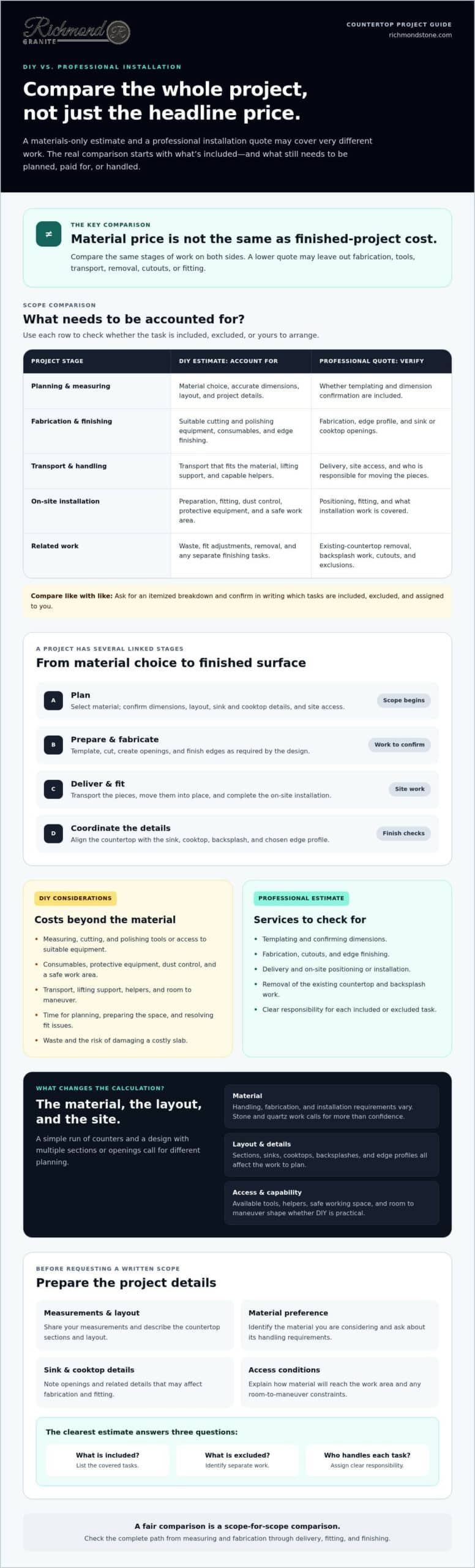
How to decide between DIY and professional countertop installation
The right choice depends on the work your project requires, not simply whether you’re comfortable with home improvement. Use this decision process to weigh the material, complexity, and practical demands before choosing an approach.
- Assess the material. Identify the supplier’s handling, fabrication, and installation requirements for your chosen countertop. Don’t assume a method that suits one material will suit another.
- Study the layout. A simple configuration may be more manageable than one involving multiple sections, planned seams, detailed edges, or sink and cooktop cutouts.
- Match the work to your experience. Consider whether you’ve measured, lifted, cut, finished, and fitted similar materials before. Confidence is useful, but it isn’t a substitute for the specific skills involved.
- Check your tools and support. Confirm you can access the necessary equipment, safe workspace, transport, and capable helpers for the full job.
- Be realistic about time. Allow for preparation, coordination, and problem-solving, not only the hours spent fitting the countertop.
- Compare written scopes. Review what each option includes, what it excludes, and who handles each project stage. A labor-only figure isn’t a like-for-like comparison.
When DIY may suit the project
DIY may be worth considering if you have relevant experience, suitable tools, enough time, and a manageable scope. First confirm that your supplier supports the fabrication and installation approach you’re planning. Then account for helpers, workspace, transport, and the steps required to protect and handle the material. If any of those pieces are uncertain, clarify them before purchasing.
When professional installation may be the more practical choice
Professional support may make more sense for complex layouts, stone fabrication, heavy slabs, or intricate cutouts, especially if you lack equipment or experience. When evaluating a provider, ask which project stages are included and how the specific details will be handled.
For projects in Staten Island, New York City, and the New Jersey metro area, check delivery access, building rules, and scheduling requirements with the relevant property contacts and project provider. Confirm current service availability for your address, too. These practical constraints can shape which approach is feasible. A considered DIY vs professional countertop installation cost decision weighs the complete scope alongside your skills, tools, and project conditions.
For a custom countertop project, discuss your material and installation requirements and clarify which stages a proposed scope includes.
Plan your countertop project with a clear installation scope
Before choosing DIY or professional installation, put the project details in writing. A clear scope gives you a practical basis for comparing responsibilities and deciding which stages you can manage yourself. It also gives a provider the context needed to identify what still needs to be confirmed before preparing an estimate.
What to prepare before requesting an estimate
Gather the information you already have, even if some measurements are preliminary. Photographs and notes can help explain the room, cabinetry, and intended layout. Include details such as:
- Room measurements and photographs of the countertop area and cabinets
- Your preferred material and, if known, edge profile
- The layout, including corners, separate runs, and any planned seams
- Sink and cooktop details, plus any backsplash plans
- Access conditions, such as narrow hallways, stairs, or building delivery requirements
Ask which details need to be checked on site before the scope can be confirmed. Your measurements can help start the conversation, but clarify whether professional templating or another assessment is part of the proposed work. Note any property-specific rules or scheduling requirements that could affect delivery or installation.
A coordinated path from material selection to installation
One provider may coordinate material sourcing, templating, fabrication, delivery, and professional installation, connecting decisions made at each stage. Ask which services are included in your estimate and who is responsible for related details. A written scope should make inclusions, exclusions, and outstanding questions easy to identify.
Richmond Stone is family-owned and has more than 30 years of experience in custom countertops, cabinetry, and tile. Its countertop service can include sourcing, templating, fabrication, delivery, and professional installation. The stages included depend on the project, so review the proposed scope and confirm current service availability for your address.
With your measurements, material preference, layout, fixture details, and access notes in hand, you can have a more focused conversation about the work ahead. Discuss your countertop project with Richmond Stone to explore the project details and clarify which stages may be included.
Choose the installation approach with confidence
The clearest DIY vs professional countertop installation cost comparison looks at the whole project, not labor alone. Include tools, transport, fabrication, fitting, and finishing, then weigh the material and layout against your experience, available equipment, and time. A written scope helps reveal what’s included, what’s excluded, and who is responsible for each stage.
If you’re considering professional installation, Richmond Stone is a family-owned business with over 30 years of experience in custom countertops. Its service can coordinate material sourcing, templating, fabrication, delivery, and professional installation. Confirm which stages are included in your project estimate, and verify availability for your address. Service coverage includes Staten Island, New York City boroughs, and the New Jersey metro area.
Bring your measurements, material preference, layout, fixture details, and access notes into the conversation. Discuss your countertop project with Richmond Stone to explore the scope and responsibilities involved. With the right details in hand, you can choose an approach that respects your project constraints and the finished surface you want.
Frequently Asked Questions
Is DIY countertop installation cheaper than professional installation?
Not necessarily. DIY may avoid paying for professional installation, but the full comparison includes more than labor. Factor in material, measuring, fabrication, tools, consumables, protective equipment, transport, waste, and the time required to complete the work. A professional estimate may include several coordinated stages. The DIY vs professional countertop installation cost depends on the material, layout, project scope, and which responsibilities you can realistically take on.
What costs should I include when comparing DIY and professional countertop installation?
Compare the same project stages on both sides. Include the countertop material, templating or measuring, fabrication, delivery or transport, installation, and finishing. For DIY, also account for tool access, consumables, protective equipment, helpers, and potential waste or rework. Check whether sink or cooktop cutouts, edge details, backsplash coordination, and removal of an existing surface are included. Written scopes make omissions easier to spot.
Can I install granite or quartz countertops myself?
It may be possible, but first confirm the supplier’s handling, fabrication, and installation requirements for the specific material. Granite and quartz projects can involve precise templating, planned seams and cutouts, careful slab handling, and suitable transport. Assess whether you have the relevant experience, equipment, workspace, helpers, and time. For a custom layout or heavy slab, professional fabrication and installation may be a more practical choice.
How difficult is it to cut and fit a stone countertop?
Cutting and fitting stone can be demanding because measurements, openings, seams, and edges must align with the room and cabinetry. The work may require suitable cutting and finishing equipment, careful handling, and experience with the selected material. An error can lead to rework or damage, although outcomes depend on the project and preparation. Before attempting the work, ask the supplier what fabrication tasks are appropriate for DIY.
What should a professional countertop installation quote include?
A useful quote should clearly state which project stages are included, such as material sourcing, templating, fabrication, delivery, installation, and finishing. It should also clarify responsibility for sink or cooktop cutouts, site preparation, access arrangements, and any excluded work. Ask how scheduling dependencies and changes are handled. Since estimates vary by scope, confirm the details in writing rather than assuming every service is included.
Does countertop installation require an in-home template or site visit?
It depends on the material, layout, and provider’s process. Measurements you take can help explain the project, but ask whether an on-site template or assessment is needed to confirm dimensions, seams, cutouts, and access before fabrication. Richmond Stone offers professional templating as part of its countertop services, though the stages included depend on the individual project. Confirm the process and requirements when reviewing a proposed scope.