

How to Update a Kitchen Without Replacing Cabinets: A 2026 Guide
A meaningful kitchen update doesn’t have to start with new cabinetry. If your cabinet boxes are sound and the layout still works, learning how to update a kitchen without replacing cabinets can help you preserve what’s useful while giving the room a fresh, cohesive look.
Start by assessing the cabinets before choosing finishes. Loose joints, water damage, or persistent sagging may call for repair or a professional assessment, not a cosmetic refresh. Once the cabinets are suitable to keep, planning the work in a clear sequence makes it easier to choose materials that fit together.
This guide covers that sequence, from checking cabinet condition and deciding whether to paint or refinish, to coordinating countertops, backsplash, hardware, and lighting. You’ll learn how to set priorities, build a palette around your existing finishes, and recognize when keeping the cabinets may no longer make sense.
Key Takeaways
- Check cabinet boxes, joints, doors, and hardware before planning cosmetic changes. Persistent moisture damage or structural problems need attention first.
- Learn how to update a kitchen without replacing cabinets by choosing selectively among finishes, hardware, lighting, countertops, and backsplash tile.
- Compare samples beside your existing cabinets in daylight and evening light to judge undertones, patterns, and sheen.
- Use a practical sequence: inspect, set priorities, choose a palette, prepare, complete the work, and review the result.
- A carefully chosen countertop or tile can give sound cabinets a cohesive new context without turning the project into a full replacement.
How to Update a Kitchen Without Replacing Cabinets: Start with Their Condition
Keep cabinets when their boxes are stable, the layout suits your needs, and doors and drawers work reliably. A worn finish, dated color, or tired hardware may be addressed in a cosmetic refresh. Loose cabinet boxes, persistent moisture damage, or failing hardware are different issues. New paint or a striking countertop won’t fix an underlying problem.
Before choosing finishes, inspect the parts that support the cabinets and make them function. A basic understanding of Cabinetry can help you distinguish a visible finish from the cabinet’s construction. Look for movement, deterioration, or damage, and investigate any concerns before covering them.
For a visual look at how paint can change a room, watch this kitchen and bath transformation:
Which cabinet problems can a cosmetic refresh solve?
Cosmetic work may suit cabinets with scuffed or faded finishes, an outdated color, or hardware that no longer fits the room. Check that doors and drawers move smoothly, test hinges and handles, and inspect shelves for sagging or damage. Look at where the cabinets meet the wall, too. Visible movement or separation should be checked before refinishing.
Grease may need thorough cleaning before a new finish is applied. Peeling can indicate a finish problem, while swelling, soft spots, or a persistent musty odor may point to moisture that needs investigation. Don’t paint over signs you haven’t assessed.
When should you repair or replace cabinets instead?
Loose or deteriorated boxes, recurring moisture, and doors that won’t stay aligned are reasons to pause and assess the cabinets before proceeding. Check for water-related damage inside cabinets as well as on visible faces, especially near plumbing. Problems can be hidden behind a door or beneath a sink.
Use this quick checklist before choosing materials:
- Are cabinet boxes firm, with no obvious looseness or deterioration?
- Do doors and drawers open, close, and remain aligned?
- Are shelves stable, and are hinges and attachments secure?
- Are there signs of swelling, recurring moisture, peeling, or persistent odor?
Some isolated issues may be repairable, but ask a qualified professional to assess damage that is hidden, recurring, or uncertain. Consider the layout separately: a fresh finish can make cabinets more appealing, but it won’t fix an arrangement that no longer suits the way you use the kitchen. The structure’s condition and the layout’s usefulness should guide how to update a kitchen without replacing cabinets.
Choose Kitchen Updates That Make Existing Cabinets Feel New
After the cabinets pass inspection, choose updates for their likely impact rather than assuming every surface needs replacing. A new finish or hardware may be enough to change the room’s character. In another kitchen, a backsplash or countertop may provide the defining update while the cabinetry stays as it is.
Start with what’s already in the room. Dark cabinet colors can feel heavier in a small kitchen with limited daylight, while pale finishes may help a space feel more open. Existing floors, wall colors, and nearby fixtures also affect which new tones will work with the cabinets. Keep the palette focused, then test samples in the kitchen in daylight and evening light. A color that looks subtle in a showroom may read differently under your own lighting.
Refresh cabinet doors, color, and hardware
Painting changes the surface color and requires preparation suited to the existing finish. Refinishing works with the cabinet’s current material and appearance rather than simply covering it. Replacement doors can change the look while retaining the cabinet boxes, but they must suit the existing openings and construction. Before choosing an approach, find out what the doors are made of and whether their current finish is compatible with the treatment you’re considering. For homeowners seeking professional help with cabinet painting and finishing, contractors such as 1st Class Painting & Restoration demonstrate how skilled preparation and quality finishes can revive existing woodwork without the expense of a full replacement.
Hardware is a smaller update with a noticeable visual effect. Compare shapes and finishes with the cabinet style, faucet, and nearby light fixtures. A simple pull may suit clean-lined doors, while a traditional knob can preserve a familiar character. Bring samples into the kitchen to see whether the details connect the finishes or compete with them.
Update lighting and visible kitchen surfaces
Lighting affects how colors and materials appear. Under-cabinet fixtures can illuminate work areas and bring out the texture of a backsplash. Task lighting can help where food preparation happens, while ambient light sets the room’s overall mood. Consider these effects before settling on a cabinet color or surface finish.
A backsplash can connect existing cabinets with other materials, especially if its color or pattern echoes a subtle tone in the countertop or floor. Countertops can also make a strong impression, but replacing them isn’t essential. If the existing surface still suits the room, focus elsewhere. If it feels out of step with the cabinets, a carefully chosen material may bring the palette into focus.
For broader inspiration, explore kitchen remodel ideas, then identify which changes fit your space and priorities. If a new countertop or backsplash is on your list, review custom countertop and backsplash options as you refine the material palette.
How to Coordinate Countertops, Backsplash, and Cabinet Finishes
When the cabinets stay, let their color and character guide your surface choices. Compare undertones first: a warm cabinet finish may work naturally with creamy or earthy tones, while cooler cabinetry may call for a different balance. Then consider pattern, sheen, and visual weight. A richly veined countertop and bold backsplash can compete for attention. Pairing one expressive surface with quieter neighbors can create a clearer focal point.
Don’t choose from a small chip alone. Bring samples next to the cabinet finish and flooring, and view them in daylight and evening light. Light can shift how colors look, and the size of the room and cabinet doors can affect whether a pattern feels balanced. Before deciding, confirm that the material suits the kitchen’s intended use.
Select a countertop that complements existing cabinets
Granite, quartz, marble, quartzite, soapstone, travertine, onyx, and limestone each have a distinct appearance. No one material is right for every kitchen. Consider the look you want and whether the material suits your household. Broad, expressive patterning can stand out against simple cabinet fronts, while a quieter surface can let detailed doors remain prominent. In a compact room, consider how pattern scale and contrast affect the overall visual weight.
For a closer look at the decisions involved, see The Art of Custom Countertops in Staten Island, including its discussion of custom countertop selection.
Make the backsplash and finishes feel intentional
A backsplash can connect the cabinets, countertop, and flooring through a shared undertone or a subtle echo of color. For a continuous, understated palette, choose a surface that complements the countertop without duplicating it. For a stronger focal point, let the backsplash carry the bolder color, texture, or pattern and keep other surfaces comparatively calm. Sheen matters, too: glossy tile beside a polished counter creates a different effect from a more subdued pairing.
Use this comparison to assess your samples:
Quieter combination: A restrained countertop pattern, related cabinet and backsplash tones, and limited contrast. This creates a cohesive look and lets the existing cabinetry remain prominent.
More expressive combination: A distinctive countertop or backsplash paired with simpler surrounding finishes. This gives the eye a focal point without asking every surface to compete.
For quartz projects, understanding the quartz fabrication process can help you ask informed questions as you compare materials and plan the finished look. Careful sampling and a deliberate balance of pattern and contrast make how to update a kitchen without replacing cabinets a coordination exercise, not simply a sequence of replacements.
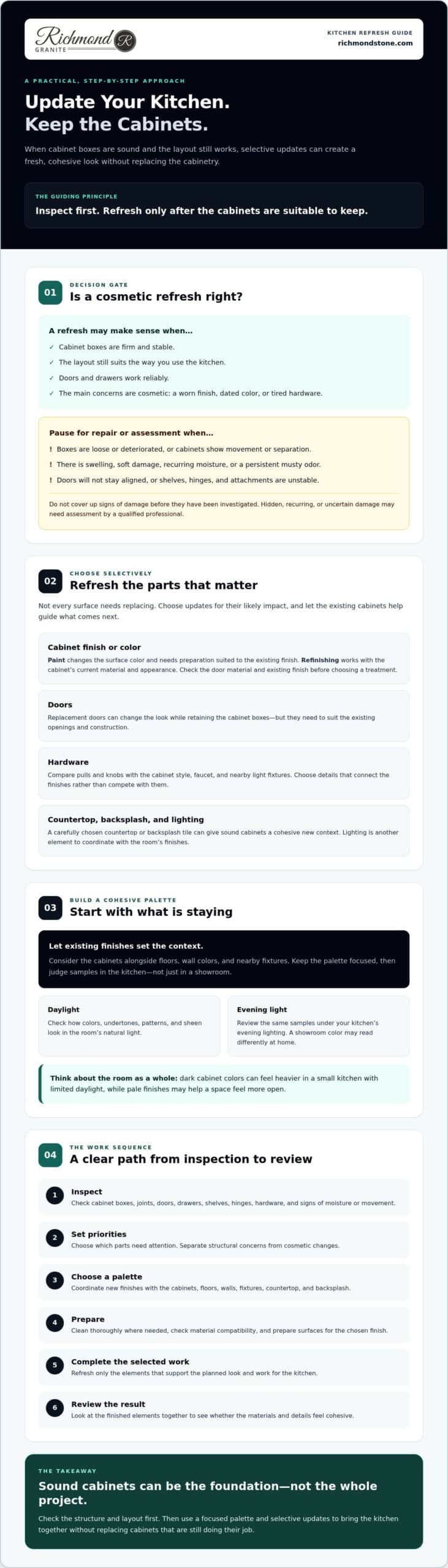
How to Update a Kitchen Without Replacing Cabinets: A Practical Sequence
A clear plan helps keep a cabinet-preserving refresh focused and prevents you from choosing materials before the room is ready. Record what works, what needs repair, and what you want to change. Then set priorities: perhaps the cabinet color feels dated, the work area needs better light, or the countertop no longer suits the room. Rank those needs before comparing finishes or proposals.
Plan the scope before selecting finishes
Measure carefully and photograph existing finishes in natural and evening light. Record cabinet dimensions, openings, and where surfaces meet walls or appliances. These notes can help you compare materials and discuss installation requirements. Before ordering, confirm measurements, material suitability, and availability with the relevant professionals. A sample or estimate doesn’t replace checking the details of your kitchen.
For a tailored perspective on countertops, cabinetry, and tile, explore Richmond Stone’s countertop, cabinetry, and tile expertise.
Prepare and complete updates in a sensible order
The right work order depends on the updates you choose. Coordinate timing with the people doing the work, particularly where surfaces meet or plumbing is involved.
- Inspect: Confirm that the cabinets and surrounding surfaces are ready for the planned work. Address repairs or uncertain damage before covering or refinishing anything.
- Set priorities: Decide which changes matter most and which existing elements will remain. This helps prevent optional updates from expanding the project without a clear purpose.
- Choose a palette: Compare cabinet, countertop, backsplash, and hardware samples together in the kitchen’s actual lighting.
- Prepare: Clear work areas and protect floors, cabinet faces, and other surfaces that will stay. Complete repairs and surface preparation before applying new finishes.
- Coordinate the work: Painting or refinishing, tile installation, countertop work, and electrical changes may require different qualified professionals. Agree on access, timing, and dependencies in advance. For example, confirm how backsplash work will meet a new countertop, and coordinate plumbing disconnection or reconnection with the appropriate professional.
- Review: When the work is complete, check that doors and drawers move freely, transitions look considered, and finishes appear as expected in daylight and evening light.
This sequence makes how to update a kitchen without replacing cabinets easier to manage: document the room, confirm details, prepare what will remain, then complete and review each chosen improvement.
Bring the Refreshed Kitchen Together Without Replacing Cabinets
A successful refresh doesn’t require every element to be new. If the cabinet boxes are sound and the layout still suits your household, preserve them and focus on the details that shape the room. A well-chosen countertop or backsplash can give existing cabinetry a more considered setting while retaining the kitchen’s useful features and character.
Make final choices based on your original goals, not just a passing trend. If the room feels dated, a surface with a complementary tone or pattern may be enough to make it feel fresh. If the cabinets and countertop already work together, a tile change may provide the contrast or continuity the room needs. For homeowners tackling broader property renovations alongside kitchen updates, you can also explore Exterior Painting to revitalize your home’s outdoor appearance.
When professional countertop or tile support can help
Custom surfaces require coordination. Material selection, templating, fabrication, and installation all affect how a countertop fits the room and meets adjoining surfaces. Bring cabinet, flooring, and backsplash samples when discussing material options so undertones and patterns can be considered together. Confirm who is responsible for measurements, preparation, and each stage of the work before the project begins.
Richmond Stone is a family-owned business with more than 30 years of experience in countertops, cabinetry, and tile. Its stated service area includes Staten Island, New York City boroughs, and the New Jersey metro area. The company provides material sourcing, templating, fabrication, and professional installation for stone and quartz surfaces. Confirm project details and availability directly.
Your final checklist before beginning
Gather the decisions in one place before work starts. This makes it easier to assess whether the plan is cohesive and each responsibility is clear.
- Confirm the cabinet condition and that the existing layout remains suitable.
- Write down the project scope, including what will stay, what needs attention, and what you plan to change.
- Verify measurements, material choices, installation requirements, and availability with the relevant professionals.
- Keep cabinet, flooring, countertop, and backsplash samples together to review the full palette under your kitchen’s lighting.
- Clarify who will handle each part of the work, including coordination where surfaces meet.
With those details settled, how to update a kitchen without replacing cabinets becomes a matter of thoughtful selection rather than wholesale replacement. Preserve what is sound, refine what feels dated, and let well-chosen materials bring the room into balance. To discuss a kitchen surface project, discuss your kitchen surface project with Richmond Stone.
Shape a Kitchen That Feels Considered and Your Own
A thoughtful refresh starts with what already serves you. If the cabinet structure and layout remain sound, a new countertop, considered backsplash, or carefully chosen finish can change the room’s character without making replacement the goal. Lasting results come from choosing details in relation to your home rather than chasing a look that may soon feel dated.
That’s the heart of how to update a kitchen without replacing cabinets: preserve sound elements, invest selectively in the surfaces that matter, and consider the complete palette as you make decisions. If a custom stone or quartz surface is part of your plan, material selection and project coordination are important parts of the process.
Richmond Stone is family-owned and operated, with more than 30 years of experience and service across Staten Island, New York City boroughs, and the New Jersey metro area. Its stone and quartz work includes sourcing, templating, fabrication, and installation. Discuss your kitchen surface project with Richmond Stone to take the next step toward a kitchen that feels renewed while remaining true to your home.
Frequently Asked Questions
Can I update my kitchen without replacing the cabinets?
Yes, you can refresh a kitchen without new cabinets if the cabinet boxes, layout, and key components remain serviceable. How to update a kitchen without replacing cabinets may involve paint or refinishing, new hardware, lighting, a backsplash, or countertops, but you don’t need to do all of these. Choose updates that address the room’s most noticeable concerns. If you find moisture damage, loose boxes, or failing doors, seek professional advice before cosmetic work.
How do I know if my kitchen cabinets are worth keeping?
Look beyond the door finish and assess how the cabinetry functions. Check whether boxes feel secure, shelves remain stable, and doors and drawers open and close properly. Inspect inside as well as visible surfaces for moisture, swelling, or deterioration. A dated appearance alone doesn’t mean the cabinets need replacing. If a problem may be structural, or you can’t identify its cause, ask a qualified professional to assess the condition first.
Can you paint kitchen cabinets without replacing them?
Yes, painting may suit cabinets that are sound and have a material and existing finish that can accept the required preparation and paint. The outcome depends on the surface, cleaning, preparation, and application, so one method won’t suit every cabinet. Ask an experienced professional which process fits your cabinetry before starting. Test your proposed color beside the countertop and backsplash in daylight and evening light.
What should I update first in a kitchen without replacing cabinets?
Start by identifying what feels most dated or gets in the way of daily use, then address repairs before decorative changes. Hardware or lighting may be a focused first step, while new tile or countertops can require more coordination. You don’t have to change every surface. Set priorities, compare finishes together, and confirm measurements and installation requirements before ordering, especially if new tile or a countertop will meet existing surfaces.
Can new countertops make old kitchen cabinets look better?
Yes, a well-chosen countertop can give retained cabinets a more cohesive setting and connect them with the backsplash, floor, or wall color. Compare undertones, pattern scale, contrast, and natural light rather than choosing from a sample in isolation. A new countertop isn’t essential if the existing one works with your plans. Review samples beside the cabinets and confirm measurements, material suitability, and installation details with a professional.
Should I replace the backsplash when I keep my kitchen cabinets?
No, replacing the backsplash isn’t necessary if it’s in good condition and complements the finishes you plan to keep or introduce. If it looks dated or conflicts with a new countertop, tile may help unite the palette or create a deliberate focal point. Compare samples beside both cabinets and countertop before committing. Clarify removal, surface preparation, and installation responsibilities with the relevant professionals so the new finish fits the overall plan.
What is the first step in a kitchen refresh without cabinet replacement?
Begin with a condition check and a written list of priorities. Note what functions well, what needs repair, and which visible changes matter most to you. Then gather cabinet, flooring, countertop, and backsplash samples to review together before purchasing materials. If you find moisture damage, loose cabinetry, or uncertain installation requirements, pause and consult a qualified professional. This early assessment helps keep the project grounded in the room’s actual needs.