
Pet-Friendly Flooring and Countertop Choices: The Definitive 2026 Architectural Guide
True architectural luxury never demands a surrender to synthetic vinyl, even in a home alive with spirited pets. If you have hesitated to invest in natural stone or refined surfaces out of fear that unyielding claws and accidental spills will leave permanent scars, your hesitation is completely understandable. Yet the finest pet-friendly flooring and countertop choices do not force a compromise between timeless beauty and daily resilience. When anchored by dense mineral structures and precision fabrication, unyielding endurance and elevated design coexist effortlessly.
In this guide, you will discover how curated quartz, impenetrable quartzite, and high-performance porcelain floor tiles withstand the rigors of four-legged companions while enriching your home’s aesthetic heritage. We examine how to harmoniously coordinate scratch-resistant floors with stain-impervious kitchen countertops, establish non-toxic care rituals, and protect your architectural investment for decades to come.
Key Takeaways
- Understand the vital difference between claw-induced mechanical abrasion and chemical etching to target surfaces engineered for real pet environments.
- Identify the premier pet-friendly flooring and countertop choices by balancing high material density with slip-resistant traction standards.
- Compare how impenetrable quartz, crystalline quartzite, and premium granite naturally resist claw scratches, stains, and daily moisture.
- Specify softened architectural edge profiles and refined transition thresholds that safeguard active companions while shielding stone perimeters from chipping.
- Discover why precision slab templating and uncompromising substrate preparation eliminate lippage, cracked grout, and dirt-collecting gaps.
The Architecture of Pet Living: Demands on Modern Floors and Countertops
Designing a refined residence shared with four-legged companions requires examining how daily domestic life tests interior surfaces. Standard retail advice frequently treats pet resilience as nothing more than repelling standing puddles, nudging homeowners toward disposable synthetic planks. In truth, curating pet-friendly flooring and countertop choices demands equal vigilance against mechanical friction underfoot and chemical reactions across working surfaces. While a floor continuously absorbs kinetic energy, an adjoining kitchen island or low vanity faces biological liquids and acidic foods that silently degrade delicate materials.
To see how traditional surfaces perform against active dogs, review this comparative breakdown:
Architectural longevity hinges on mineral density. When pets roam between living zones and culinary spaces, their daily patterns connect both planes of your interior architecture. The selection of foundational flooring materials must absorb claw pressure, while perimeter countertops and cabinetry bases must endure splashes from elevated water bowls or wet food prep. Porosity remains the ultimate vulnerability across both planes; unsealed pores welcome moisture, harbour organic bacteria, and succumb to deep discoloration.
Mechanical Wear: Claws, Grit, and Impact Resilience
Canine claws deliver intense point-load pressure with every stride. Soft topical sealers yield quickly, scratching under dynamic shear force. Outdoor quartz grit clings to paw pads, turning playful movement across an open hallway into relentless micro-abrasion. Near dining nooks, shifting heavy ceramic or stainless-steel bowls repeatedly strikes floor tiles and low cabinetry returns. Without sufficient surface hardness, these high-traffic focal points lose their luster within months.
Chemical Resistance: Organic Acids, Moisture, and Hygiene
Mechanical abrasion tells only half the story. Pet saliva, biological accidents, and overturned wet food introduce active enzymes and acids that readily etch soft, calcium-rich stones like unsealed marble or limestone. Porous surfaces also create microscopic pockets where lingering bacteria thrive, resisting ordinary sanitation. Selecting calibrated pet-friendly flooring and countertop choices establishes dense, non-porous barriers that resist chemical erosion and allow effortless, non-toxic cleaning without aggressive bleach.
Evaluating Pet-Friendly Flooring: The Hierarchy of Enduring Surfaces
Discriminating homeowners often confront contradictory advice regarding high-end finishes. While retail showrooms promote synthetic planks, enduring residences require materials with genuine geological integrity. When balancing pet-friendly flooring and countertop choices, flooring must establish an uncompromising baseline: extreme scratch resistance, moisture defense, and a Dynamic Coefficient of Friction (DCOF) rating of 0.42 or higher to prevent pets from slipping on slick surfaces.
Porcelain and Ceramic Floor Tiles: The Gold Standard for Paws
Porcelain represents the absolute pinnacle of claw and moisture immunity. Vitrified at temperatures exceeding 2,200 degrees Fahrenheit, porcelain floor tiles achieve an absorption rate under 0.5 percent, rendering them impenetrable to standing moisture. Honed and lightly textured matte finishes provide vital traction for active pets without trapping dirt. Pairing these tiles with non-porous epoxy or urethane grout neutralizes biological odor absorption completely, eliminating the vulnerability of traditional cementitious joints. For homeowners planning a renovation and seeking expert craftsmanship, discover Express Tiling Limited for precision residential tiling solutions.
Natural Stone Flooring: Granite, Slate, and Honed Travertine
Dense igneous granite and natural cleft slate offer rich geological texture alongside peerless durability. Granite floor tiles resist deep scratches from the largest dog breeds, while cleft slate provides natural paw grip. As explored in Natural Stone: A Master Artisan’s Guide to Nature’s Timeless Legacy, selecting high-density stone and sealing it properly preserves heirloom dignity under demanding use. Pairing durable floor stone with architectural pet-friendly countertops creates a unified, enduring sanctuary across your living spaces.
Flooring Materials to Approach with Caution
Certain luxury surfaces prove ill-suited to active pets:
- Hardwood: Both solid and engineered woods inevitably show claw indents and suffer dark water stains from missed spills.
- Synthetic Vinyl: While marketed as waterproof, plastic planks lack architectural permanence and detract from the prestige of a refined home.
- Polished Marbles: Soft calcitic stones scratch quickly under paw grit and etch when exposed to acidic pet saliva.
For tailored guidance that honors your home’s character, consult the master craftsmen at Richmond Stone to select materials that age gracefully.
Selecting Pet-Proof Countertops: Pairing Luxury with Daily Utility
Most design guides treat pet living strictly as a floor-level concern. Yet in refined homes, elevated culinary surfaces face agile cats, playful paws propped against islands, and the routine splatters of pet food preparation. Harmonizing high-performance stone with your overarching kitchen remodel ideas demands analyzing how raw material density resists both sharp claws and chemical stains. When selecting durable pet-friendly building materials, the right worktop transforms daily living from perpetual vigilance into effortless serenity.
Engineered Quartz: Non-Porous Peace of Mind
Engineered quartz delivers uncompromising resilience for homes shared with inquisitive animals. Formed through vacuum-vibrocompression, quartz slabs combine crushed natural mineral aggregates with high-grade polymer resins, creating a completely non-porous surface. It never requires sealing, shrugging off acidic wet food, spilled medicines, and organic messes without staining. As explored in The Master’s Guide to Quartz Fabrication in NYC: Nature Refined by Hand (2026), master fabrication ensures every edge and surface resists chipping from impact while preserving a seamless, hygienic finish.
Granite and Quartzite: Geological Armor Against Scratches
For purists devoted to authentic natural stone, quartzite and granite offer peerless durability. Quartzite registers between 7 and 8 on the Mohs hardness scale, making it harder than steel and completely impervious to cat claws. Crystalline granites with rich veining also excel, naturally camouflaging stray pet hair between cleanings while enduring thermal shocks and abrasions. Partnering with seasoned artisans, as outlined in The Art of Selection: Finding a Master Granite Fabricator Near Me in 2026, guarantees the precision templating and deep-penetrating sealants required to keep raw stone pristine.
Marble, Soapstone, and Travertine: The Living Finish Conundrum
Calcitic stones introduce distinct challenges in active pet environments. Classic marble and travertine etch rapidly when exposed to acidic pet saliva, spilled foods, or digestive enzymes, demanding swift intervention and frequent sealing. Chemically inert soapstone avoids etching, but its high talc content means claws can carve shallow surface marks. While some homeowners celebrate soapstone’s evolving historic patina, those curating balanced pet-friendly flooring and countertop choices often prefer reserving delicate marbles for private, pet-free master suites.

Architectural Detailing and Edge Profiles: Designing for Safety and Longevity
Beyond selecting raw slabs, genuine durability resides in the subtle details of architectural fabrication. In a spirited home, the physical contours of edges and boundary junctions determine how well stone surfaces withstand daily activity. Thoughtful tailoring transforms refined surfaces into resilient architectural barriers. When finalizing pet-friendly flooring and countertop choices, bespoke detailing ensures both stone preservation and animal safety, a hallmark explored in The Art of Custom Countertops in Staten Island: A Master Artisan’s Guide.
Selecting the Ideal Countertop Edge for Active Households
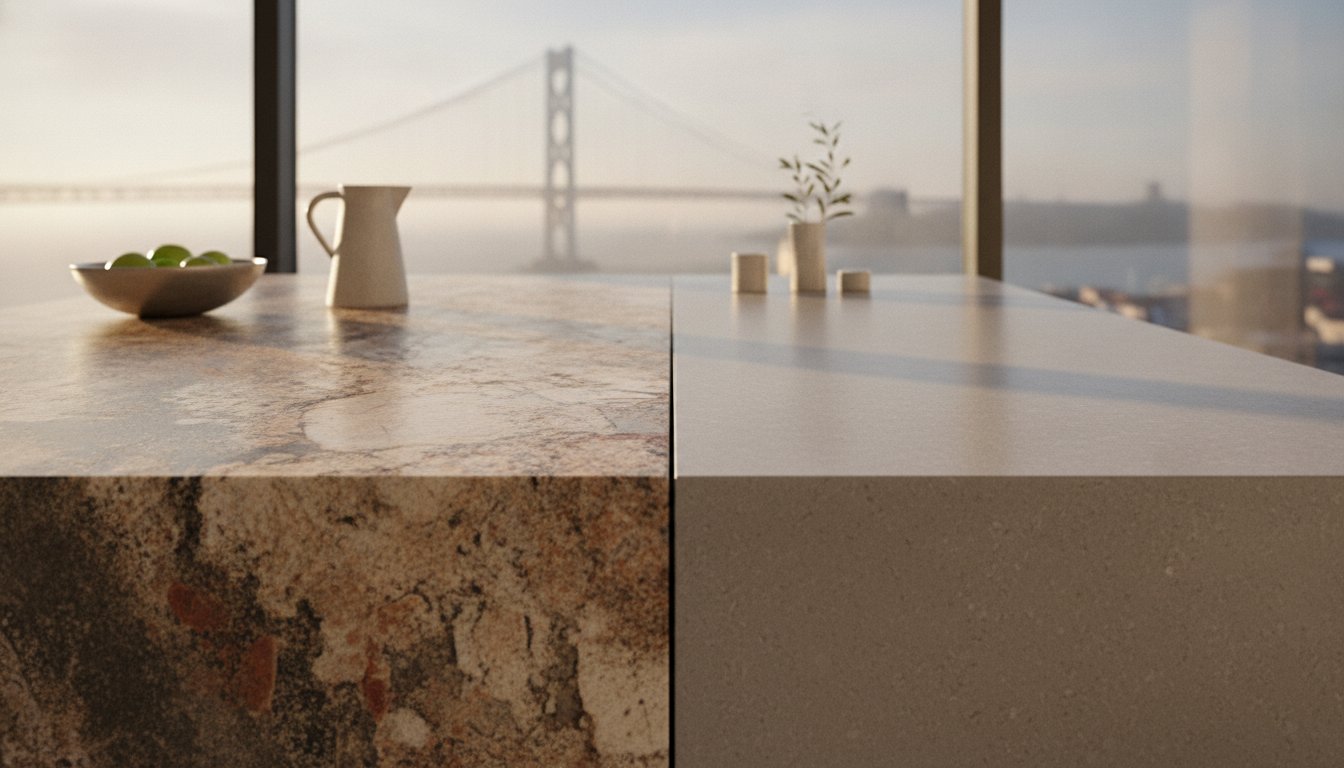
Standard ninety-degree eased edges present hidden vulnerabilities. Heavy collar tags, shifting toys, or an energetic pet jumping against an island can fracture brittle square corners, potentially injuring a playful animal. Specifying a softened profile, such as an elegant demi-bullnose or a delicate pencil round, smoothly deflects kinetic impact away from the edge. For exposed kitchen islands, extending the slab into full waterfall legs encases vulnerable lower millwork in continuous stone, creating an impenetrable shield against claw gouges and paw traffic.
Floor Transitions, Baseboards, and Cabinet Protection
Protective detailing must extend downward to the floor plane. Standard painted wooden baseboards rapidly degrade around feeding stations due to splashing water and shifting bowls. Installing matching porcelain or natural stone tile baseboards provides a waterproof, easy-to-clean perimeter that shields drywall from moisture and food stains.
- Flush Stone Thresholds: Curbless, flush-ground transition sills eliminate raised lips between rooms, removing trip hazards for senior dogs and ensuring visual continuity.
- Stone Toe Kicks: Lining under-cabinet recesses with matching stone slabs defends custom cabinetry against stray claws and wet paws.
- Integrated Splash Zones: Extending stone backsplashes down to the floor behind dedicated pet stations encapsulates wet areas completely.
To design resilient edge profiles and integrated architectural features tailored to your family’s daily lifestyle, schedule an architectural stone consultation with Richmond Stone today.
The Master Artisan Approach: Custom Fabrication, Installation, and Care
Even the most resilient mineral slabs and vitrified tiles depend entirely on the skill of the hands that shape and set them. In high-traffic homes with active pets, minor oversights in substrate preparation or imprecise joint tolerances quickly manifest as cracked grout, hollow floor tiles, or moisture-trapping seams. Uncompromising craftsmanship bridges geological strength and domestic endurance, elevating pet-friendly flooring and countertop choices from mere construction components into enduring architectural heirlooms.
Before installing fine stone or porcelain, structural stability must be secured. Subfloor deflection inevitably leads to micro-movement under dynamic weight, creating hairline fractures in grout joints where pet moisture and dander gather. Meticulous substrate leveling paired with heavy-duty uncoupling membranes isolates the surface layer, ensuring a solid, silent foundation that withstands vigorous play and heavy foot traffic.
Precision Templating and Seamless Craftsmanship
Digital laser templating captures the exact dimensions of your space, translating uneven perimeter walls and custom island layouts into razor-tight fabrications. When refining pet-friendly flooring and countertop choices, tight seam tolerances ensure that liquids from overturned bowls or organic accidents cannot penetrate beneath the surface. Drawing on over thirty years of family-owned mastery across Staten Island, NYC, and New Jersey, Richmond Stone’s master fabricators cut and polish every slab with calibrated accuracy, leaving dirt and debris nowhere to lodge.
Sealing Protocols and Pet-Safe Daily Maintenance
Preserving natural stone demands deep-penetrating, pet-safe fluoropolymer impregnators rather than superficial topical lacquers. Topical coatings inevitably haze, flake, or scuff under relentless claw contact. Penetrating sealers sink into the stone’s crystalline structure, forming an invisible, non-toxic shield that repels moisture and organic stains while allowing the material to breathe.
Daily maintenance remains straightforward and safe for animal companions:
- Routine Cleansing: Use warm water and specialized pH-neutral stone soaps that lift grime without stripping protective impregnators or irritating sensitive paws.
- Chemical Avoidance: Avoid harsh bleach, ammonia, and acidic citrus cleaners, which etch polished stone and pose respiratory risks to animals.
- Prompt Attention: Wipe standing liquids from feeding zones promptly to keep grout lines spotless.
To experience these curated materials in person, visit the Richmond Stone showroom and custom fabrication facility in Staten Island, where master craftsmen help you select the ideal natural stone or porcelain for your architectural vision.
Architectural Harmony: Crafting an Enduring Sanctuary for Pet Living
Living alongside animal companions shouldn’t force a compromise on architectural integrity. By prioritizing dense mineral compositions, specifying impact-deflecting edge profiles, and installing vitrified porcelain floor tiles with non-porous grout, you elevate everyday living into an enduring art form. The finest pet-friendly flooring and countertop choices prove that unyielding scratch resilience and timeless refinement can coexist seamlessly.
Realizing this harmony requires the practiced touch of a master artisan. Bringing over 30 years of family-owned mastery across Staten Island, NYC, and New Jersey, Richmond Stone unites custom laser templating and in-house slab cutting to deliver flawless, dirt-resistant installations. Browse an extensive inventory of granite, quartzite, engineered quartz, and designer floor tiles designed to weather life’s energetic moments gracefully. Explore custom pet-friendly stone and tile solutions at Richmond Stone and invest in a timeless sanctuary your entire household will cherish.
Frequently Asked Questions
Can large dog claws scratch polished granite or quartz countertops and floors?
No, large dog claws cannot scratch polished granite or quartz surfaces under normal household conditions. Keratin claws register at approximately 2.5 on the Mohs hardness scale, whereas quartz aggregates and dense igneous granites rate between 6 and 7. Claws lack the mineral hardness required to abrade polished crystalline matrices. Any visible grey marks left behind are typically softened claw residue or metal transfer from tags, which wipes away effortlessly with warm water.
What is the best pet-friendly flooring for mudrooms and entryway transition areas?
Vitrified porcelain floor tile with a textured matte finish is the best option for mudrooms and entryways. This material combines an impervious absorption rate below 0.5 percent with high slip resistance, handling damp paws, melting snow, and outdoor grit without degrading. Evaluating pet-friendly flooring and countertop choices for transition zones requires pairing textured porcelain with epoxy grout to prevent muddy moisture and road salts from penetrating subfloors or staining joints.
Will pet accidents cause permanent stains or dull spots on natural marble surfaces?
Yes, pet accidents will quickly etch and dull unsealed or polished marble. Because marble is composed primarily of calcium carbonate, it reacts chemically with acidic liquids like urine, regurgitated food, and saliva, dissolving the top polish into a dull, chalky mark within minutes. While high-grade penetrating fluoropolymer sealers buy valuable cleanup time, homes prioritizing effortless daily living typically favor crystalline quartzite or engineered quartz worktops and dense floor tiles instead.
Is engineered quartz completely safe and non-toxic for pets who lick kitchen counters?
Yes, fully cured engineered quartz is non-toxic, chemically inert, and completely safe for curious pets. Quartz slabs undergo high-pressure vibrocompression and thermal curing, locking polymer resins and quartz crystals into a solid, impenetrable matrix that emits negligible VOCs. It doesn’t off-gas harmful chemicals, leach synthetic compounds, or harbor bacteria within hidden crevices, ensuring an ultra-hygienic food preparation surface even if your pets occasionally investigate dropped treats or lick island edges.
How often should natural stone floors and countertops be sealed in homes with multiple pets?
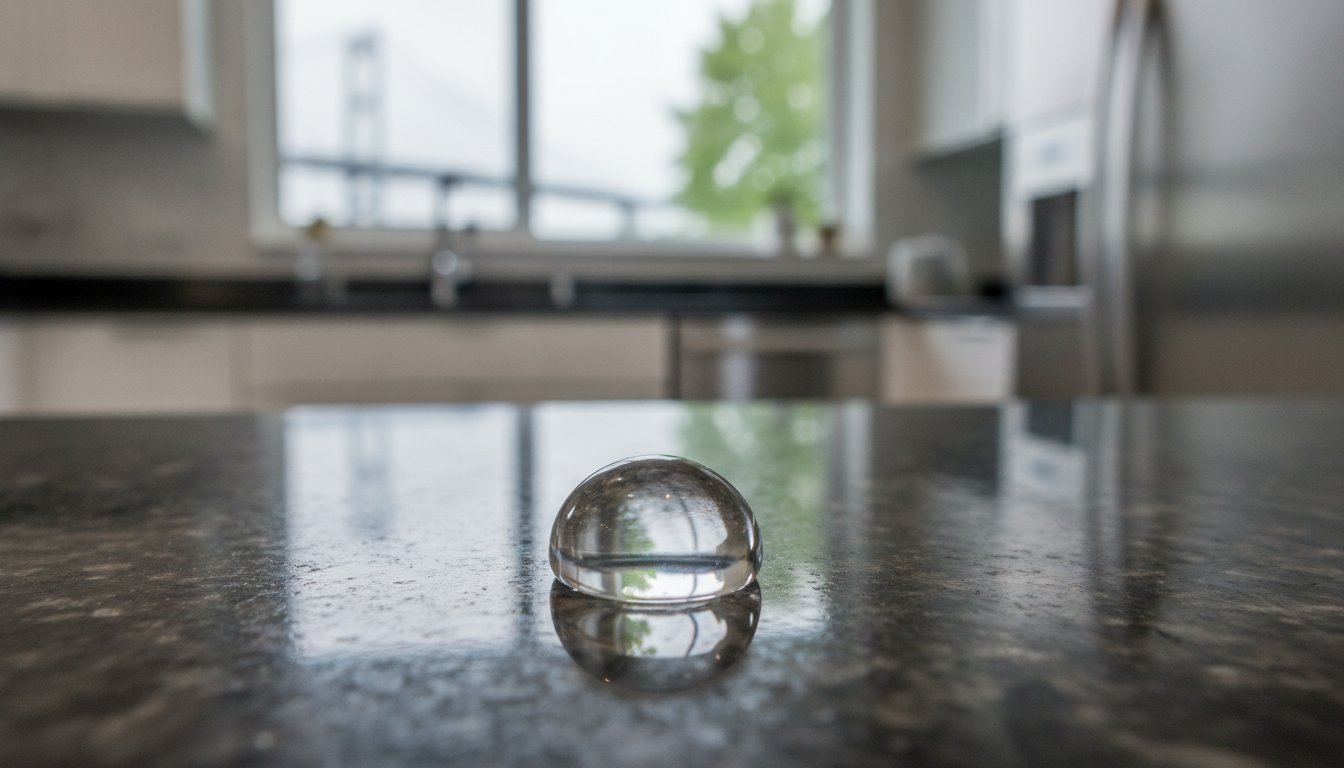
Natural stone floors and countertops in multi-pet homes should be sealed every twelve to eighteen months using a penetrating fluoropolymer impregnator. High-traffic areas, like feeding stations and mudrooms, experience faster sealant breakdown from repeated cleaning and kinetic friction. You can easily test surface protection by dropping a few beads of water on the stone; if the water darkens the surface within ten minutes rather than beading tightly, it’s time to reseal.
What countertop edge profile is safest for energetic dogs and playful cats?
A demi-bullnose or eased pencil-round profile offers the safest balance of architectural elegance and daily safety. Sharp ninety-degree square edges are brittle, chipping easily when struck by swinging dog collars, heavy ceramic bowls, or airborne toys, while also posing an injury hazard to running pets. Softly radiused edge profiles distribute impact force evenly, protecting both the structural integrity of your stone investment and the wellbeing of spirited animals.
How does porcelain floor tile compare to luxury vinyl tile for pet longevity?
Porcelain floor tile dramatically outlasts luxury vinyl tile in high-end pet households. While luxury vinyl relies on a thin topical wear layer that dulls and scratches under relentless claws, vitrified porcelain maintains uniform mineral density throughout the body of the tile. Selecting porcelain floor tiles ensures decades of scratch immunity, non-combustibility, and elevated home resale value, positioning it among the finest pet-friendly flooring and countertop choices for discerning architectural spaces.