Avoiding Common Kitchen Remodel Mistakes: A Master Artisan’s Guide to Enduring Design
The most expensive element of your kitchen renovation isn’t the rare quartzite or the bespoke cabinetry; it’s the cost of a choice that dates before the seal is dry. Avoiding common kitchen remodel mistakes requires more than a simple checklist. It demands an artisan’s eye for the intersection of geological history and modern utility. You’ve likely felt the anxiety of coordinating complex logistics or the fear that a bold material choice might lose its luster within the decade. We understand that in the dense architectural landscape of New York City, every square inch must perform with grace and permanence.
This guide reveals how to navigate these complexities, ensuring your renovation transcends the predictable pitfalls that compromise both luxury and longevity. You’ll discover the wisdom of prioritizing enduring stone and custom cabinetry, which typically accounts for 25 to 35 percent of your investment. We’ll preview how to master the latest 2026 safety standards, such as the National Electrical Code’s shift away from island-side receptacles, while maintaining an aesthetic of quiet prestige. From initial sourcing to the final realization of your vision, we’ll help you create a space that feels both traditional and contemporary.
Key Takeaways
- Learn how to audit your daily culinary rituals to ensure your new layout honors the home’s original architectural bones rather than creating structural friction.
- Discover the master artisan’s secrets for avoiding common kitchen remodel mistakes by choosing materials with true geological permanence over fleeting aesthetic trends.
- Transition from the outdated work triangle to a modern work zone approach that provides the necessary clearance for large, custom stone islands.
- Understand how professional templating and specific lighting temperatures protect the intrinsic beauty of natural stone and the integrity of cabinetry joinery.
- Simplify your renovation by utilizing a single source for both custom cabinetry and stone surfaces to eliminate the delays of fragmented contractor coordination.
The Foundation of Foresight: Beyond the Initial Sketch
True luxury begins with a pause. It’s the silent calculation made before the first stone is cut or the first cabinet is hung. For homeowners in the NYC and NJ metro areas, space is a finite currency, yet many succumb to the allure of a visual mood board without first auditing their actual movement through the room. Avoiding common kitchen remodel mistakes starts with recognizing that a kitchen is a functional landscape, not just a gallery. If you prioritize a trendy look over timeless craftsmanship, you risk a financial misalignment where the materials expire long before their structural life is over. In a market where mid-range renovations often represent 15 to 25 percent of a home’s total value, investing in fleeting aesthetics is a risk to your long-term equity.
To build a legacy within the home, one must look toward established kitchen design principles that have evolved over centuries. Understanding the history of the culinary hearth allows us to see beyond the surface. A kitchen that fails to respect the original architectural bones of the property often results in structural friction. This is especially true in historic Staten Island residences where plumbing stacks and load-bearing walls dictate the rhythm of the space. Ignoring these elements leads to awkward transitions that no amount of expensive stone can hide.
Auditing Your Daily Rituals
Your home’s rhythm should dictate your kitchen remodel ideas. Are you hosting grand, high-traffic galas, or do you cherish quiet, solitary mornings with a coffee? A family kitchen requires the resilient, non-porous nature of quartz to withstand the chaos of daily life. Conversely, a professional chef or a lover of heritage may prefer the evolving patina and distinct character of marble. We often see homeowners choose materials based on a photograph rather than their own lifestyle. Failure to match the material to the ritual is a compromise you’ll feel every single day.
Respecting the Home’s Architectural Integrity
Older homes in our region possess a unique character that modern layouts can sometimes violate. Forcing an open-concept flow into a historic floor plan without professional templating often leads to costly structural surprises. We view ourselves as partners in preserving this heritage. Your custom cabinetry should speak the same language as the crown molding and the existing window casings. By aligning the new with the old, you ensure that the renovation feels like a natural evolution rather than a forced intrusion. Avoiding common kitchen remodel mistakes requires a deep respect for what already exists, ensuring the new installation feels as permanent as the foundation itself.
Selecting Materials for a Lifetime: Avoiding the Trap of Fleeting Trends
The choice of material defines the soul of a kitchen. While a digital rendering might capture a color palette, it fails to convey the weight, temperature, and texture of the elements that will anchor your home for decades. Avoiding common kitchen remodel mistakes requires a shift in perspective: you’re not just selecting a finish, you’re curating a legacy. Many homeowners mistakenly believe that all stone surfaces offer equal permanence, yet the geological reality tells a different story. Choosing a material that doesn’t align with your tolerance for care is what we call the ‘Maintenance Myth.’ It’s a quiet error that leads to long-term dissatisfaction when the reality of daily use sets in.
The Countertop Conundrum: Aesthetic vs. Endurance
In the high-stakes environment of a New York kitchen, durability is as vital as beauty. When considering quartz fabrication NYC, one finds a material engineered for modern life, offering exceptional heat resistance and a non-porous surface. However, natural granite remains a stalwart for those who demand raw, volcanic strength. If your heart is set on marble, you must embrace a ‘patina-positive’ mindset, understanding that its history will be etched into its surface over time. For those seeking the bridge between these worlds, quartzite offers the prestigious veining of marble with a hardness that rivals granite. We invite you to view our curated selection of slabs to feel the difference for yourself.
Cabinetry Craftsmanship: More Than Just a Facade
It’s easy to be seduced by a beautiful door style, but the integrity of a kitchen lives within the joinery. A frequent mistake in many renovations is prioritizing the facade over the internal core. Choosing particle board cores over solid wood or high-grade plywood compromises the stability of your entire installation. In the irregular footprints of NYC and NJ homes, custom kitchen cabinets aren’t a luxury; they’re a necessity for maximizing every available inch. Precision matters. The inclusion of soft-close European hardware ensures a silent, tactile grace that defines a truly high-end environment. Avoiding common kitchen remodel mistakes means looking behind the drawer front to ensure the craftsmanship matches the aesthetic ambition.
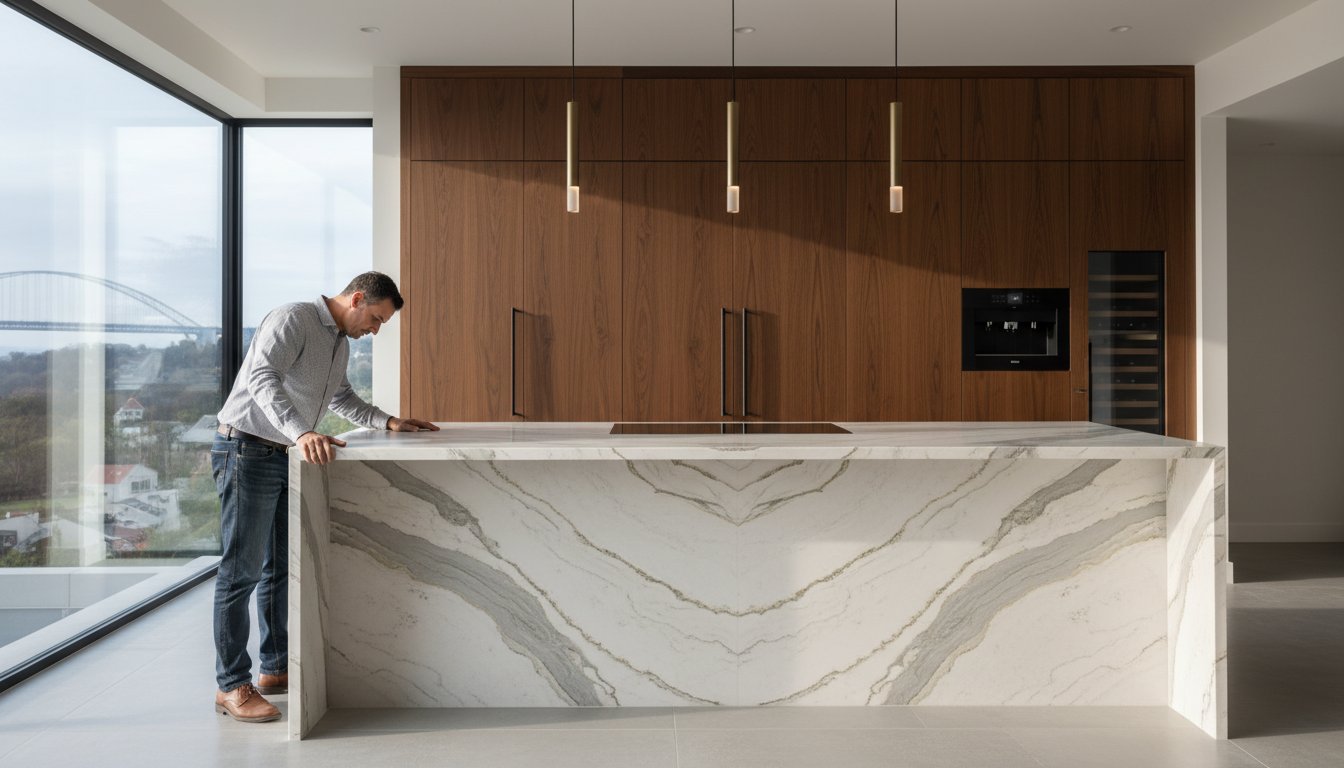
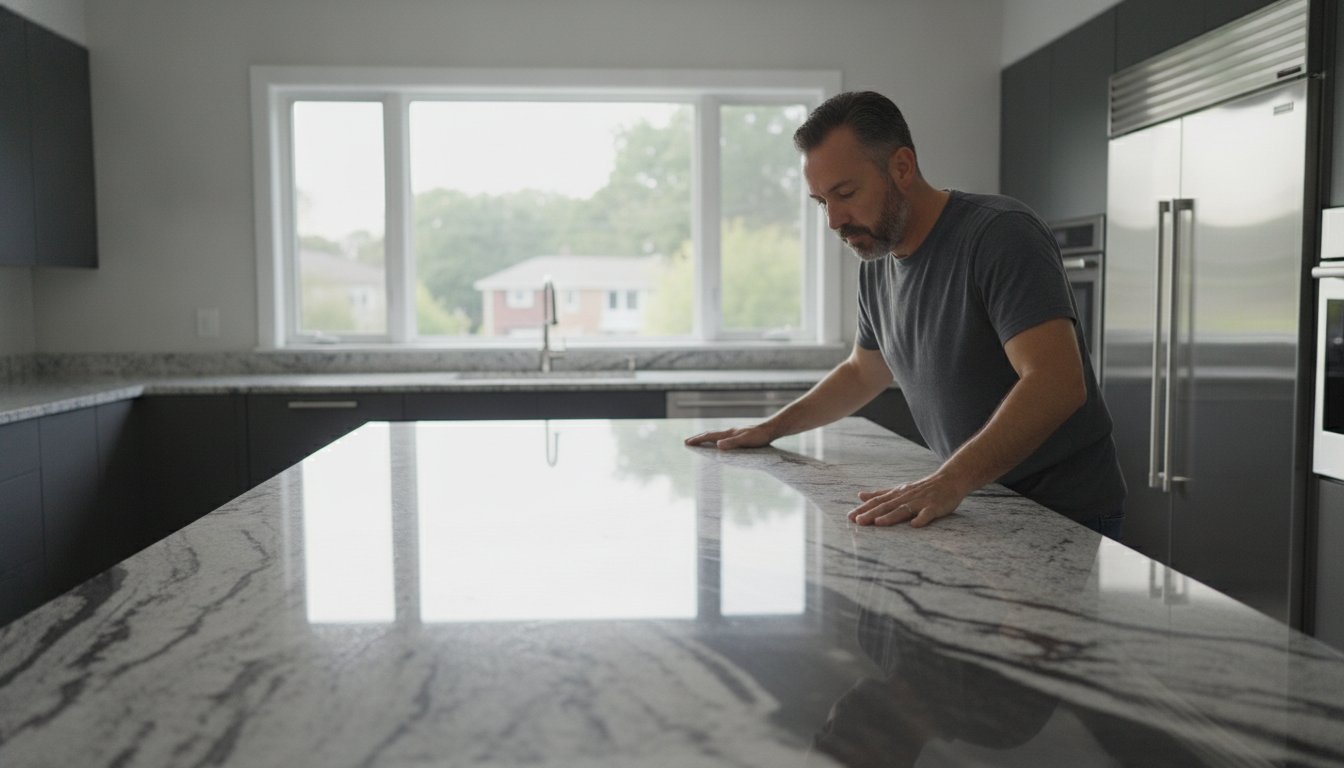
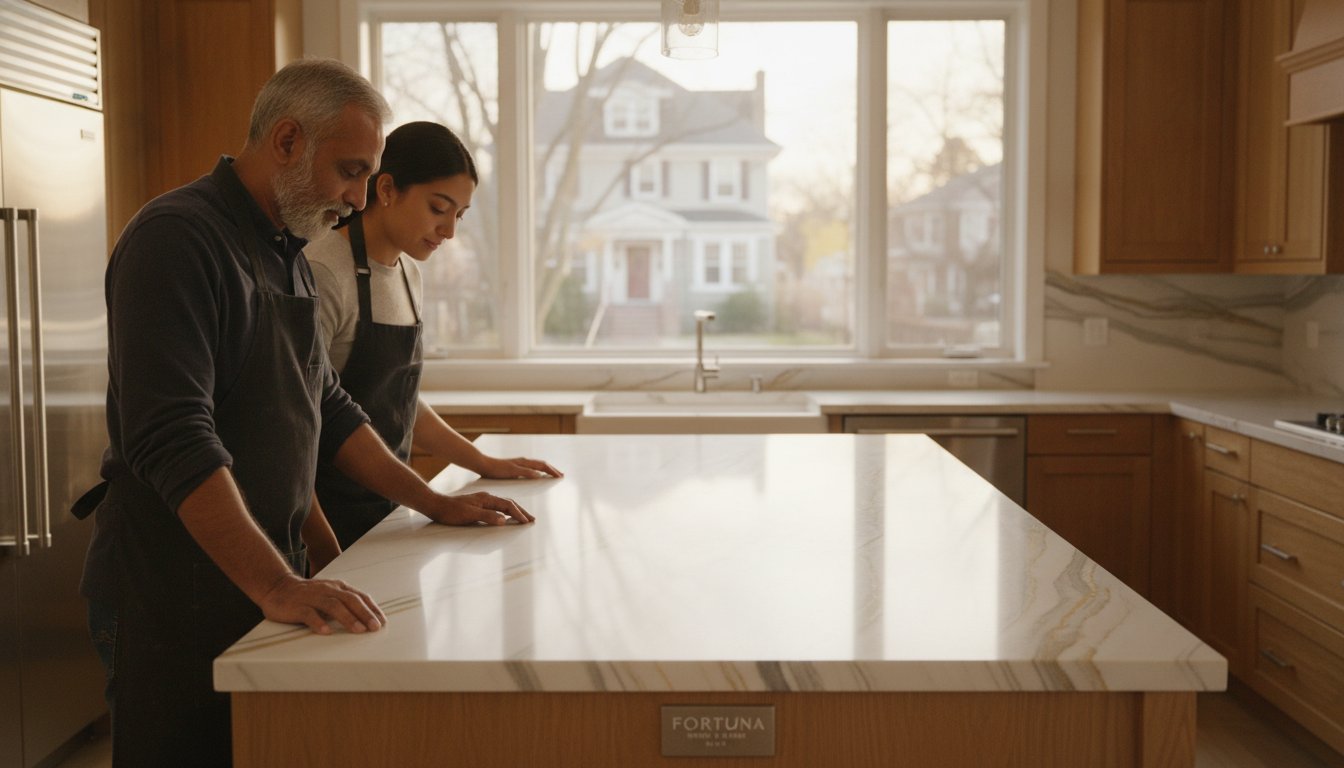
Ultimately, a kitchen should be a sensory experience. You cannot fully appreciate the depth of a soapstone slab or the subtle grain of a walnut cabinet through a screen. Visiting a stone gallery allows you to run your hands over the surfaces that will become the backdrop of your life. This tactile audit ensures that your chosen materials don’t just look the part but feel right within the context of your daily rituals.
Orchestrating the Flow: Layout and Spatial Precision
Spatial precision is the silent partner of luxury. In the dense boroughs of New York and the sprawling estates of New Jersey, the choreography of a kitchen relies on the invisible lines between its elements. The temptation to anchor a room with an oversized custom stone island often leads to the ‘Overcrowding’ trap. Avoiding common kitchen remodel mistakes involves respecting the physical boundaries of the room. A massive marble centerpiece loses its prestige if it forces guests to sidestep or prevents the dishwasher from fully extending. Similarly, many homeowners fail to look up. Utilizing the full verticality of a room with ceiling-height cabinetry is essential for storage in smaller footprints, yet it’s an opportunity frequently missed. Appliances that float, those not seamlessly integrated into the cabinetry plan, disrupt the visual and functional continuity of the space. A high-end range or refrigerator should feel like an architectural feature, not an afterthought.
The Geometry of the Modern Work Zone
Traditional design often clings to the classic work triangle, but modern culinary habits demand a more sophisticated work zone approach. This methodology organizes the kitchen into specialized areas for preparation, cooking, and cleanup. For this to succeed, stone surfaces must be contiguous. A break in the countertop between the sink and the range creates friction in your workflow. Landing zones are equally critical. A hot tray from the oven needs an immediate, heat-resistant stone surface nearby to maintain safety and efficiency. Integrating these zones ensures that multiple people can navigate the kitchen without collision, a hallmark of a well-planned luxury environment.
The Silent Error: Neglecting Circulation and Clearances
Ergonomics are the foundation of comfort. When planning bar seating, miscalculating the overhang for stools is a common grievance. Without sufficient depth, guests are forced into an unnatural posture that detracts from the social experience. We advocate for a 36-inch walkway as the non-negotiable minimum for a functioning kitchen, though 42 to 48 inches is preferred for multi-chef households. Avoiding common kitchen remodel mistakes also means accounting for the simultaneous swing of cabinet doors and appliance handles. Precision in these measurements ensures the environment remains serene. Furthermore, when designing islands, you must account for the latest National Electrical Code updates, which no longer allow receptacles on the sides of islands to meet countertop outlet provisions. This requires a master artisan’s touch to integrate power solutions discreetly within the stone or cabinetry without compromising the aesthetic integrity of the piece.
The Artisan’s Edge: Technical Precision in Fabrication and Lighting
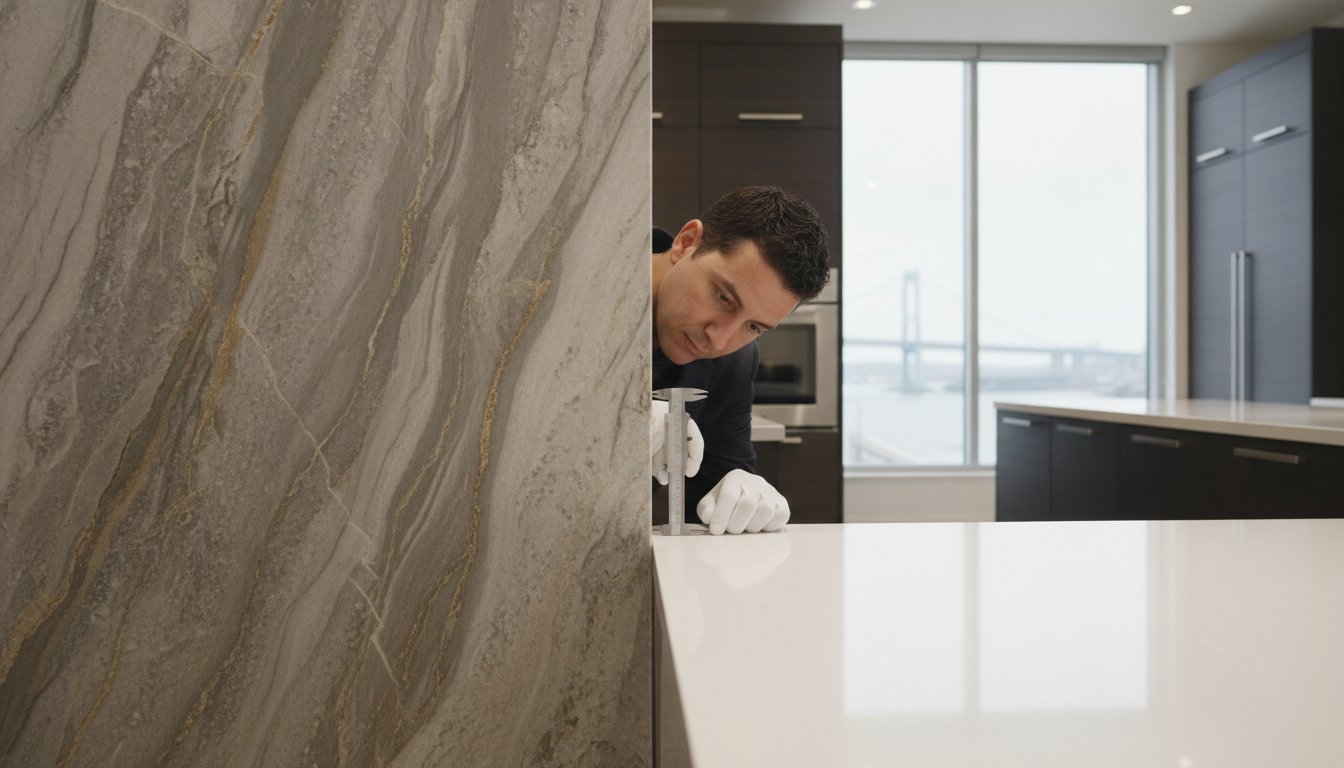
The transition from a raw geological slab to a finished architectural masterpiece is where the most critical errors often occur. Many homeowners fall victim to the “Measuring Fallacy,” assuming that a standard tape measure is sufficient for a high-end installation. It isn’t. Walls are rarely plumb, and corners are rarely perfectly square. Avoiding common kitchen remodel mistakes requires the surgical precision of professional digital templating. This process only begins once your cabinetry is permanently anchored, allowing us to capture every minute deviation in your home’s structure. Without this level of detail, custom countertops Staten Island will never achieve the seamless, integrated look that defines true luxury.
Technical precision extends beyond the stone itself to the invisible map of your kitchen’s utilities. A common oversight is neglecting the electrical layout until after the stone is cut. Modern culinary spaces demand more power than ever, yet visible outlets can clutter a beautiful backsplash. We advocate for artisan-led planning that hides power strips under cabinets or utilizes pop-up outlets within the stone. This coordination must happen early to avoid the “Bungled Backsplash,” where a stunning slab is marred by poorly placed switch plates or awkward tile transitions that weren’t accounted for during the initial fabrication.
The Nuance of Layered Illumination
In a masterfully designed kitchen, lighting is treated as a material. The wrong color temperature can alter the appearance of natural stone veins, turning a warm, creamy travertine into a sickly yellow or making a cool marble appear clinical. High-end environments rely on layered illumination to provide both utility and atmosphere. Under-cabinet task lighting is essential for highlighting the intricate details of your backsplash while ensuring the chef isn’t working in their own shadow. Dimmable ambient lighting allows the room to transition gracefully from a high-energy workspace to an intimate social hub. When positioning these fixtures, we consider how the light will reflect off polished or honed surfaces to prevent distracting glares.
Precision in Fabrication: Why Measurements Are Only the Beginning
Selecting a granite fabricator near me is a decision to trust an artisan’s eye for continuity. A master fabricator doesn’t just cut to size; they map the veins. They ensure that the natural flow of the earth continues uninterrupted across seams, a task that requires both technical skill and artistic vision. Your choice of edge profile is equally significant. While a sharp mitered edge offers a sophisticated, modern silhouette, it may not be the most functional choice for a high-traffic family island where an eased or bullnose edge provides better longevity. Avoiding common kitchen remodel mistakes means recognizing that these technical details are what elevate a project from a simple renovation to an enduring legacy.
To ensure your vision is realized with this level of meticulous detail, consult with our master fabricators today to discuss your project’s unique requirements.
Realizing the Vision: The Benefit of a Unified Design Partner
The culmination of a renovation is often the most precarious stage. Success hinges on the seamless integration of disparate elements, yet many homeowners find themselves caught in the friction of fragmented contractors. Avoiding common kitchen remodel mistakes requires a shift toward a unified design partnership. When you separate your cabinetry vendor from your stone fabricator, you invite logistical dissonance. Lead times clash. Measurements drift. The silent language between the wood and the stone is lost. By choosing a single source, you ensure that the heartbeat of the project remains steady from the first slab selection to the final hinge adjustment.
A unified approach eliminates the “Finger-Pointing” trap that often plagues the installation phase. If a countertop doesn’t sit perfectly flush or a cabinet door catches on a mitered edge, a fragmented team will often trade blame rather than solutions. A master artisan takes total accountability for the environment they create. This level of stewardship ensures that the natural stone you’ve carefully selected is honored by the structure beneath it. Precision in the workshop translates to peace of mind on the job site.
Eliminating the Friction of Multiple Vendors
Technical harmony between materials is paramount. A unified team ensures that the load-bearing capacity of your custom cabinetry is meticulously calculated to support the immense weight of a thick quartzite or granite slab. We streamline communication, providing one point of contact for the entire lifecycle of the kitchen. This cohesion extends beyond the countertops. It allows for a synchronized aesthetic that flows from the floor tiles to the backsplashes, and even to adjacent features like fireplace surrounds. Every element is curated to speak the same language of understated elegance, ensuring the finished space feels like a singular, intentional masterpiece.
The Richmond Stone Promise
For thirty years, our family-led team has served the NYC and NJ metro area with a commitment to enduring quality. We don’t just supply materials; we act as guardians of the natural world’s most exquisite elements. Our process is a marriage of raw nature and meticulous human skill, refined over decades of practice. Avoiding common kitchen remodel mistakes is easier when you partner with an expert who values legacy above all else. We’re dedicated to creating environments that transcend fleeting trends, offering you a masterpiece that feels both contemporary and timeless. When you trust your vision to a single, dedicated partner, the result isn’t just a kitchen. It’s a testament to uncompromising craftsmanship and a sanctuary built to last a lifetime.
Cultivating a Legacy of Enduring Craftsmanship
A kitchen is more than a culinary workspace; it’s a testament to the intersection of nature’s raw beauty and human precision. By auditing your daily rituals and selecting materials with true geological permanence, you ensure your investment transcends the fleeting nature of modern trends. Avoiding common kitchen remodel mistakes requires a commitment to technical precision, from the initial digital template to the final, silent close of a custom cabinet door. Success lies in the details that remain invisible to the untrained eye but are felt in the effortless flow of a well-planned room.
Realizing this vision demands a partner who respects the heritage of the materials and the homes they inhabit. Richmond Stone brings over 30 years of family-owned mastery to every project, offering a comprehensive approach that spans sourcing, fabrication, and installation. Whether you’re in Staten Island, the heart of NYC, or the NJ Metro area, your home deserves an environment defined by quiet prestige and uncompromising quality. We invite you to move beyond the predictable and embrace the extraordinary.
Begin your journey toward an enduring kitchen legacy with Richmond Stone. Your vision, refined by our artisan skill, will result in a space that stands as a curated masterpiece for generations to come.
Frequently Asked Questions
What is the most expensive mistake in a kitchen remodel?
The most expensive error is often the decision to prioritize temporary aesthetic trends over the long-term integrity of the materials and layout. When homeowners invest in lower-grade cabinetry or surfaces that require replacement within a decade, the initial savings are quickly eclipsed by the cost of a second renovation. A successful project balances high-end aesthetics with functional longevity. This foresight is a cornerstone of avoiding common kitchen remodel mistakes that compromise your home’s equity.
How do I choose between natural stone and quartz for my kitchen?
Your choice should be dictated by your daily rituals and your tolerance for the natural evolution of materials. Quartz offers an engineered, non-porous surface ideal for high-traffic environments where maintenance must be minimal. Natural stone, such as marble or soapstone, appeals to those who value the unique patina and geological history that only the earth can provide. Each material has its own rhythm and specific requirements for enduring care.
Why is professional templating so important for countertops?
Professional digital templating is the only way to account for the subtle irregularities inherent in every home’s structure. Walls are rarely perfectly plumb, and corners often deviate from a true square. By capturing these measurements only after the cabinetry is permanently installed, we ensure a seamless fit that prevents unsightly gaps or forced seams. This level of precision is essential for maintaining the architectural integrity and prestige of the final installation.
Can I install new cabinets myself to save on costs?
Attempting a self-installation often compromises the very luxury you’re trying to create. High-end custom cabinetry requires precise leveling and anchoring to support the significant weight of stone slabs like granite or quartzite. Mistakes in the base installation can lead to structural failure or misaligned seams in the stone. Entrusting this phase to a master artisan ensures the foundation is as stable as the materials it supports for a lifetime.
How long does a typical kitchen renovation take in the NYC area?
A comprehensive renovation in the NYC and NJ metro area typically requires a timeline that respects the complexity of the craft. While cosmetic refreshes might be swifter, a full luxury remodel involving custom cabinetry and stone fabrication often spans several months. This duration accounts for the meticulous sourcing of raw materials, precise templating, and the coordination of specialized artisans. True quality is never the result of a rushed or frantic process.
What should I look for when hiring a stone fabricator?
Look for a fabricator who demonstrates a deep reverence for the raw material and a mastery of vein matching across seams. A premier artisan will provide on-site digital templating and utilize precision machinery to ensure every cut honors the stone’s natural flow. You should also evaluate their history of family-led expertise and their ability to handle the entire lifecycle of the project, from initial sourcing to the final realization.
Is it better to buy cabinets and countertops from the same place?
Utilizing a unified design partner is a strategic way of avoiding common kitchen remodel mistakes related to contractor friction. When one team handles both the cabinetry and the stone, the technical details, such as load-bearing capacity and lead times, are harmonized from the beginning. This singular point of accountability ensures a cohesive aesthetic and prevents the delays often caused by miscommunication between fragmented vendors. It creates a seamless transition between architectural elements.
How do I avoid a kitchen layout that feels cramped?
Avoiding a cramped environment requires a strict adherence to ergonomic clearances and circulation paths. We advocate for a minimum of 36 inches for walkways, though 42 to 48 inches is preferred for multi-chef households. Utilizing the full verticality of the room with ceiling-height cabinetry also frees up essential floor space for movement. Precision in the planning phase ensures that custom islands don’t overwhelm the room’s natural boundaries or disrupt the social flow.