The Master Artisan’s Guide: How to Clean Granite Countertops Daily for Enduring Elegance
What if the secret to a kitchen that remains eternally pristine isn’t found in a heavy-duty chemical cabinet, but in a simple, rhythmic ritual of respect? Many homeowners view maintenance as a chore of removal, yet true artisans understand it as an act of preservation that honors millions of years of geological history. You likely understand the quiet anxiety of a spilled glass of acidic juice or the persistent frustration of cloudy streaks that seem to dull your stone’s natural brilliance. It’s natural to feel overwhelmed by the shelves of harsh chemicals and wonder exactly how to clean granite countertops daily without compromising the delicate sealer that stands as your surface’s primary defense.
This guide promises to reveal the precise daily rituals and professional secrets required to preserve the luster and legacy of your granite surfaces for a lifetime. We’ll demystify the confusion surrounding safe household ingredients and provide you with a foolproof routine that ensures your kitchen looks showroom-ready every morning. You’ll learn why avoiding common acidic mistakes like vinegar is vital and how to identify products that meet the 2024 EPA Safer Choice Standard. By the end, you’ll possess the confidence to care for your home’s natural elements with the poise of a master craftsman.
Key Takeaways
- Honor the geological legacy of your surfaces by understanding how their naturally porous structure interacts with daily environmental elements.
- Refine your selection of pH-neutral solutions and high-quality microfiber to master how to clean granite countertops daily with the precision of an artisan.
- Adopt the ‘Clear-Clean-Buff’ protocol to establish a rhythmic evening ritual that ensures your kitchen remains showroom-ready every morning.
- Master the ‘Golden Hour’ of spill management to differentiate between organic and inorganic stains and protect your stone’s enduring luster.
- Learn the simple ‘Annual Integrity Check’ to evaluate your sealant’s performance and safeguard the long-term heritage of your natural stone investment.
Understanding the Porous Soul of Granite
To truly master how to clean granite countertops daily, one must first respect the stone’s geological heritage. Granite is a crystalline, igneous rock, forged through the slow cooling of molten magma deep beneath the earth’s crust over eons. This ancient, high-pressure birth results in a stunning mineral composition, yet it also leaves behind a complex network of microscopic pores. These tiny openings act much like a dry sponge, ready to draw in liquids, organic oils, and deep pigments that can lead to permanent, internal discoloration. Understanding these intrinsic properties of granite is the essential foundation for any professional stone stewardship.
Daily care serves as the primary line of defense for the stone’s internal integrity. There is a vital, often misunderstood distinction between simply cleaning a surface and actively preserving it. While cleaning focuses on the removal of surface debris, dust, and bacteria, preservation involves protecting the invisible barrier that prevents contaminants from migrating into the stone’s core. When you refine your routine for how to clean granite countertops daily, your objective should be the gentle removal of daily life while leaving the underlying protective seal entirely undisturbed. This balanced approach ensures that the stone’s natural artistry remains visible and protected against the passage of time.
The Science of the Sealant
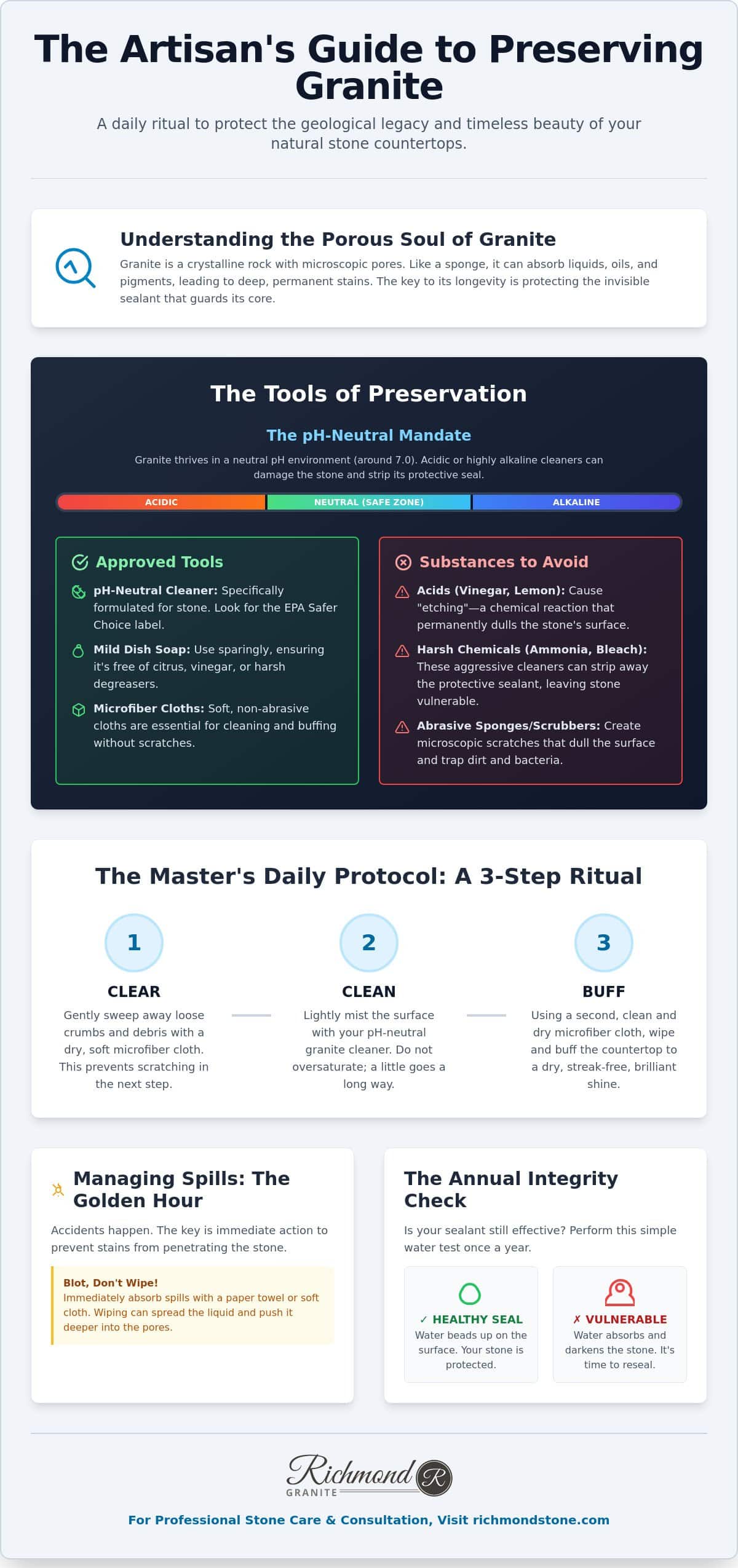
A professional sealant penetrates the surface to occupy microscopic pores. This creates a surface tension that repels moisture and oils; it keeps them on the surface where they can be safely wiped away. Many common household cleaners act as solvents that gradually strip away this protective barrier. To assess your stone’s health, perform a simple water test. Place several drops of water on the surface and wait ten minutes. If the water beads, your seal is intact; if it absorbs and darkens the stone, the internal structure is currently vulnerable.
Why ‘Clean’ Isn’t Always ‘Safe’
Generic cleaners often contain aggressive degreasers or ammonia that are far too harsh for natural stone. Acidic substances like vinegar or lemon juice cause immediate, microscopic damage. Etching is a chemical reaction that permanently dulls the stone’s polish. This damage cannot be wiped away, as the acid has literally dissolved a portion of the stone’s mineral face. True elegance requires a pH-neutral approach that honors the stone’s chemical equilibrium and prevents these irreversible mistakes.
Selecting the Tools of Preservation
The transition from understanding stone to actively maintaining it requires a curated selection of implements. Just as a sculptor chooses their chisels with care, the homeowner must assemble a toolkit that respects the mineral composition of the surface. Mastery of how to clean granite countertops daily begins with the rejection of generic, high-volume cleaning products in favor of solutions that mirror the stone’s own chemical stability. By selecting the right tools, you move beyond mere utility and into the practice of high-end stone stewardship.
The pH-Neutral Mandate
Chemical equilibrium is the cornerstone of stone longevity. On the pH scale, which ranges from acidic to alkaline, a rating of 7.0 represents perfect neutrality. Granite thrives in this “Goldilocks zone.” Ammonia-based glass cleaners, often mistakenly used for their streak-free promise, possess a high alkalinity that can slowly dissolve the protective seal over time. Similarly, while some mild dish soaps are acceptable, you should only select those free of citrus extracts, vinegar, or heavy degreasers. Look for products bearing the 2024 EPA Safer Choice label to ensure the ingredients are both effective and environmentally responsible for your home’s natural elements.
Microfiber Mastery
Standard kitchen sponges often feature an abrasive side that creates microscopic scratches. These tiny fissures serve as breeding grounds for bacteria and trap dulling residues that obscure the stone’s natural depth. High-quality microfiber is the superior alternative. For daily maintenance, select a cloth with a density of at least 300 GSM (grams per square meter). These split-fiber textiles lift oils and debris away from the stone rather than merely spreading them across the surface. When laundering these cloths, avoid fabric softeners; they leave a waxy coating that will inevitably transfer to your bespoke granite surfaces and create a cloudy film.
In regions such as New York and New Jersey, where local water sources can sometimes carry high mineral concentrations, the simple act of wiping can leave behind “ghost” spots of calcium or magnesium. Utilizing distilled water for your daily spray avoids this mineral buildup entirely. By organizing these elements into a dedicated Stone Care Kit, you transform a mundane task into a streamlined evening ritual. This level of preparation ensures that every interaction with your countertop serves to enhance, rather than diminish, its enduring elegance and showroom-ready appearance.
The Master’s Daily Cleaning Protocol
Establishing a consistent evening rhythm is the hallmark of the master steward. It’s during these quiet moments that you prevent the microscopic accumulation of daily life from becoming a permanent mark on your stone’s history. The “Clear-Clean-Buff” framework represents the gold standard for those seeking to master how to clean granite countertops daily with professional-grade results. This isn’t a rushed task; it’s a deliberate process that respects the material’s heritage. In regions like Staten Island and New York City, where tap water carries a specific mineral profile, this structured approach is even more critical. Without it, the calcium and magnesium found in local water can settle into the pores, creating a hazy film that masks the stone’s natural brilliance.
Step 1: The Debris Clearing
Begin by addressing the surface with a dry, high-GSM microfiber cloth. This initial pass lifts loose particulates, crumbs, and dust without dragging them across the polished face, which could cause subtle abrasions. Pay meticulous attention to the junctions where the backsplash meets the surface and the seams around the sink; these are the hidden enclaves where grime often seeks refuge. Use angled lighting from a nearby window or under-cabinet fixture to reveal “invisible” spills that might otherwise escape notice. Clearing the workspace entirely allows you to treat the stone as a single, continuous canvas of natural art.
Step 2: The Gentle Cleanse
Once the surface is clear, apply a gentle, pH-neutral solution. A precise ratio of one teaspoon of stone-safe soap to two cups of warm water is usually sufficient for daily maintenance. Avoid the temptation to saturate the stone; a fine mist is far more effective for lifting oils than a soaking wash. Employ a rhythmic “S-motion” wiping technique, starting from the back of the counter and working toward the edge. This ensures 100% surface coverage and prevents the redistribution of dirt into areas you’ve already addressed. This method treats the stone with the poise it deserves, ensuring no corner is neglected during the process.
Step 3: The Artisan’s Buff
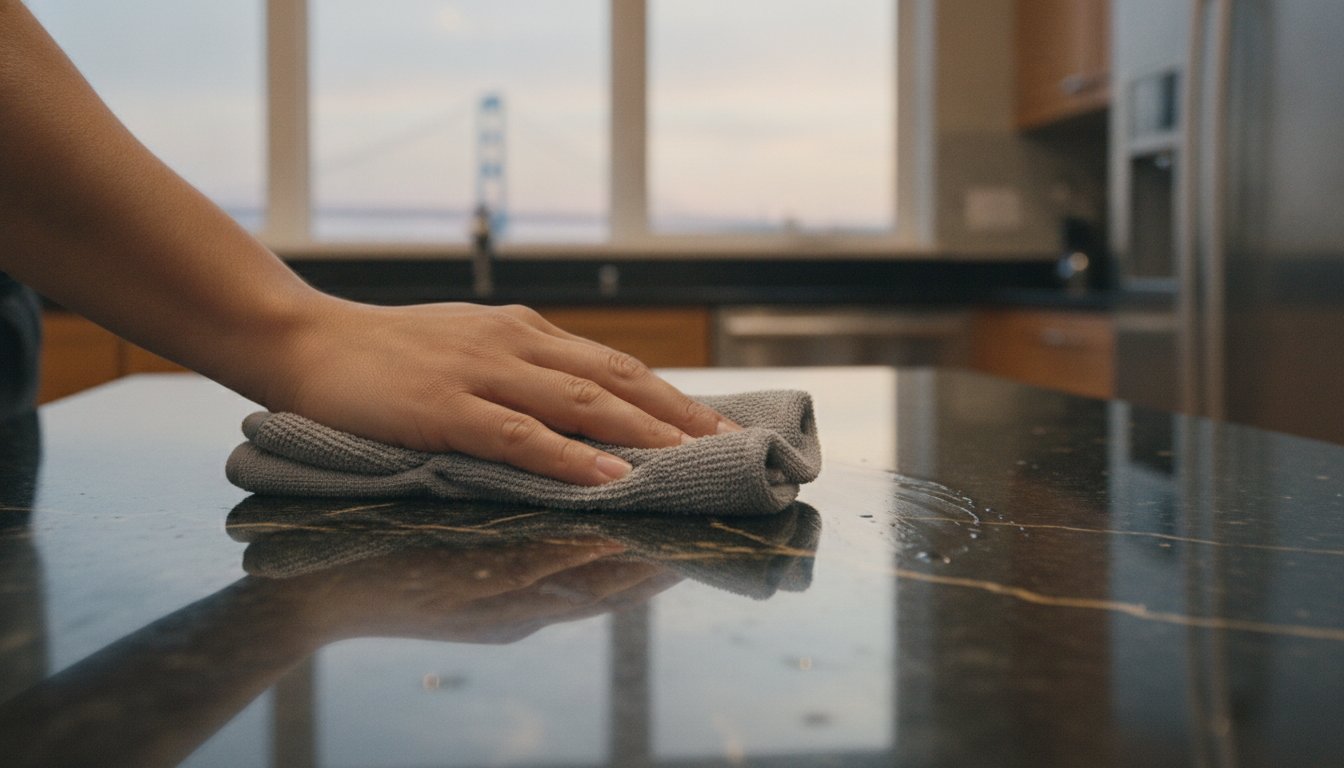
The final stage is where the transformation truly occurs. Use a fresh, bone-dry microfiber cloth to remove every lingering trace of moisture before it has the chance to evaporate and leave mineral spots. The buff stage is what creates the mirror-like finish that defines a showroom-ready kitchen. Use firm, circular motions to enhance the stone’s natural depth and reflectivity, a process that mirrors The Art of Custom Countertops in Staten Island where the original factory polish was first realized. This ritual ensures your surfaces remain a testament to enduring elegance, protected from the dulling effects of urban water minerals and the wear of daily use.
Managing the Unexpected: Spills and Spot Treatment
Even with a disciplined routine for how to clean granite countertops daily, the unpredictability of a functioning kitchen will eventually present a challenge. Master artisans refer to the first sixty minutes following a spill as the “Golden Hour.” During this brief window, the liquid rests primarily upon the surface tension created by your sealant. Once this time passes, capillary action begins to draw the substance into the stone’s microscopic pores, where it can become a permanent part of the material’s history. Immediate reaction is the difference between a simple cleanup and a costly restoration process.
The most vital technique to master is the “Blotting Rule.” When a spill occurs, your natural instinct may be to wipe the liquid away with a vigorous motion. Resist this. Wiping serves only to spread the contaminant across a larger surface area and can actually force the liquid deeper into the stone’s crystalline structure. Instead, use a clean, absorbent cloth to blot the area, pressing firmly to draw the liquid upward and out of the stone. This preserves the integrity of the surrounding area and minimizes the risk of a lingering shadow.
A common misconception among homeowners is that darker stones are impervious to damage. While it’s true that deep charcoals and blacks hide organic stains more effectively than lighter varieties, they are equally susceptible to chemical damage. Acidic substances can dull the factory polish of a dark stone just as easily as a white one, often leaving behind “ghost” rings that are visible only when the light hits the surface at a specific angle. True stewardship requires the same level of vigilance regardless of your stone’s palette.
The Acid Alert
Acidic spills from wine, citrus, or vinegar represent a chemical attack rather than a simple stain. Water alone is often insufficient to neutralize these substances before they begin to dissolve the stone’s mineral face. If an acidic spill occurs, utilize your pH-neutral cleaner immediately to restore chemical equilibrium. You can distinguish etching from a stain by touch; etching will feel slightly rough or “grabby” compared to the surrounding polish, whereas a stain is merely a change in color beneath a smooth surface.
Oil and Grease Mitigation
Cooking oils and fats are the most persistent threats to light-colored granites, as they can migrate deep into the stone and darken it from within. For fresh oil spots, the “Cornstarch Method” is a time-honored artisan secret. Cover the spot with a thick layer of cornstarch and allow it to sit for twenty-four hours to draw the lipids out of the pores. If the shadow remains after this period, the oil has likely set, and you may need to transition from daily care to a professional-grade poultice. If you find your current surfaces are no longer responding to these preservation techniques, consider viewing our collection of premium granite countertops to rediscover the brilliance of a masterfully finished stone.
Long-Term Stewardship of Your Natural Stone Investment
True luxury is measured by its permanence. While mastering how to clean granite countertops daily provides the essential foundation for a pristine home, enduring elegance requires a broader vision of stewardship. This commitment to care extends far beyond the removal of surface debris; it’s a practice that honors the professional fabrication and geological history of your surfaces. By maintaining a disciplined routine, you’re doing more than preserving a kitchen; you’re actively safeguarding a legacy of natural artistry that can last a lifetime when handled with the poise of a master craftsman.
Every twelve months, your stone deserves a formal “Annual Integrity Check.” While we previously discussed the water test as a quick indicator of health, a professional-grade assessment involves a more nuanced inspection of the stone’s surface texture and light reflectivity. You should observe your countertops under various lighting conditions to identify areas where the finish may be beginning to lose its depth. This proactive approach allows you to address subtle changes in the sealant’s performance before they manifest as deep-set stains or irreversible etching. Richmond Stone stands as the premier guardian of these natural elements, ensuring your investment remains as captivating as the day it was installed.
Beyond Daily Wiping
Stewardship involves a tactile awareness of your stone’s physical condition. Periodically run your hands along high-use areas, particularly around the sink and prep zones, to check for hairline fissures or microscopic chips. These minor imperfections can occasionally occur in even the most durable igneous rocks. Addressing these early prevents moisture from bypassing the sealant and entering the stone’s core. While your daily routine provides the first line of defense, applying a professional-grade sealant every 12 to 18 months is vital for maintaining the stone’s internal equilibrium. For those seeking a deeper understanding of these materials, explore Natural Stone: A Master Artisan’s Guide to Nature’s Timeless Legacy to learn more about the intrinsic properties of your surfaces.
Consulting the Craftsman
There are moments when even the most meticulous DIY care reaches its limit. If you notice persistent dullness that no longer responds to the artisan’s buff, or if a shadow from an old oil spill remains visible despite your best efforts, it’s time to consult a professional. The Richmond Stone approach to restoration and maintenance in NYC and NJ combines time-honored techniques with modern precision to revive the stone’s original brilliance. We treat every project as a unique, curated masterpiece, providing customized solutions that respect the history of the materials. When you’re ready to ensure the continued excellence of your home’s natural features, Contact Richmond Stone for a professional assessment of your granite surfaces.
Preserving Your Stone’s Geological Legacy
Mastering the art of stone care transforms a mundane household task into a rhythmic ritual of preservation. By embracing pH-neutral solutions and the precision of the artisan’s buff, you ensure the internal integrity of your surfaces remains uncompromised for generations. You’ve learned that immediate action during the “Golden Hour” of a spill and a commitment to understanding how to clean granite countertops daily are the true secrets to a showroom-ready environment. This disciplined approach respects the raw power of nature while celebrating the human skill required to refine it.
When you’re ready to further elevate your home with a custom granite masterpiece from Richmond Stone, our team is here to guide you. With over 30 years of family-owned expertise and master artisan fabrication based in Staten Island, we proudly serve all NYC boroughs and the NJ Metro area. We don’t just supply stone; we partner with you to curate enduring environments that reflect your personal vision of luxury. Your kitchen is a testament to timeless quality, and with the right care, its brilliance will never fade.
Frequently Asked Questions
Can I use Dawn dish soap to clean my granite countertops every day?
Yes, you can use a mild dish soap like Dawn, provided it’s free of citrus extracts or heavy degreasers. The key is moderation; use only a single teaspoon per two cups of water. Excessive soap creates a waxy buildup that dulls the stone’s natural luster over time. Always follow with a clean water rinse and a thorough buffing to ensure no residue remains to cloud the surface.
Is it safe to use disinfecting wipes or Clorox on granite surfaces?
No, most disinfecting wipes and Clorox products are too aggressive for natural stone. These cleaners often contain bleach or citric acids that strip away the protective sealant and can lead to microscopic etching. For daily disinfection, rely on specialized, pH-neutral stone cleaners that are formulated to kill bacteria without compromising the chemical equilibrium of the granite’s surface.
How do I remove streaks from my granite countertops after cleaning?
Streaks are usually the result of excess moisture or soap residue drying on the surface. To remove them, use a fresh, bone-dry microfiber cloth and buff the area in firm, circular motions. This mechanical action lifts the lingering film and restores the mirror-like finish. If streaks persist, it’s a sign that you’re using too much cleaning agent in your daily routine.
What happens if I accidentally use vinegar or lemon juice on my granite?
Accidental exposure to vinegar or lemon juice causes a chemical reaction known as etching. This process dissolves the minerals on the stone’s surface, leaving behind a permanent, dull mark. If a spill occurs, neutralize it immediately with a pH-neutral cleaner. While small etches can sometimes be polished out by a professional, prevention remains the most effective form of stewardship.
Does daily cleaning replace the need for professional sealing?
Daily cleaning is essential for hygiene and appearance, but it doesn’t replace the structural protection of a professional seal. Learning how to clean granite countertops daily ensures surface contaminants don’t linger; however, the sealant is what prevents deep-seated absorption into the stone’s pores. Most high-use surfaces require a fresh application of professional-grade sealant every 12 to 18 months to maintain their internal integrity.
Why does my granite feel ‘gritty’ even after I’ve wiped it down?
A gritty texture often indicates a buildup of mineral deposits from hard water or microscopic debris trapped in a failing sealant. In areas with high mineral content, like NYC and NJ, tap water can leave behind calcium crusts as it evaporates. If a thorough “Clear-Clean-Buff” cycle doesn’t resolve the texture, your stone may require a professional deep cleaning to remove the accumulated residue from its pores.
Can I use Windex if it says ‘Vinegar-Free’ on the label?
Even vinegar-free Windex is generally unsuitable for granite because it often contains ammonia. Ammonia is a high-alkaline substance that gradually wears down the protective barrier of your stone’s sealant. Long-term use results in a surface that is vulnerable to staining and lacks its original depth. Stick to cleaners specifically engineered for natural stone to ensure you’re not inadvertently shortening the lifespan of your investment.
How often should I perform the ‘water drop test’ on my granite?
We recommend performing the water drop test every six to twelve months to monitor the health of your sealant. Simply place a few drops of water on various areas of the counter and wait ten minutes. If the water still beads on the surface, your protection is intact. If the stone darkens or absorbs the moisture, it’s time to consult a craftsman for a fresh application of sealant.